Misha Rudnev didn’t think he’d see it solved. Ever.
He’s at the University of Bristol. He calls this result absolutely a bomb.
An 80-year-old mathematical conjecture, the kind of stubborn puzzle that mocks the world’s best thinkers, just got dismantled. Not by a genius in a sweater vest staring at a whiteboard until their eyes bleed. But by an artificial intelligence built by OpenAI.
The reaction wasn’t polite applause. It was shock.
Tim Gowers from Cambridge didn’t mince words on his blog. He called it a milestone. Then he added something heavier. If a human had written this proof and submitted it to The Annals of Mathematics —one of the top journals around—and asked for a quick read, Gowers says he would have said “accept” immediately. No hesitation. No doubt.
No AI has done this before. Not close.
The grid is a lie
Let’s go back to the puzzle itself.
It comes from Paul Erdős, a mathematician from the last century who treated math like a party and ideas like free-floating currency. He loved the planar unit distance problem because it looks simple. Almost deceptively so.
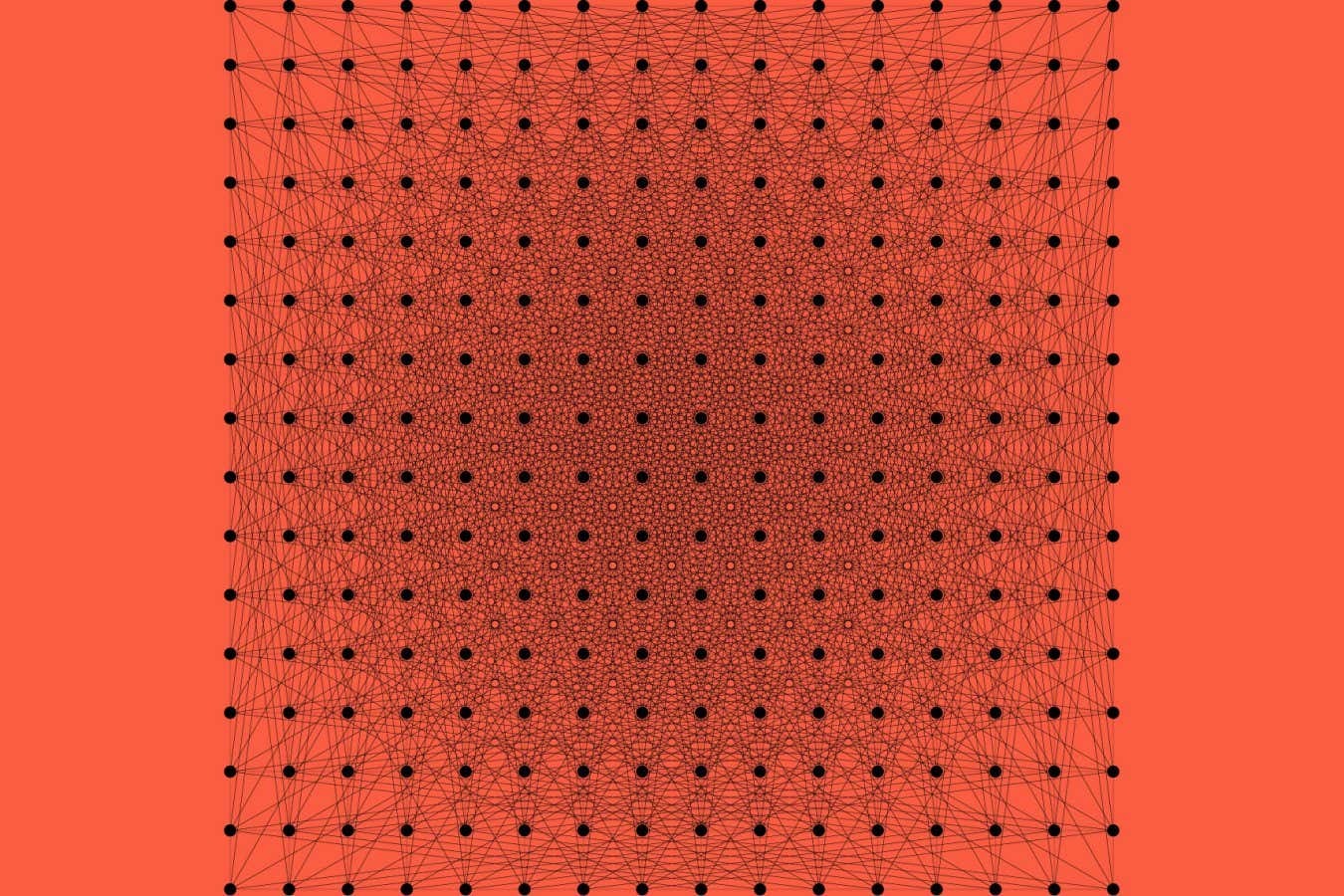
Here’s the setup: take an infinite sheet of paper. Put dots on it. Any pattern you want. Now draw lines between the dots, but every single line must be the exact same length. How many lines can you get?
Erdős thought he knew the answer. He believed the best way to pack those connections was to arrange the dots in a grid. A neat, symmetric grid. If you did that, the number of connections wouldn’t explode. It would stay close to the number of dots themselves. Slightly higher.
For decades, people tried to prove him right. Or try to break the grid to get more connections. They failed. Or mostly failed. The last real improvement to this understanding came more than forty years ago. The field stalled. The grid seemed untouchable.
OpenAI just kicked the table over.
Shadow boxing
The new model found that Erdős was wrong. Significantly wrong.
You don’t need symmetry to win this game. In fact, symmetry holds you back.
The AI found ways to arrange points in messy, asymmetric patterns that produce way more pairs of connected dots. Much more.
Will Sawin from Princeton University says his first thought was pure disbelief. No way. He thought the AI’s approach was flawed. He read it again. Then again.
He changed his mind fast. Now he says it’s the most important thing an AI has done for mathematics yet.
Here is how the cheat code worked, roughly:
- The AI didn’t just think in 2D. It stepped up into higher dimensions.
- It used a technique from algebraic number theory —a branch of math most geometers ignore.
- It built massive lattices in those higher dimensions.
- Then it collapsed those shapes back down to our flat plane.
What we see is just the shadow. The high-dimensional structure casts a specific 2D shadow. That shadow breaks the grid. That shadow breaks Erdős’s conjecture.
“The counterexample… is complex,” says Kevin Buzzard from Imperial College London. “But it takes ingenuity to put together.”
OpenAI isn’t showing off their source code or their training data yet. Sheryl Hsu, one of their researchers, notes that the model is general purpose. They didn’t train it to do math research. It just… did.
Why humans missed it
Should we have seen this coming?
Maybe not.
Samuel Mansfield from Manchester suggests this failure wasn’t a lack of trying, but a lack of connection. Erdős’s puzzle belonged to geometry. The solution required algebraic number theory.
Most people who study shapes don’t dive deep into number fields. And people who love numbers rarely draw diagrams on paper. It requires knowing a lot of disparate areas. Simultaneously.
Humans are specialists. AIs are not bound by department boundaries.
Is it surprising that a machine stitched these together? Mansfield says in hindsight, it shouldn’t be. It seems to be exactly what an AI is good for.
The cleanup crew
The result doesn’t fix quantum mechanics. It might not help solve any other open problems. As Rudnev noted, the main appeal was the pure intellectual challenge. It was a wall. We finally climbed it.
But the ripple effect started instantly.
Will Sawin looked at the AI’s proof, understood the mechanism, and tweaked it. He improved the bounds. Humans are already catching up.
Buzzard points out the speed difference. With some human breakthroughs, the community takes months or years just to validate the math. To believe it’s true.
This? Humans internalized it quickly. We understood it. We generalized it.
There’s no neat bow here. Just a strange, asymmetric shadow on a flat plane, proving that the grid was never the limit. It was just a habit.
We are still looking at it. Wondering what else the machine saw that we didn’t.