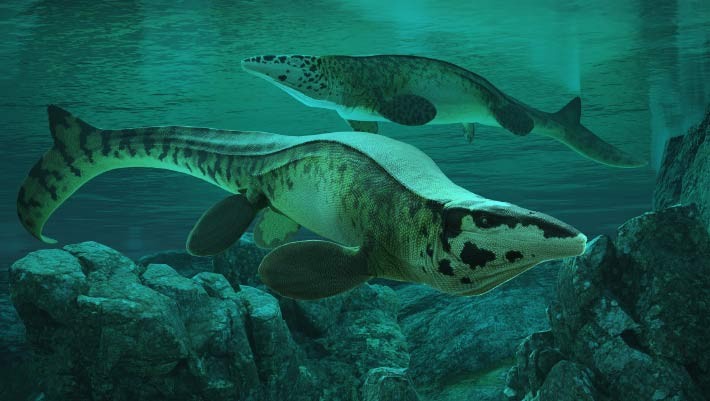
It wasn’t a dinosaur. Not even close.
Meet Tylosaurus rex. A monster from 80 million years ago. Thirteen meters of pure reptilian terror. 43 feet of serrated teeth and open-ocean hunger.
We tend to lump everything prehistoric into one big “dinosaur” bucket. Lazy, really. Mosasaurs? They’re closer to you and I than the T. rex. Specifically. They are cousins of the Komodo dragon and modern snakes. Scaled down to monitor lizard proportions, maybe, before they exploded in size during the Late Cretaceous.
The seas back then belonged to the big things. Four subfamilies of mosasaurs evolved streamlined bodies and powerful flippers. Some got fat. Some got fast. The Tylosaurinae got huge. Way huge.
Everything is bigger in Texas, it seems.
That includes the monsters in the water.
Amelia Zietlow was digging through the American Museum of Natural History collections. A Ph.D. student looking for clarity. She found a specimen labeled Tylosaurus proriger. Wrong. Completely wrong. The bone structure screamed something else. Something new. She checked the holotypes. Compared the teeth. The serrations were different. The size? T. rex was significantly larger than the Kansas fossils of T. proriger. And younger by about 4 million years.
So what do we call a giant lizard from the Western Interior Seaway that outgrows the competition? We borrow the crown jewel of names. Tyrannosaurus… no wait, that’s a typo. Tylosaurus. The family name stays. Rex. The king title arrives.
It works.
These animals didn’t just eat fish. They ruled. Their skulls were built like battering rams. Massive attachment points for neck muscles. The jaw bite force suggests a predator that didn’t chew so much as dismantle. Dr. Ron Tykoski calls them “meaner.” I like that. Simple. Accurate.
Take “The Black Knight.” A specimen sitting at the Perot Museum. Missing its snout tip. Jaw fractured. How did that happen? Not by falling down. The damage pattern points to one source. Another T. rex. Fighting over food? Territory? Pride? The bones keep the secrets. But the violence was real. Internal strife for the top of the food chain.
This reclassification isn’t just a name swap. It’s a realignment. Specimens like “Bunker” in Kansas and “Sophie” in Yale? They’re T. rex too. They’ve been misidentified for over a century. Now the map clears up.
Was it luck? Good fossil hunting? Or just the inevitability that Texas hides the biggest monsters?
The paper drops today in the Bulletin of the American Museum of Natural History. The details are dry. The implications? A lot messier. The Late Cretaceous wasn’t just about land dinosaurs. The sea had its own kings. And they had very bad tempers.
We usually think of extinction as a sudden curtain drop. 66 million years. The asteroid. The end. But before the lights went out. These creatures were already writing their final chapter. Fighting. Breeding. Dying in the shallows.
Leaving us with bones that refuse to stay quiet.
Maybe we named them Rex because we need to understand size through domination. Or maybe it’s just funny. A sea snake getting a name after the ultimate land killer. Either way, the name sticks. It has to. There is nothing else like them.
Except perhaps what they replaced. Or what waited in the dark water.