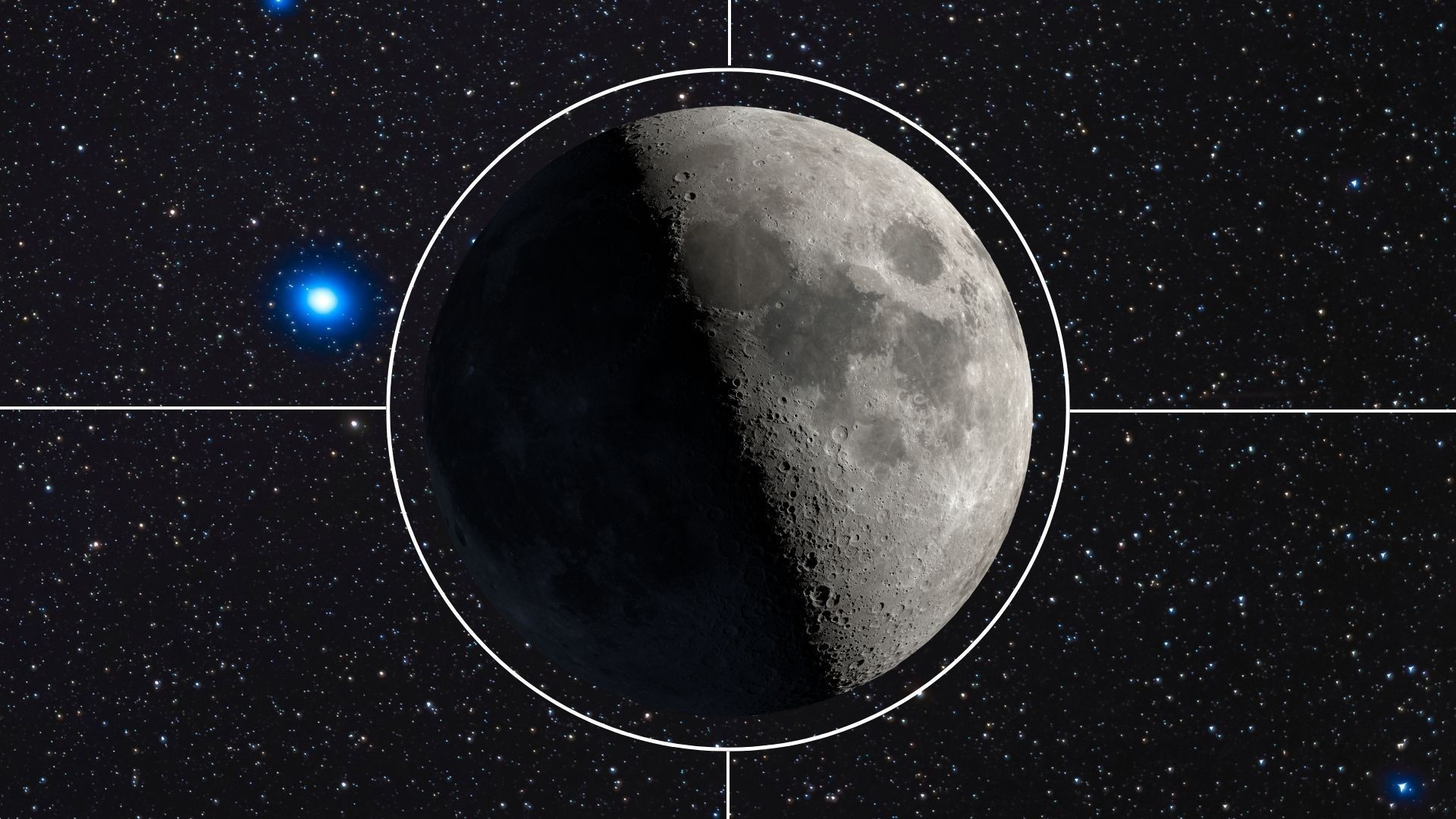
On May 23 the moon will swallow a star. Specifically Regulus. It is called a lunar occultation.
The moon slips in front. Blocks the light. Simple. But only if you are in the right place. Mostly parts of the Pacific.
Elsewhere? The star just drifts nearby. A close call through the constellation Leo.
Why you might miss it
Distance matters. The moon orbits Earth at 238,854 miles away. That is close. Too close. It creates something called parallax viewing.
Parallax means where you stand changes what you see. An object shifts position against the backdrop depending on your viewpoint. NASA says this shift can be up to 2 degrees. Huge for the sky. Small on the ground. It’s all relative.
You aren’t seeing the same moon as someone on the other side of the world.
Who sees the show
Fiji gets front row seats. Samoa too. TongA and other Pacific islands will watch the shadow side of the half-lit Moon pass over Regulus early May 23. The light vanishes. Totally blocked. According to In-The-Sky that is how it plays out.
Sydney has a different story. After sunset Regulus grazes the top of the Moon. Blue-white light skirting the lunar disk. Then it sets beneath the moon just before midnight. A tight dance.
US viewers get a near miss. Overnight May 22 into May 23 offers the best shot. The Moon climbs toward Regulus. When they finally sink below the western horizon early on May 23 they are separated by roughly 1 degree. That is the width of your pinky finger held at arm’s length.
Did you really think we were looking at an eclipse?
No. The occultation is hidden. Out of reach for American eyes. But you can fake it. Sort of. Grab a phone app. Stellarium works. SkySafari Pro is better for some. They simulate the view from wherever you happen to be. Even if nothing happens.