Social media loves a good “What I Eat In A Day” video. Usually, I watch them to spot wellness trends. Sometimes to judge the food. Mostly to see if the creator is lying for clicks.
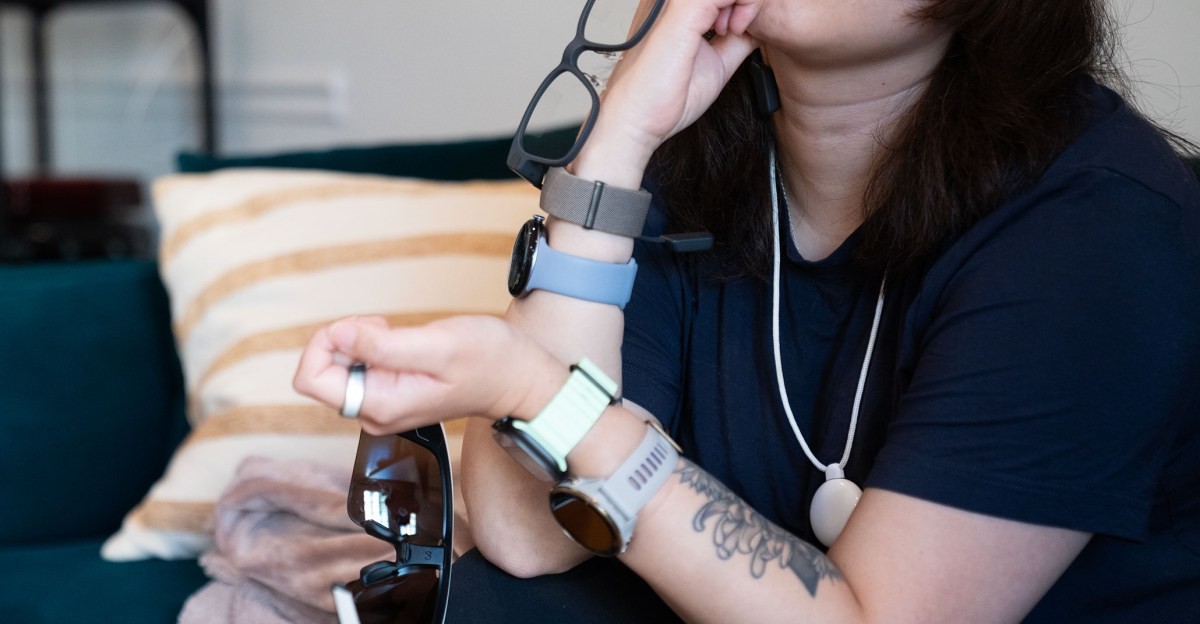
My job is different. I don’t track calories. I track data. As a senior wearables reviewer at The Verge, I wear more devices than a cyborg. Readers ask me what my day looks like. They want to know if wearing ten gadgets will make them successful. It won’t. It will give you data fatigue. And probably a rash.
The Reality of Wearable Testing
My routine changes with the seasons. Winter? Light load. Launches are slow. Summer and Fall? I’m covered in sensors. Right now is peak chaos. Why? Because I’m building a digital twin of my metabolism. It’s intense. It involves blood, sweat, and continuous glucose monitors.
I don’t recommend this for normal people. I do it to test products. I check if a $600 scale is worth the money. I see if a smart ring matches a medical-grade monitor. I evaluate GPS accuracy. I stress-test batteries. You track to get healthy. I track to see if the tech works.
What Devices Am I Wearing Right Now?
I test in blocks. Right now, the focus is metabolic health. I need control devices to compare against. If a new smart ring comes out, I compare it to the Oura Ring. That’s the market standard. If a new tracker drops, I pit it against the Garmin Cirqa or Fitbit Air.
My current wrist situation is… crowded.
- Apple Watch Ultra 3 (Left wrist, the baseline)
- Dexcom G7 (CGM, alternating underarms)
- Google Fitbit Air (Right wrist)
- Garmin Cirqa (Right wrist, new addition)
- Oura Ring 5 (Right index finger)
- Polar H10 (Chest strap, workouts only)
I also have scales. A lot of them. The Withings BodyScan 2 is the star. It’s expensive. It’s bulky. I compare it to the Twin Health scale and the older Withings models. I use the Eight Sleep Pod 4 to track sleep data independently. It acts as a control.
Morning: The Syncing Ritual
Wearable testing starts before coffee. Actually, it starts before I get out of bed.
- Check Batteries: I sync every device. Did the Garmin Cirqa last 24 hours? Did the Apple Watch survive?
- Review Sleep Data: I open five apps. Apple Health, Oura, Google Health, Eight Sleep. I look for discrepancies. Did the cat jump on my face at 2 AM? Did the trackers catch it?
- Glucose Check: I open the Dexcom app. What’s my fasting glucose? Are there overnight patterns?
- The Bathroom: I pee. I do not drink water yet. Hydration changes the data.
- The Scales: I strip down. I step on the Twin Health scale. Then the Withings Body Smart. Then the BodyFit. Then the BodyScan 2. I sync them all. I take my blood pressure. I log it in three different apps.
- Breakfast: I eat. I log the meal. I set a timer for two hours. I need to see how food spikes my glucose.
This takes about an hour. It is tedious. It is necessary.
Daytime: Workouts and Anomalies
Once the morning is done, I ignore the devices. Mostly.
I track workouts with precision. Before a run, I start every app. In the same order. Left to right. If I forget to start the Garmin, I have to do the run again. That’s bad.
During the workout, I check metrics every half mile. Pace. Heart rate zone. Distance. I compare the data mid-run if possible. Afterward, I sync everything. I check my glucose levels post-workout. I weigh myself again to check for water loss. I log everything in a spreadsheet. This adds 30 minutes to my workout.
If the heart rate is off by more than 10 BPM, I note it. The Polar H10 is the truth-teller. It’s accurate. The wrist sensors are not.
Evening: Data Tagging and AI Hallucinations
Nighttime is for trends. I check medication logs. I review step counts across all devices. I look at stress metrics.
AI summaries are everywhere now. Most are wrong. Recently, my wearables told me I was dying. They said my body was failing. I was fine. I had just eaten a salad. The AI panicked.
I use the journaling features in Oura and Eight Sleep to tag events. Did I drink alcohol? Did I sleep with a cat? These tags help correlate lifestyle choices with sleep quality. By the time I finish tagging, I’m exhausted. I pass out. The cycle repeats tomorrow.
Why You Shouldn’t Do This
I’ve been doing this for ten years. I’m fast at it now. But I take breaks.
Every few weeks, I take 48 to 72 hours off. No trackers. No data. Just living. Some purists call this a sin. They say it breaks data integrity. I call it sanity.
If you track everything all the time, you burn out. You stop seeing the forest for the trees. You need purpose. If you don’t know why you’re tracking, stop.
More data is not better data. It’s just noise. Choose one or two metrics. Pick one device that fits your life. Ignore the biohackers. Ignore the hype. Track what matters to you. Not what the algorithm wants.