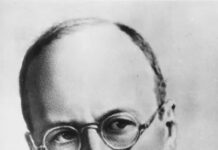
Johann Pachelbel was born in 1653 and baptized on September 1 in Nuremberg, Germany. He died there 52 years later, on March 3, 1706.
Today, most people know him from the wedding march that was played at a million ceremonies. But he was already one of the greatest organ masters in the Baroque period. A giant in his field. He sat right in the line that led to Johann Sebastian Bach. Not quite, but close enough.
How Pachelbel Shaped German Church Music
Pachelbel didn’t just sit at the keyboard all day. He studied music in Altdorf and Regensburg. This was serious training for the 17th century. Before settling down, he worked as an organist in Vienna and Stuttgart. In 1695, he received a position in the St. Sebaldus church in Nuremberg. He stayed there until his heart stopped.
He also taught.
This is where the Bach connection gets interesting. Pachelbel taught Johann Christoph Bach. Johann Christoph then gave his younger brother Johann Sebastian his first formal keyboard lessons. A direct pedagogical line can be traced from Pachelbel’s studio to the throne of the Bach family legacy. Without this early teaching, the landscape of Western classical music might look very different.
Style behind the sound
His work is not complicated. It’s contrapuntally simple. Clear lines. Clear structures.
But don’t confuse simple with easy. Pachelbel’s organ compositions showed a deep knowledge of Italian forms. He received this influence from Girolamo Frescobaldi, filtered through Johann Jakob Froberger. This Italian flavor is combined with German rigor. It created something new.
He specialized in chorale preludes. These pieces did a lot of work. They helped establish the choral melodies of Protestant northern Germany in the more lyrical musical atmosphere of the Catholic south. It was a bridge. A resonant handshake between two sides of the religious divide.
Why Pachelbel’s Canon still rules the playlists
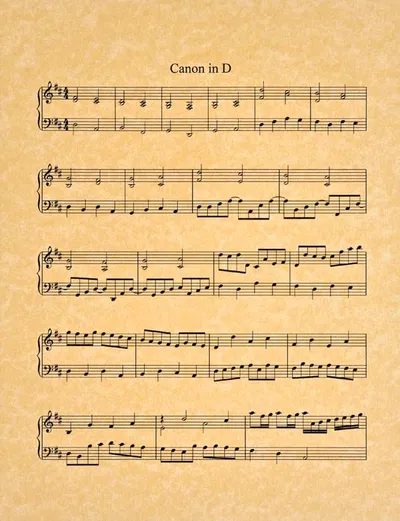
Then there’s the famous one. Pachelbel’s Canon.
Written for three violins and continuo, followed by a gigue in the same key. It is his most popular work. Why? It’s catchy. It is repetitive in the best way. It builds. It resolves. It’s perfect for a movie scene or Instagram reel.
The structure is a ground bass. A repeating lower pattern over which the violins weave in and out. It’s hypnotic. That’s why it’s still the go-to for indie filmmakers and wedding planners alike.
His son Wilhelm Hieronymous Pachelbel was also an organist and composer. The craft ran in the family. But Johann remains a name on the marquee.
He died in 1706. But his music did not. It just waited. Centuries passed. Technology changed. Music tastes shifted. And then suddenly his canon was all over the place again.
Is it art or a product? Does it matter? It’s in the air. You hear it in elevators, in commercials, in the background of your life. It is unavoidable.
There is no big statue of him in Nuremberg