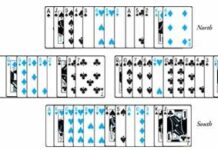
You might be surprised to learn that Pinochle didn’t start in a suburban basement in Ohio. It actually has European roots, evolving from the trick-taking game known as Bezique. While Bezique is still played, Pinochle carved out its own niche, becoming a staple in family game nights and card clubs across the US. But it’s not just one game. It’s a family of games. You’ve got Partnership Pinochle, the solitary challenge of Two-Handed Pinochle, and the cutthroat, three-to-six-player version that can turn friends into frenemies fast.
The heart of Pinochle isn’t just winning tricks. It’s about the melds. These are the specific card combinations that let you rack up points before you even play a single card. If you don’t know which melds count and how much they’re worth, you’re essentially playing with one hand tied behind your back.
The High-Value Melds That Define the Game
In Pinochle, points come from two places: your melds and the tricks you win during play. But the melds are where the big numbers live. Here is the breakdown of the most valuable combinations you need to memorize.
The Flush
This is the holy grail of melds. You need the Ace, 10, King, Queen, and Jack—all of them—of the trump suit. If you hold all five of these cards, you score 150 points. That is a massive chunk of the total score. It’s rare, it’s powerful, and it can swing a game in an instant.
The Royal Marriage
If you don’t have the flush, you might settle for a marriage. A royal marriage is the King and Queen of the trump suit. It’s worth 40 points. Simple. Effective. You don’t need the other cards to score this.
The Plain Marriage
Not every marriage is created equal. If you hold the King and Queen of a non-trump suit, that’s a plain marriage. It’s worth 20 points. It’s half the value of the royal marriage, but it’s still a solid score if you’re short on trump cards.
Why Melds Matter More Than Tricks
Many new players focus entirely on winning tricks. They ignore their hand. They don’t look at the cards they’ve been dealt. This is a mistake. In Pinochle, the melds can give you a head start that tricks alone rarely recover from.
Think about it. A flush alone gives you 150 points. You’d need to win dozens of tricks just to catch up to that single combination. Even a simple royal marriage adds 40 points. That’s like winning a few tricks in one go. The strategy shifts when you realize that holding specific cards isn’t just about playing them. It’s about keeping them together to score.
Bids: The Risky Heart of Pinochle
Beyond melds and tricks, there’s the bid. This is where the game gets psychological. Before the cards are dealt, players bid on how many points they think they can score. The winner of the bid gets to choose the trump suit. This is huge. Choosing the trump suit


If you’ve ever sat at a table with chips stacked up and cards in hand, you know the hierarchy matters. It’s not just about luck. It’s about knowing which cards carry weight. Let’s look at the numbers that actually keep the game moving.
The High Card Hierarchy
At the top of the food chain are the Aces. There are four of them. Each one is worth 100 points. They are the kings of the deck. No other rank comes close unless you have a straight flush or a full house, but even then, the Ace is often the deciding factor.
Just below the Aces are the Kings. You have four of these. They sit at 80 points. They’re strong. They beat the queens, the jacks, and every number card below them. But they lose to the Ace. Always.
Then come the Queens. Four of them. Each counts for 60 points. They are solid mid-tier cards. Enough to win a pot if the board is quiet. Not enough to bluff your way into a grand slam unless everyone else is holding trash.
Next down are the Jacks. Four of them. They are valued at 40 points. They are the workhorses of the game. You’ll see them in straights. You’ll see them in pairs. They are the bridge between the high honor cards and the low numbered cards.
Why These Numbers Matter
You might wonder why the points drop so specifically. 100. 80. 60. 40. It’s not random. It creates a clear gap. When you’re calculating potential hands or evaluating your stack, these fixed values help you decide whether to fold or push.
A hand with two Aces is already worth 200 points on its own. Two Kings? 160. Two Queens? 120. Two Jacks? 80. The math is simple. The strategy is harder.
What Comes Next?
The list stops at Jacks in this snippet, but the pattern is obvious. The Ten would be next. Then 9, 8, 7, 6, 5, 4, 3, 2. The points likely continue to drop in increments of 20. 20 for the Tens. 0 for the deuce? Or maybe the deuce is wild? That depends on the specific variant you’re playing.
If you’re playing standard high-card scoring, the Ace is always the best card. It’s the anchor. Everything else is just noise until you pair it, fit a straight, or fill a house.
So, check your hand. Count your points. Decide if you want to stay in or walk away. The cards don’t change. The rules don’t change. Only your bet does.


J-
J), 40 points
Dix (pronounced “deece”) (9 of trumps), 10 points
(If you declare a flush, you may not also declare the royal marriage it contains.)
In addition to the melds, there are two other ways to score in Pinochle, points and bids.
Scoring Points
When play is over, points are counted in tricks as follows:
Ace, 11 points
10, 10 points
King, 4 points
Queen, 3 points
Jack, 2 points
9, 0 points
Last trick, 10 points
Scoring Bids
If you make your bid, collect points from each opponent as follows:
250-290, 5 points
300-340, 10 points
350-390, 15 points
400-440, 25 points
450-490, 50 points
500+, 100 points
For bids over 300, spades score double.
Let’s get started with basic Pinochle, commonly called Auction Pinochle. Here’s how to play:
Number of players: Three (or four, with the dealer sitting out each deal).
Object: To scroe points in melds and in play.
The cards: A 48-card Pinochle deck is used. You can put one together from two standard packs by dropping all deuces through 8s. Cards rank — from high to low — A-10-K-Q-J-9.
Dealing: Deal 15 cards to each player. By tradition, deal in bunches of three, or one bunch of three followed by bunches of four. Deal three cards (not the last three) to a face-down widow, or kitty.
Bidding: Starting with the player at dealer’s left, each player bids or passes. The lowest bid is 250 points, and bids increase by ten points thereafter. Once you pass you can’t reenter the bidding, but bidders can continue raising the auction. The auction is closed once two players have passed. The aim is to score at least as many points as you bid.
The player who wins the bid becomes the bidder. If you are the bidder, turn the three widow cards face up and add them to your hand. It may be clear at this point that your total of melds and cards taken in play won’t reach your bid. You may concede at this point, losing the amount you bid.
Otherwise, table your melds, including cards from the widow, and announce a suit as trumps. If the bidder has already reached or exceeded the value of his or her bid, play ceases immediately, and he or she scores the value of the game (see “Scoring Points and Bids”).
Your two opponents will temporarily unite in their play against you. In order to reduce your hand back down to 15 cards, choose three unmelded cards to set aside, face down, to add later to the tricks you win. Pick up your melds and lead any card to the first trick.
The winner of each trick leads to the next. You must always follow suit, and if you cannot follow to a plain suit, you must play a trump if possible. When a trump is led, play a higher trump than the previous player if possible. Tricks are taken by the highest card of the suit led or by the highest trump if they are played. When two of the same card, say two

When two cards of the same rank are played to a trick, the one played first takes precedence. It’s the higher of the two, period.
Scoring in Pinochle is unforgiving. Hit your bid? Collect points from every opponent based on the table. Concede? Hand them your points. Miss your bid? That’s where it gets painful. You go bete (pronounced “bait”) and lose double the difference to each opponent.
Let’s look at the math. Suppose you bid 370 and take 405 in spades. You pocket 30 from each opponent. If you’d bid 400 and still made 405, you’d win 50 from each. But bid 410 and only make 405? You go bete. You owe 100 points to each player. Ouch.
Here is the hard truth about the widow. Don’t count on those face-down cards to rescue your meld. The odds are against you—better than one in six that the specific card you need is sitting there waiting. When calculating potential losses, assume your opponents will use high cards to beat your losing tricks. They will.
As a defender, track the cards the bidder melded that you can beat. Win those tricks. Be careful, though. Sometimes the bidder holds even more of that suit in their hand, hiding a side suit alongside the trumps.
Bidding Traditions and Variations
Rules vary by region. In one tradition, if two players pass, the dealer must bid at least 250. In another, the dealer either passes the hand entirely or opens at 290, 320, or higher—but never 250. A third treatment starts the first hand at 300 and allows the declarer to throw in for the minimum stake loss if things go south.
Partnership Pinochle: The Racehorse Game
Ready for the next level? Let’s talk about Partnership Pinochle, also known as Racehorse Pinochle. This four-player version changes the stakes entirely.
The Setup
Four players. Two teams. Partners sit opposite each other. How do you find your partner? Everyone draws a card from the deck. The two highest cards form one team. The two lowest cards form the opposing team. Use decks that look identical on the back. You don’t want a peek.
The Object
Be the first team to reach 1,500 points. Standard scoring applies, so check the foundational rules if you’re new to the points table.
The Deck
You need a 48-card Pinochle deck. Take two standard 52-card decks and remove all 2s through 8s from each. Card ranking remains the same: Ace (high) through 10, King, Queen, Jack, 9 (low).
Dealing
Cut for the highest card to determine the dealer. Dealing proceeds clockwise. Deal three cards at a time to each player until everyone has 12 cards. The dealer gets the final batch. It’s a rhythm you pick up quickly.
Bidding in Partnership Play
Bidding starts at the dealer’s left. Any player can bid or pass. The opening bid must be at least 250. Subsequent bids go up in ten-point increments. You can pass and then bid later in the same round, but three consecutive passes close the auction.
What happens if no one opens? The hand is thrown away. The next dealer shuffles and deals a fresh hand. If someone bids, the highest bidder becomes the declarer. The pressure is on.
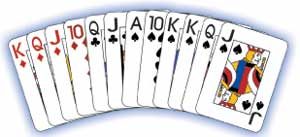
The goal in Pinochle isn’t just to win tricks. It’s to build a hand that screams value before the cards are even played. Imagine holding a trump suit where you can meld a Pinochle and a Flush together. If spades are trumps, that combination alone nets you 100 points. Then, stack a plain marriage in diamonds on top of that. Add 20 points for the suit. You are sitting at 210 points on the table before the bidding even settles.
This is where strategy diverges from luck. You might void your hearts through passing. Why? To ensure you can trump heart leads later. It creates a defensive wall while building offensive points.
Understanding the Exchange Phase
Once the declarer names the trump suit, the real work begins. This is the passing phase. The declarer receives four cards from partner. It’s not a gift. It’s a trade.
The declarer examines the new cards. Then, they select four cards to send back to partner. This return isn’t mandatory. It can include none, some, or all of the cards received. The logic is simple: discard the weak cards, keep the strong ones, and balance the hand. Partner does the same. They are refining their own hand based on the information implicit in the bid and the trump suit.
This exchange happens simultaneously. Both players are reshaping their hands without seeing what the opponent holds. It’s a blind negotiation with your own partner.
Laying Out the Points
After the cards are swapped, the melding phase kicks in. All players lay their melds on the table. This is transparent. Everyone sees who has what.
Scoring the meld is straightforward but intense. The points are tallied for each side—the declaring side versus the defending side. Let’s say you won the bid at 360. You have a hand full of potential. You meld your marriages. You meld your runs. You check for the Pinochle. The total is calculated. If your meld score is high, you might not need many trick points to win the game. If it’s low, you need every trick.
The declaration system adds another layer. When you bid, you declare which combination of melds and tricks you intend to win. It’s a promise. Breaking it means penalty points. So, when you meld a Pinochle and a Flush for 100 points, plus a marriage for 20, you are telling the table: “I have these points. Now watch me win the tricks.”
Why Strategy Matters More Than Luck
Pinochle is often mistaken for a game of chance. It’s not. It’s a game of probability and partnership. The passing phase is where the game is won or lost. If you pass poorly, you end up with a hand that can’t meld effectively. You might pass away a heart, thinking it’s useless, only to realize later that hearts were the opponents’ strength. You need to trump them.
The melding phase is where you capitalize on that strategy. A well-timed meld can give you a cushion. It means you can afford to lose a trick or two and still win the hand. It’s about building a buffer against variance.
Consider the
The cards are dealt. You declare spades trump. Partner slides over the Queen, then the 10, and finally the King in quick succession. It’s a specific signal. They want you to know something about their holding, or perhaps just clear the way. You take the lead and return the Ace, followed immediately by the King and the Queen.
Why do this? Because in bridge, the order of play is a language. When partner leads the Q, 10, K sequence, they aren’t just playing cards. They are showing strength. Specifically, this is a standard echo or attitude signal. The 10 is the key. It says, “I have the Jack too,” or it encourages you to continue the suit because partner holds the high honors.
If you simply played the Q and then the K, the story changes. But the insertion of the 10 in the middle? That’s the detail. It confirms control. You return the A, K, Q to cash in your winners. The defense has no trumps left to ruff. The declarer is trapped. The suit is established. The points are yours. This is how you read the cards. Not by looking at your own hand, but by watching what comes across the table.
You need to do the math before you commit. If you’re confident you can secure your contract, play the hand. The goal is simple: accumulate 150 points through your winning tricks. It doesn’t matter if your partner holds zero meld points. As long as your tricks add up to that 150, you’re in business.
But there’s a hard floor. If your combined meld points sit at 100 or lower, forget it. You cannot make your contract. There are only 250 points total available in the deck. If you don’t have the melds to start with, the math says no. Don’t play.
The Declarer’s Solo Decision
You don’t need a committee meeting. Your partner’s opinion is irrelevant here. You are the declarer. You call the shots on whether to play or fold.
If you fold, the game shifts immediately. You lose the chance to score your melds. Instead, your opponents get the value of their melds plus a 250-point bonus. It’s a quick loss, but it stops the bleeding.
If you decide to play and your opponents set you, the penalty is steeper. You get nothing. No meld points. No trick points. Your opponents walk away with their melds, that same 250-point bonus, and every point from the cards they captured.
Winning means both sides keep their points. Losing means you start from zero.
How Play Unfolds
The player to the dealer’s left leads the first trick. From there, play moves clockwise. Whoever wins a trick leads the next one. This rhythm dictates the pace of the hand.
Follow suit is non-negotiable. If the leader plays a non-trump suit, you must follow. If you can’t, you must play a trump if you have one. It’s a rule, not a suggestion.
When a trump is led, the hierarchy changes. You must beat the previous trump with a higher one. If you can’t play a higher trump, you’re stuck following the suit or throwing away a useless card. The highest card of the suit led wins the trick. Or the highest trump, if one is present.
What happens when the exact same card appears twice in a single trick? The rules get tricky. Usually, the first one played stands. But context matters. Did someone slip? Did they miscount? The game relies on memory and sharp eyes. One mistake and you’re down 250 points before the next hand even starts.
Do you risk the contract? The numbers don’t lie, but they don’t always tell the whole story. Sometimes the best play is the one that keeps you at the table.
Two-Handed Pinochle used to dominate the card table in the United States. It’s a two-player duel that relies heavily on melding and trick-taking. The goal is simple: reach 1,000 points first. If both players pass that mark, the higher score takes the pot.
The Setup and Deck
You need a 48-card Pinochle deck. If you don’t have a specific Pinochle pack, take two standard decks and remove all 2s through 8s. Make sure the backs look identical. You can’t shuffle with mismatched backs.
Card rank runs from Ace (high) down to 9 (low).
To determine who deals, both players draw a card from the shuffled deck. Highest rank wins the deal. If you draw the same rank, draw again. No ties allowed.
The dealer hands out cards in groups of three or four. Each player ends up with 12 cards. The rest form the stock pile.
The Trump Suit
The dealer flips the top card of the stock faceup. This becomes the trump suit. It sits half-exposed at the bottom of the stock.
There is a immediate payout here. If that upcard is a 9, the dealer scores 10 points right away. No other card triggers this instant bonus.
How to Play
The game has two distinct phases. First, you tackle trick-taking and melding. Then, you move to the endgame.
The nondealer leads first. The dealer can play any card. Following suit is not required until the final card is drawn from the stock.
High card wins the trick. Unless, of course, it is trumped. Trump beats everything else. If two identical cards are played, the first card played wins. The winner of the trick leads the next one.
After each trick, both players draw one card from the stock. The dealer draws last. This keeps the hand dynamic. You are constantly refreshing your options.
Melding Mechanics
You can only meld one set at a time. This happens when you win a trick but before you draw from the stock.
The 9 of trumps is an exception. You can score it with any meld or no meld at all.
You must use at least one card from your hand to form a meld. Points are recorded as you build each set.
Keep your melds faceup on the table. Do not hide them. Once the final card is drawn from the stock, pick them up and keep them in hand. Before that final draw, you can play these melded cards anytime instead of using a card from your main hand.
Cards played in a trick are out for the rest of the hand. A melded card can be used again in a different meld. Just not for the same kind of meld twice.
Strategy Tips
You will need 80 or more melding points to make a competitive bid in partnership variants. In the two-player version, strategy shifts slightly. You need to manage your stock draws carefully.
If you have a strong hand, try to meld early. It keeps your options open. If you are weak, focus on saving high trumps for trick-taking.
The dealer has an advantage. They draw last. They see what the opponent draws before they pick up their own card. Use this information.
Trump selection matters. If the upcard is a 9, the dealer gets a head start. But the opponent might have a stronger trump suit overall. Watch the plays.
Winning the Game
The game ends when one or both players reach 1,000 points. The highest score wins.
It is not just about luck. It is about reading your opponent. When do they meld? When do they hold back?
Keep reading if you want to explore other variations. Partnership Pinochle without an auction is another popular route. In that version, the last card turned up determines trump. Each side scores tricks and melds. The first side to 1,500 wins.
But for now, stick to the two-player duel. It is fast. It is intense. And it rewards precision.
You can’t marry the same King to two different Queens. Once K is locked into a marriage with one Q, that specific card is gone from your melding pool. It can’t be used again for a marriage with a different Queen. However, those Kings aren’t completely useless. You can still use them to complete a flush or to make four of a kind, provided the suits are different.
The Importance of the Dix
The Dix (pronounced “deece”) is the first 9 of trumps you turn up. It’s worth 10 points. If you’re the first to be dealt it or draw it from the stock, you have a choice: exchange it for the upcard resting at the bottom of the stock. If you hold the second 9 of trumps, you simply show it and claim your 10 points. No exchange needed.
How the Endgame Works
The endgame begins when only the upcard and one card remain in the stock. The player who won the previous trick takes the last stock card. The loser takes the upcard, which is always the Dix. At this stage, no more melds can be made.
Players place all their melded cards back into their hands. The winner of the previous trick leads the next round. From here on out, you must follow suit if you can. If a trump is led, you must beat it with a higher trump if possible. Lead a non-trump suit, and if you’re void in that suit, you must trump if you’re able.
Strategy Tips
Cards played to tricks in the first phase are no longer available for melding. Be careful with high cards. Play a possible melding card only if you’re sure you can spare it.
Kings and queens (especially the high-value pairs ) are your best friends in the early game. Save them if you can.
Holding the Line with Qs
When you are looking at your hand and trying to decide what stays and what goes, Queens and Kings are your anchors. Keep them. As long as there is still a mathematical chance to meld them—whether into a set or a run—they are assets. You want to hold onto cards that have multiple pathways to scoring points.
Jacks, however, are a different story. They are generally low-value trash in the context of melding. They do not connect well with high cards, and pairing them with low cards often leaves you stranded with a dead hand. You should discard them early unless you are holding a specific, rare combination.
Jacks are deceptive. In many Pinochle variants, four different jacks only score 40 points. Unless you actually hold that specific meld, keep them out of your hand. They are dead weight.
Context changes everything. If you have already seen both Kings of Spades (Ks), the value of the remaining Kings drops sharply. Why? Because the 80-point King meld is no longer an option. Your strategy must shift. Watch your opponents closely. If an opponent plays a strong melding card early, it is likely a duplicate card from a pair. But don’t be fooled. They might be missing the rest of the meld and are desperately strapped for a legal play.
Use your trumps wisely. In the opening moves, play a trump to meld some cards and free up your hand, or to block an opponent’s meld. In the endgame, a long trump suit is gold. It brings in several extra tricks and secures the last trick of the hand.
Beware the singleton ace in the final rounds. If your opponent plays the other ace, you must follow suit and lose. Play your ace first. Don’t wait.
But there is one variation that strips away the partnerships and leaves only the raw competition: Cut-Throat Pinochle.
Cut-Throat Pinochle Rules
Cut-Throat Pinochle is intense. It is every player for themselves. There are no partners. There is only you against the table.
Number of Players: Three
Objective: Reach 1,000 points through tricks and melds. You need to understand standard meld scoring to survive here.
The Deck: Use two standard 52-card decks. Remove all twos through eights. This leaves Aces, 10s, Kings, Queens, Jacks, and 9s. Make sure the backs of the cards look identical. You cannot afford to mark a deck in a three-player free-for-all.
Card Ranking: Ace is high. Then 10, King, Queen, Jack, and 9 is low.
Dealing: Each player receives 16 cards. Deal in groups of four. All play moves clockwise from the dealer.
Setting Trump: The last card dealt goes face-up to the dealer. Its suit becomes trump. This single card sets the tone for the entire hand.
Point Values in Cut-Throat
Trick scoring in Cut-Throat differs from standard Pinochle. The rank of the card dictates the points.
- Aces and 10s: 10 points each. These are your money makers.
- Kings and Queens: 5 points each. Solid, but not explosive.
- Jacks and 9s: 0 points. They are only useful for melds or as trumps.
- The Last Trick: Wins 10 bonus points.
How to Play Cut-Throat Pinochle
The player to the dealer’s left leads first. You can lead any card from your hand. In three-handed play, you must follow suit. If you are void, you must play a trump. You must always play to win if you can. Don’t just play a card; play a winning card. The winner of the trick leads to the next one. If two players play the same card to win a trick, the first one down takes it. Time matters.
The hand ends when no more tricks can be taken. Count your trick points. Then, arrange your remaining cards into melds. Tally the total.
Scoring melds follows standard Pinochle rules, but the trick points are calculated differently based on the card ranks listed above.
Once you master these rules, you join the legion of Pinochle enthusiasts. It is a lifelong hobby for many. The strategy runs deep.
Pinochle FAQ
Who invented Pinochle?
Pinochle evolved in Europe from Bezique, a popular card game of the era.
What are the basic rules for playing Pinochle?
The goal is simple: score points in melds and in play. You bid on how many points you can secure.
How do you score in Pinochle?
If you make your bid, you collect points from each opponent based on the scoring table. If you concede, you lose points to each opponent. If you play the hand and miss your bid, you lose double the points to each opponent for going bête (pronounced “bait”).
How do you play Pinochle with two players?
There is a specific version for two people called two-handed Pinochle. Historically, this was the most popular card game for couples in the United States.
How do you get good at Pinochle?
Stop relying on the widow, or kitty, to save you. Do not count on the face-down pile to provide the melding help you need. The odds are against you. There is less than a one in six chance that any specific card you need is in the widow. Calculate your losses in play by assuming each opponent will play a high card on your losing tricks. Don’t hope for luck. Expect resistance.