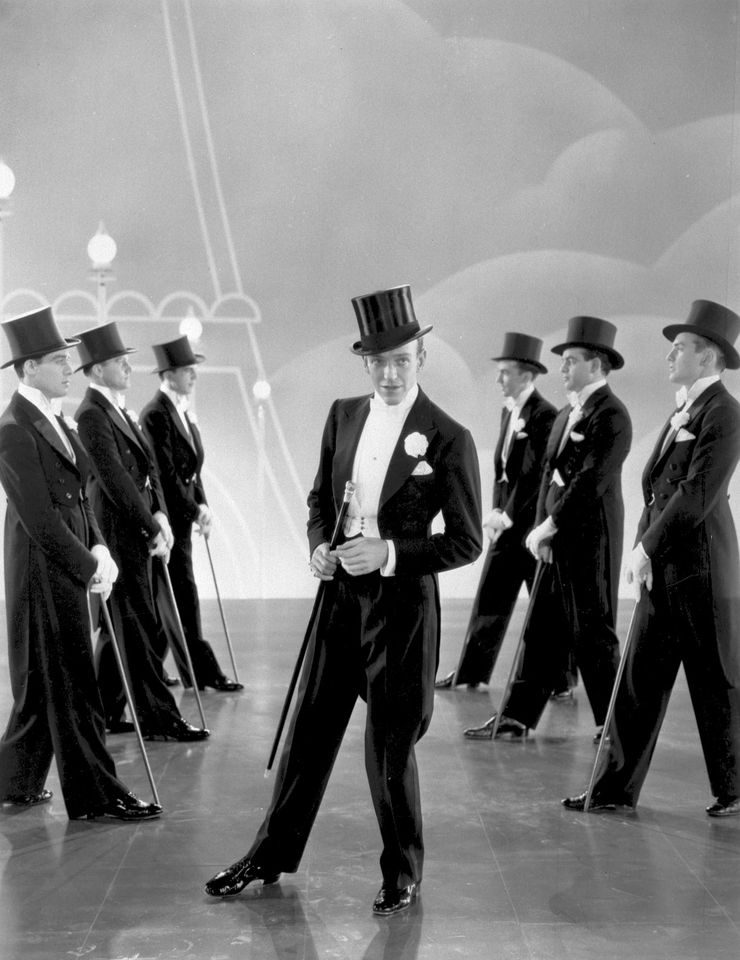
Frederick Austerlitz, known to the world as Fred Astaire, didn’t just dance. He changed how the entire industry viewed movement on screen. Born in Omaha, Nebraska, on May 10, 1899, he spent his final days in Los Angeles before passing away on June 22, 1987. But his legacy isn’t in dates or locations. It’s in the sheer weight of his influence.
His career didn’t start in a cinema. It started on a vaudeville stage. At just seven years old, he was already performing alongside his sister, Adele Austerlitz. They built a popular act from the ground up. By 1917, they had made their Broadway debut. The duo stayed on top of the stage circuit for over a decade, delivering hit after hit until Adele decided to retire in 1932. Fred went solo, and the rest is history.
The Rogers Partnership and Technical Mastery
When he transitioned to Hollywood, he didn’t just bring his steps. He brought a level of sophistication that nobody had seen before. His first major film success with Ginger Rogers came in 1933 with Flying Down to Rio. That partnership wasn’t a fluke. It became the gold standard for musicals, running steadily through 1939. Their chemistry wasn’t just romantic. It was kinetic. They made complex choreography look like it happened by accident.
Astaire’s technique was so precise that it seemed effortless. He had no formal vocal training. His singing voice was raw, unpolished. Yet, the greatest songwriters of his era admired it. They wrote for him because they understood his rhythm. He wasn’t trying to be a opera singer. He was trying to be an extension of the music.
Post-War Collaborations and Legacy
By the 1940s and 50s, he wasn’t just relying on Rogers. He partnered with other powerhouse dancers. He shared the screen with Eleanor Powell, a tap legend in her own right. He danced with Cyd Charisse, whose legs seemed to go on forever. He even performed alongside Judy Garland, blending her vocal star power with his physical precision.
He didn’t stop when the studio system crumbled. He retired from regular film work in 1971. But he didn’t disappear. He made occasional appearances on television and in select films, always maintaining that icy cool demeanor.
His combination of sophisticated, seemingly effortless grace and technical virtuosity revolutionized popular-dance performance.
Why does he still matter? Look at any modern musical. Watch how a lead actor moves. You are seeing the ghost of Astaire. He proved that dance in film wasn’t just decoration. It was storytelling. He turned steps into dialogue.
He left Omaha. He conquered Broadway. He defined the silver screen. But did he ever truly rest? The dance steps, it seems, never really stop.