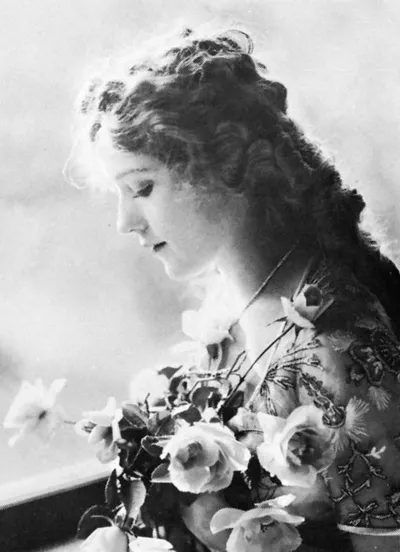
Mary Pickford was not just a face. She was a business empire wrapped in golden locks. Born Gladys Louise Smith in Toronto on April 8, 1892, she grew up with very little money. Her father died young. The family was desperate. At the age of seven, he started performing in the limited company of his hometown. It wasn’t glamour. It was about survival.
She toured at eight. In 1907 he was on Broadway.
David Belasco saw him in the movie “The Warrens of Virginia” and made the call that changed history. He told the young actress to change her name. Mary Pickford sounded cleaner. Marketable. American. She was 14 then. She knew stagecraft better than actors twice her age. And that face? Irresistible.
From silent film star to studio head
Pickford didn’t just act. He owned his destiny. It is no coincidence that he was known as “America’s Treasure”. It was a brand. A powerful one. At her peak, she was one of the richest women in the United States. Not because she was lucky. Because she was smart.
She co-founded United Artists Corporation. Why? To control her own work. Other studios ate up young talent. Pickford refused. She built her own table. That move cemented her status as a pioneer. Not just an actress. Mogul.
Why his early life matters
Her poverty shaped her hustle. Child roles were not a choice. They were a necessity. Her whole family acted. It was a unit. One team. This background gave her a grit that many stars lacked. She didn’t have a safety net. He had a script. And she knew how to rewrite it.
The Legacy of a Pioneer
Pickford died on May 29, 1979 in Santa Monica. But her shadow is long. She was one of Hollywood’s first film stars. Before the studio system crushed individuality, she had it. Before women were sidelined in Hollywood, she was the center of attention.
Her story isn’t just about fame. It’s about leverage. She used her fame to buy power. To build a company. To own her image.
How many stars these days could say they built their own studio from the ground up? Not many. Pickford did. In the silent era. When women were told to smile and stand still.
He did both. Smiled. And spoke loudly.
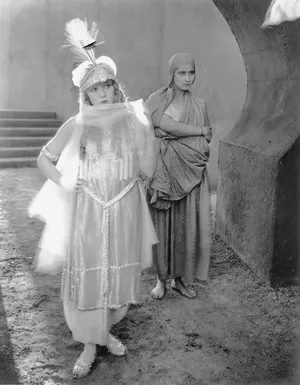
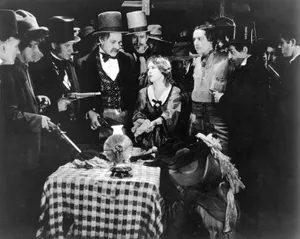
Mary Pickford’s entry into the industry wasn’t a quiet one. She started as an extra at D.W. Griffith’s Biograph Company, making her cinematic debut in the 1909 short The Violin Maker of Cremona. Back then, studios didn’t bother crediting actors’ names, but Pickford’s face was already familiar to moviegoers. By 1913, a Broadway stint in Belasco’s A Good Little Devil had cemented her stage presence, but she knew where the real money and fame were. She pivoted to the screen, joining Adolph Zukor’s Famous Players Company.
Her transition from unknown bit-part player to studio owner was shockingly fast. In 1916, Famous Players established Mary Pickford Studios specifically for her. This wasn’t just star power at work. It was a combination of her meticulous care for quality and a specific brand of innocence that audiences couldn’t get enough of.
The Image Behind the Success
Silent film relied on visual shorthand, and Pickford mastered it. She played the ringleted ingenue with a sweetness so sincere it felt invincible. Movies like Hearts Adrift (1914), The Poor Little Rich Girl (1917), Rebecca of Sunnybrook Farm (1917), Stella Maris (1918), and Johanna Enlists (1918) showcased this carefully crafted persona. Audiences everywhere were enthralled. It wasn’t just acting; it was character design.
She went by different names as her fame grew. First, the industry called her the “Biograph Girl with the Curls.” Then, as her real name became public, fans adopted “Our Mary.” But it was the 1914 release of Tess of the Storm Country that truly locked in her status as “America’s Sweetheart.” That title wasn’t given lightly. It stuck.
The Price of Stardom
Being America’s Sweetheart came with a hefty price tag. By 1917, Pickford’s leverage was undeniable. First National Films paid her $350,000 for each of three contracts. That sum was astronomical for the era. One of those films, Daddy-Long-Legs (1919), became a massive commercial success.
“Pickford’s rise was attributable not only to the phenomenal popularity of her films but also to her dedication to her craft…”
The business side of Hollywood was changing, and Pickford was leading the charge. She wasn’t just a face on the screen. She was a brand. A production company. A force.
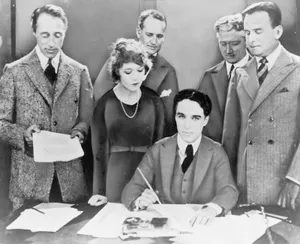
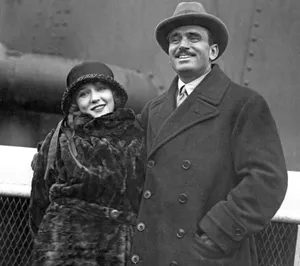
Mary Pickford didn’t just act in movies. She helped build the industry that produced them. In 1919, she stood at the center of a revolt against the studio system, and together with D.W. United Artists. Griffith, Charlie Chaplin and Douglas Fairbanks. It was a power move. Independent distribution. Creative control. She wanted it all.
Then came 1920.
Her first marriage to actor Owen Moore had collapsed. The marriage, which began in 1911, ended in divorce. When this chapter was finished, he entered directly into another. She married Douglas Fairbanks, the swashbuckling leading man and one of the original partners of United Artists. The wedding was a spectacle. The press loved it.
The union would last sixteen years. It ended in 1936.
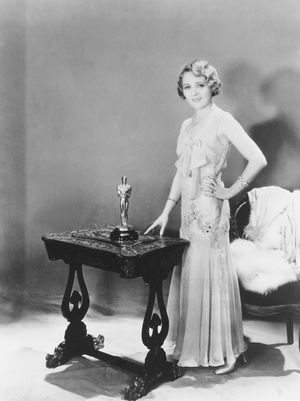
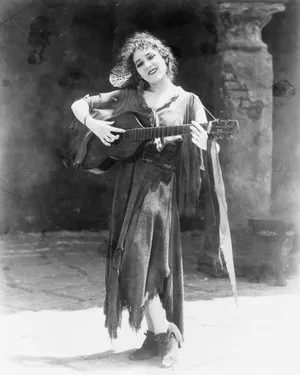
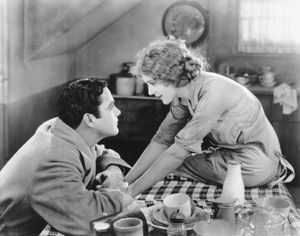
The late silent film era was a golden run for Mary Pickford. Not only did she stay relevant; she dominated. Pollyanna (1920) and Little Lord Fauntleroy (1921) cemented her status as the nation’s darling. Little Annie Rooney kept the momentum going until 1925, followed by the romantic hit My Best Girl in 1927.
Then came the talkies.
Coquette (1929) marked her debut in sound. It was a defining moment in her career for one reason: she won the Oscar for Best Actress. The industry finally gave its highest honor to the woman who helped build it. But the award felt like a parting gift.
Her popularity began to wane with the advent of sound. The transition was not smooth for everyone, and Pickford had to navigate a landscape that changed beneath his feet. She kept working, though. The Taming of the Shrew (1929) brought him together with Douglas Fairbanks, their only film together. It was a star-studded event, but the magic was fading.
Kiki (1931) was her next venture. By now, the image of the young girl next door was outdated. Audiences were moving on. The applause continued, but the excitement was gone.
She remained a legend. But the box office grip? That loosened. The end of an era did not come with a bang. There was a whisper and then silence.
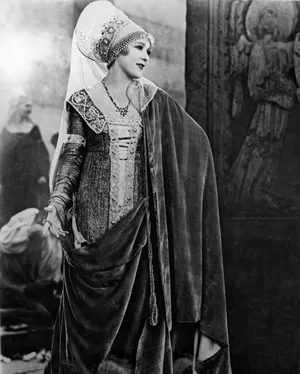
The End of the Silver Screen
The curtain fell on Mary Pickford’s acting career in 1933. It wasn’t a fade-out. It was a hard stop. After appearing in Secrets, which turned out to be her 194th film, she simply walked away from the camera. No goodbye tour. No final bow on a bustling Hollywood set. Just silence.
But walking away from acting didn’t mean walking away from the industry. If anything, it meant moving into the shadows where the real power lay. She threw herself into United Artists, the studio she had helped build with the heavy hitters of early cinema. By 1935, she was serving as first vice president. She wasn’t just a figurehead, either. She produced several films, shaping the business from behind the scenes while trying to stay relevant in a changing world.
She kept her hand in the creative process, too. Pickford wrote the novels Why Not Try God? (1934), The Demi-Widow (1935), and My Rendezvous with Life (1935). You could hear her voice in the 1930s radio waves as well, broadcasting her presence into living rooms that didn’t have movie projectors. Then came 1937. She married Charles “Buddy” Rogers, an actor who would become her last great love.
Life Behind the Gates
The glamour of the early 20th century gave way to something more private. Her later years were defined by business deals, civic duties, and charitable work. But the public eye was hard to escape, even when you tried to hide.
Eventually, the noise of Hollywood became too much. Pickford retreated to Pickfair. The estate she had built with Douglas Fairbanks was lavish, sprawling, and suffocatingly perfect. It became her fortress. She turned into a recluse there, guarding her privacy with a ferocity that surprised those who remembered the “Girl with the Curls.”
The world waited. Finally, in 1955, she broke her silence with Sunshine and Shadow, her autobiography. It wasn’t just a memoir; it was a defense, a history, and a reckoning.
The industry hadn’t forgotten her, though. In 1976, the Academy of Motion Picture Arts and Sciences gave her an honorary Oscar. It was a tribute to her contributions to film, recognizing the woman who had essentially invented stardom. But Pickford didn’t go to a grand hotel ballroom. She didn’t step onto a stage under blinding lights. She accepted the award at Pickfair. In the house she had built, surrounded by the ghosts of her past, she took the statue that confirmed what she had always known.
She was the first female president of the Academy. She was a mogul. She was a myth. And then, she was just Mary, watching the sun go down over Bel Air, wondering if any of it was enough. It probably wasn’t. But it was all she had.