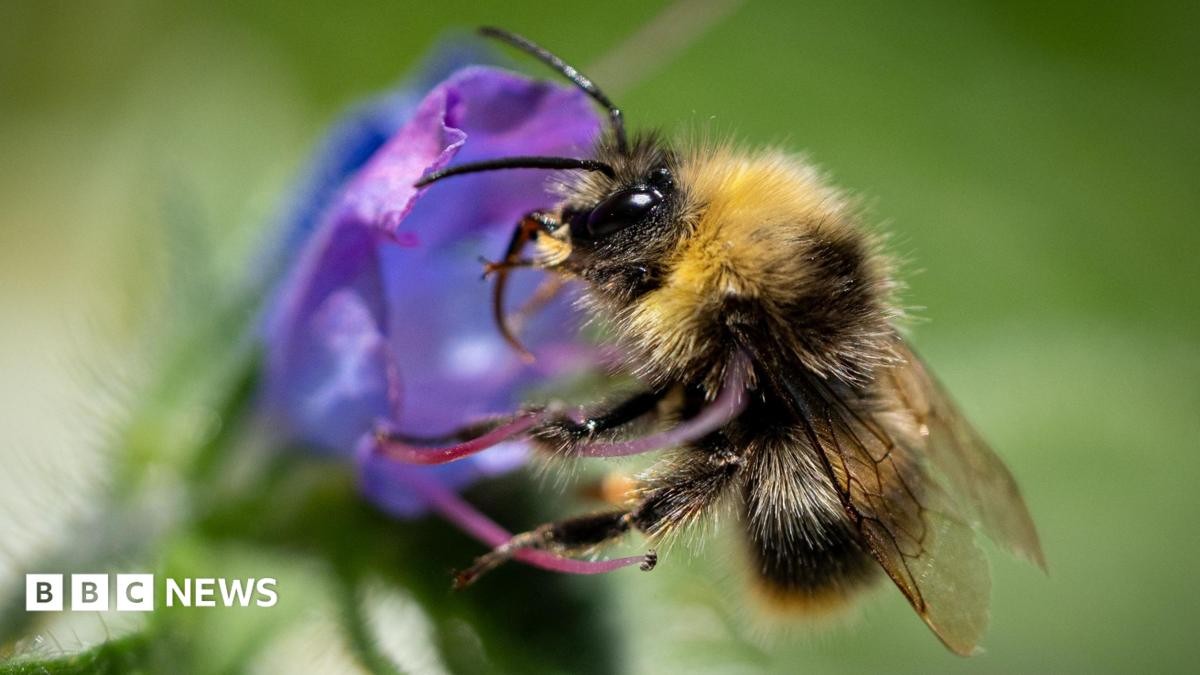
They are keeling over.
That’s the stark image coming from the latest analysis on UK bumblebee populations. As heatwaves become more frequent, these fuzzy pollinators are struggling to survive.
The data comes from the Bumblebee Conservation Trust’s national monitoring scheme. It paints a grim picture for Britain’s summer icons. The findings show sharp declines following the record-breaking heat of 2020, though the impact lingers.
Britain just emerged from a third heatwave in three months. Temperatures hovered in that dangerous zone where bees cannot fly without risking fatal overheating.
But why does heat kill them?
It’s not just bad luck. It’s biology.
UK species evolved for a cooler climate. Their fat, furry bodies are designed to trap heat. Their powerful flight muscles generate warmth as they work. It’s a perfect system for a drizzly British afternoon.
In a heatwave? It’s a trap.
Dr Richard Comont, the Trust’s science manager, explains the mechanics simply.
“They actually cook themselves from the inside out.”
When air temperatures hit 28C to 32°C, things get precarious. Bees keep flying, burning muscle energy, generating internal heat. If they can’t escape that heat, their core temperature spikes.
Once internal temperatures pass 40°C, they die.
Literally. They drop out of the air.
The 2022 crash
The numbers tell the story.
In 2022, the UK saw three official summer heatwaves. Temperatures hit 40.3°C. Population numbers plummeted.
Three of the most common species took the hardest hits:
- Common carder bees: Down 35%.
- Buff-tailed bees: Down 25%.
- Red-tailed bees: Down 20%.
These weren’t just one-off drops. The colonies struggled to recover. BeeWalk data showed queen numbers remained below average well into the spring of 2023.
Is every warm year a disaster? No.
Previous warm summers were fine for some species, especially those with southern ranges. The problem is the intensity. Extreme heat paired with drought is lethal.
The double threat of heat and hunger
Overheating is half the problem.
The other half is starvation.
Colonies rely on workers bringing in steady supplies of nectar and pollen. When flowering plants dry up due to lack of rain, food disappears.
Foraging is a math equation for bumblebees. They need to “make a profit.”
Dr Paul Williams at the Natural History Museum notes this energy calculation. If a bee wastes energy searching dry flowers for nectar that isn’t there, the colony loses.
If food is scarce:
* Larvae develop slowly.
* Colonies grow weak.
* Fewer new queens are produced for the next year.
This isn’t a local issue. It’s linked to global temperature rises driven by climate change. The UK is on track for more frequent, intense heat events.
How to help bumblebees in a warming UK
Conservationists argue for immediate action. The goal? Create flower-rich habitats.
You don’t need acres of land. A pot of native wildflowers works.
Dr Sarah Beynon manages a wildlife-focused farm in west Wales. She transformed her land from a “wildlife desert” into a nature reserve in just ten years. She planted meadows, willows, and late-flowering crops.
But her advice for regular folks is simpler.
“Your flowerpot is a service station,” she says.
It’s a refueling stop for insects moving through human-dominated landscapes.
Dr Comont suggests adding a pond, however small. Shade matters too.
Why?
Bumblebees don’t carry water like honeybees. They get most of their hydration from nectar. Plants near water produce nectar with higher moisture content.
“Flowers growing near water tend to produce nether with more moisture in it,” Comont notes. This helps colonies stay resilient when it gets hot.
Dense shrubs offer shade. They provide cooler pockets of air for bees to move through.
We are reshaping the climate. The bees are paying the price. But a window of action remains.
One pot. One patch of shade. It helps.