Jerry Seinfeld has been quiet. For nearly a decade after his sitcom ended, the comedian stayed away from Hollywood’s glare. He did talk shows. He did stand-up. But he mostly kept his head down.
Then came 2007.
On November 2 of that year, Bee Movie hit theaters. It was different. This was Seinfeld’s first animated feature. It used computer animation to bring his specific brand of idiosyncratic humor to life. The movie wasn’t just a side project. It was a four-year labor of love.
The result? A film where Seinfeld wore three hats. He wrote it. He produced it. He starred in it.
He didn’t do it alone. Directors Simon J. Smith and Steve Hickner guided the animation. A massive cast lent their voices. Renée Zellweger played the florist. Matthew Broderick was the best friend. Chris Rock showed up as a mosquito. John Goodman played a smug lawyer. Sting sang. Oprah appeared. Ray Liotta was there too.
Hundreds of artists and animators turned these ideas into pixels.
The Origin Story: A Phone Call to DreamWorks
Everything started with a casual comment over dinner.
Seinfeld was eating with Steven Spielberg. The idea came out of nowhere.
“Wouldn’t it be funny if they made a movie about bees and called it ‘Bee Movie’?” Seinfeld asked.
Spielberg liked it. He didn’t just nod. He pulled out his phone. He called Jeffrey Katzenberg at DreamWorks on the spot.
The deal was struck.
But there was a problem.
Seinfeld had the title. He did not have the movie.
“There were many versions,” Seinfeld said later. “Probably two and a half years of different ideas and stories until we had one that we felt would work.”
He went through iterations. The final script was number 212.
The story settled on Barry B. Benson. He was an independent-minded bee. He left the hive. He met a florist. He discovered humans were stealing honey. His reaction wasn’t to swarm. It was to sue.
He took his case to court. He faced off against lawyer Layton T. Montgomery.
Casting and Recording
The casting choices were personal.
Seinfeld called his friends.
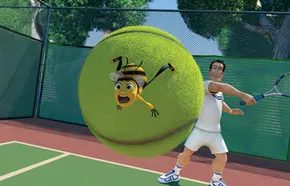
Chris Rock became a mosquito Barry meets on a windshield.
Matthew Broderick voiced Adam, Barry’s best friend.
Patrick Warburton returned as a variation of Puddy from Seinfeld. Seinfeld called this version “a little more aggressive and a little dumber.”
The production process broke standard animation rules.
Most voice actors record alone. They record their lines in isolation. The editor stitches them together later.
Seinfeld recorded with his co-stars.
He wanted interaction. He wanted real-time reaction.
“As the writer, I know what we’re going for, and it makes things easier,” he said.
But the medium fought him.
Coming from live-action TV and stand-up, animation was slow.
“The pace of it is very difficult,” Seinfeld admitted.
In animation, you suggest a change. You wait weeks. You see if it works.
“You have to remember what you said, and sometimes you forget,” he said.
“That happened a lot.”
Research and Reality
Seinfeld needed facts.
He visited a beekeeper.
He got stung.
The pain was worth it. He learned about flight patterns. He learned about social hierarchy.
The entire production team did field research.
They went to apiaries. They studied hundreds of photos. They spoke to experts.
They learned harsh truths.
If bees didn’t pollinate, nature would collapse. Humanity would fall within four years.
It takes 17 bees to make one teaspoon of honey.
The facts hit hard.
Director Smith felt guilty.
“We felt bad for those guys,” he said.
He stopped eating honey.
The knowledge changed the film. It added weight to the comedy. The stakes were real.
Next, we look at the directors. We look at the production process. We see how the vision took shape on screen.
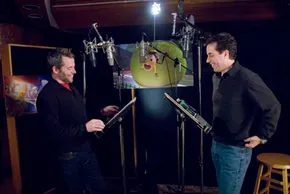

The collaboration between directors Simon J. Smith and Steve Hickner with Jerry Seinfeld didn’t start with a handshake. It started in July 2004, right after the pair wrapped up work on the Universal Studios attraction “Shrek 4-D.” They hit it off immediately. Smith notes that Seinfeld wasn’t precious about the origins of ideas. They had great banter. But there was a high standard he demanded.
That standard accelerated everything. Because Seinfeld was writing, producing, and starring in the project, development moved at breakneck speed. What usually takes six weeks to rewrite happened in an afternoon.
The Voice of the Hive
Having Seinfeld on set—or rather, on the phone—proved invaluable. He often telecommuted from New York. His presence in the recording studio raised the bar. Other actors brought their A-game when they felt their lead was bringing his. They bounced off each other. The performances mirrored what you’d get on a live-action set.
The first six months were a learning curve for Jerry. He had to find the rhythm. Then he could just turn Barry on at the flick of a switch. That shift made everyone go up a level.
Barry’s appearance evolved organically. Smith’s team shot reference footage during voice recordings. Slowly, Jerry started looking like Barry. It wasn’t forced. As Seinfeld got into the character, he became him. Animators then coalesced that performance with the image.
Designing the Middle Ground
Barry is dressed in black and yellow. He is neither completely realistic nor entirely stylized. The goal was a middle ground. It took more than 800 designs to finalize his look.
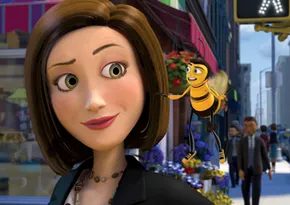
Other characters posed different problems. Renée Zellweger’s character, Vanessa, is a florist. Female faces and forms are difficult to reproduce in animation. But placing a tiny bee and a human in the same universe was the trickiest part of all.
Choreographing those scenes was a massive challenge. You want intimacy. You want a relationship to flourish. You can’t have a two-shot. You have to establish the dynamic without using weird camera angles. It’s a tightrope walk.
Balancing Two Worlds
Scale issues plagued the environment design. There are two full worlds: the human world and the hive world. Each needed enough detail to balance the other. Merging those worlds when bees venture outside multiplied the difficulty.
The bees fly through human space at 200 miles per hour. They are so close to the camera lens. Getting the compositions right required constant adjustment.
Consider one specific shot. You see the whole reverse of Central Park. Bees fly through kites. That single sequence took nine months to complete. The complexity of layering insect-scale physics with urban geometry is staggering.
The Trailer Park
Seinfeld created several live-action promotional trailers for “Bee Movie.” They illustrated via comic mishaps why the story worked better as animation. He asked a simple question. “What if you were so dumb that you tried to make it for real?”
“How bad would that be?”
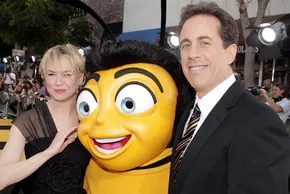
The result was a funny story about how they ended up making a cartoon. Seinfeld looks ridiculous in a giant bee costume. Chris Rock shows up as a huge mosquito. They endure water torture together on a giant windshield. It’s chaos.
Seinfeld says he owes Rock big-time for the favor. He doesn’t know how he’s going to pay him back. The line between reality and animation blurred intentionally. It highlighted the absurdity of trying to film a bee’s life in live-action.

The Physics of Flying Insects
The sheer volume of characters in a single shot was a nightmare to manage. Supervising animator Marek Kochout didn’t sugarcoat it. He had to track every single bee and group them logically. That grouping allowed the team to control pitch, roll, and individual movement paths. But there was a physical problem. In a 3-D world, objects don’t have inherent boundaries. Move something fast enough, and it passes right through another object. If the wings were modeled too large, they would clip through the bees’ backs. So they double-checked everything. Constantly. Ensuring bees didn’t phase through one another became a tedious, essential task.
It gets worse when characters interact with physical objects. Touching. Picking things up. These moments are tricky because digital characters occupy no real space. They can overlap and pass through each other freely. The solution was layering. It was a process of constant verification. You build it up, then you check, then you check again.
Scaling the Perspective
Simon J. Smith and Kochout both wrestled with scale. Some shots framed a tiny bee looking over the shoulder of a human. Any movement the human made was magnified by that perspective. It was a visual trap. If foreground elements were small, you couldn’t use broad movements. It would look disjointed. The team had to position characters in specific spaces to maintain visual appeal. They relied on composition, not physics. Physics would have placed things awkwardly. Composition kept it beautiful.
Face Values
Facial animation is slow. There is simply too much information in a face. You can’t rush it. Kochout’s team used stripped-down versions of the characters to block out ideas quickly. They saved the full-featured rigs for later in the pipeline. This saved time. It kept the workflow moving.
But the faces needed soul. Designs for Barry and the supporting cast were locked in by February 2006. Personality was the missing piece. Jerry Seinfeld provided that. He used his hands a lot. Barry got that mannerism. Seinfeld had great ideas. He gave sharp notes on what the characters were thinking. It made the animators’ jobs easier. He thought through the jokes.
It wasn’t always smooth sailing. Sometimes it was painful. You’d be nearly finished with an animation sequence. Seinfeld would say that wasn’t funny. He’d have a better idea. It happened a few times. It always made the movie better, though. You just had to swallow the ego and redo the work.
Not Your Average Hive
They observed bees for research. Kochout and his team watched them. But they were told to take liberties. Real bees hover. They jitter. Seinfeld and the directors didn’t want that. They wanted smooth. They wanted airplane-like banking and rolling. The bees in the film were stylized. They defied the chaotic energy of the real world.
Why Real Bees Are Different
How else do the “Bee Movie” bees differ from the real thing? It starts with biology. Real male bees don’t have stingers. They don’t make honey. A stinger is a modified ovipositor. It is for laying eggs. Only females have it. Females gather the pollen. Females handle honey production.
Male honeybees die after mating. So that heart-to-heart between Barry and his dad? Impossible. That plot point relies on a male bee surviving past reproduction. It can’t happen. Also, real bees don’t talk. You probably knew that part. But the rest? It’s just Hollywood biology.
Inside the Bee Movie Animation Pipeline
It sounds like a massive logistical puzzle, and Marek Kochout knows it all too well. As the supervising animator for Bee Movie, he was juggling a crew of forty. At any given moment, seven to ten of them were deep in a single sequence, but the whole machine had to move in sync.
The process starts with a design. Once approved, that sketch jumps to the modeling department. They build the 3-D model. It’s not a one-and-done deal. The model goes through more changes. Then comes rigging. Think of it as putting a digital skeleton and muscles inside the plastic shell. The rigging team decides how the thing moves. They test it. Again and again.
While the characters are being built, the rest of the crew is mapping the chaos. Storyboards get timed out. The layout department figures out camera angles and shot placement. Then the animators block out the action. They get feedback from directors. They shoot the sequence.
Lighting and effects wrap it up. They finalize colors. They add smoke. Explosions happen here. When everyone is satisfied, editors snip frames. They stitch the sequence together. The composer adds music last. It’s a linear assembly line of creativity.
Technology helped, sure. Kochout, who also worked on Over the Hedge, Shrek 2, and Madagascar, noted that Bee Movie benefited from recent hardware and software leaps. We’re talking dual-processor computers. Bigger displays. Smarter software. It all just ran quicker.
From Bugs to Babies
Jerry Seinfeld didn’t come into Bee Movie with a grand ecological agenda. He just wanted to make a funny movie. He wanted to put his personal stamp on computer-generated animation. Now that it’s done, the father of three sees it differently.
He’s excited about it as a gift to children. Specifically his own. But the neurotic comedian in him can’t turn off. He has one major worry.
“I hope they don’t go up to bees after this. What I’m worried about is a lot of kids seeing bees after the movie and trying to go pet them.”
Before this project, Seinfeld admitted he didn’t think much about bees. Now? His opinion changed enormously. He has much more respect for them now. Just maybe don’t let the kids touch the stingers.
Back to the Mic
After pouring so much time and energy into Bee Movie, Seinfeld is in no rush for another animated feature. It was a massive investment. He likes trying new things, and that curiosity brought him to animation in the first place.
But he’s not staying here. He’ll probably try something different next. Something outside the box. But he’s clear on what his actual job is.
“My real job is telling jokes in front of an audience.”
These other ventures are great experiences. They aren’t his real profession. Starting early next year, he’s getting back to his roots. More stand-up. More crowds. More jokes. The bees can wait.