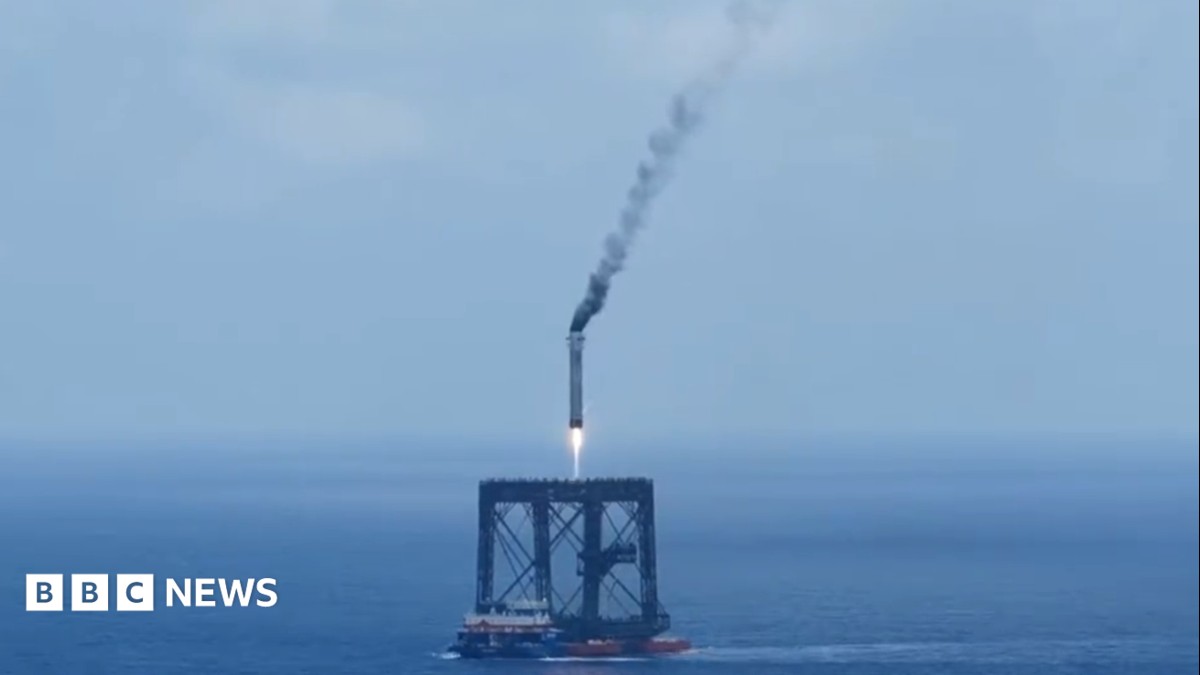
History changed on a floating platform in the South China Sea.
State media reports it was successful. The first time. For real. The Long March 10B lifted off from Hainan on Friday at 12:15 local time, just past midnight in London. Six minutes later the booster detached, fell back to Earth vertically, and got caught.
Not crashed. Caught.
This is huge for Beijing’s ambitions. They want to challenge the US. Elon Musk’s SpaceX and Jeff Bezos’ Blue Origin have dominated the reusable market. But now? Maybe not exclusively.
The era of disposable rockets is fading fast.
Think about it. Traditional rockets are trash after one flight. They break apart, burn up, sink. It’s wasteful and brutally expensive. Reusing the booster—the expensive bit—slashes the price of getting stuff to space. Satellites? Cheaper. Exploration? More accessible.
SpaceX did this in December 2015 with Falcon 9. Blue Origin followed with New Glenn last November. Falcon 9 launches roughly 150 times a year now, with boosters re-flying dozens of times. China has been trying. Their Febuary attempt with the 10A model resulted in a controlled splashdown near a platform. Good progress, but not a landing.
The 10B is different.
It can haul at least 16 metric tonnes to low-Earth orbit. That puts it right up against the Falcon 9 in terms of lift capacity. But the recovery method is distinct. The Chinese rocket doesn’t land autonomously on concrete or a ship deck.
No touch-down. Instead, “landing hooks” on the rocket snag a net on the floating platform.
It works. The market reacted immediately. Shares in Chinese space stocks like China Spacesat and China Satellite Communication jumped 10%, hitting the daily cap allowed by regulators.
A net, some hooks, and a very expensive rocket now sitting in the water.
It’s an awkward dance compared to the graceful pinpoint landings of US counterparts, but awkwardly effective. Who cares if it lands on its belly or hangs from a rig? The payload goes up, the rocket comes down intact.
The space race just got cheaper. And messier.