It’s too stiff. Not weak. Too stiff.
That’s the puzzle. Half of all heart failure cases come from a condition where the pump works fine but the muscle refuses to relax. They call it HFpEF. Over 3 million Americans walk around with this broken mechanism in their chest.
We still don’t really know why it happens.
That ignorance makes treatment a guesswork game. Scientists just patched the symptoms—high blood pressure, diabetes, fluid buildup. Now they have a new toy to figure it out.
A Silicone Shadow
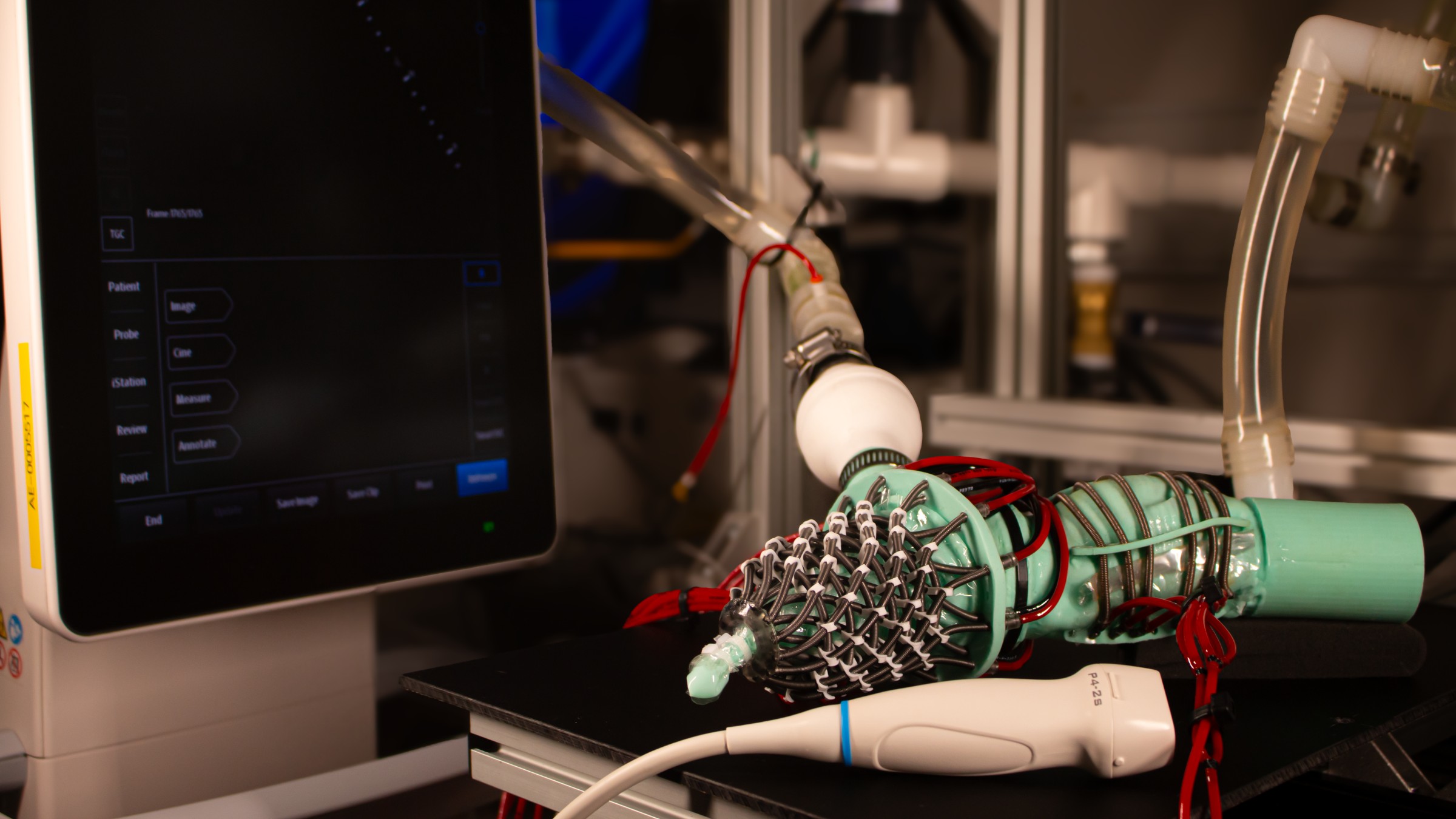
Described June 1 in Nature Communications, a team unveiled the first soft robotic heart that can actually feel its own pressure.
Traditional models? They’re rigid tubes. Mock circulation loops. They show flow but look nothing like a beating organ. Animal studies? Expensive. Ethical minefields. And frankly, mice hearts aren’t human hearts.
Thanh Nho Do from the University of New South Wales knows the drill. “HFpEF has been notoriously difficult to_study,” he wrote.
This new device is different. It’s a silicone replica of the human left ventricle. Wrapped in it are artificial muscle fibers. Rubber tubes with spring coils inside.
When fluid moves through them, the fibers feel the squeeze.
It tightens. It relaxes. It reacts to pressure.
The heart adjusts its own stiffness on the fly. If you want to simulate early disease? It’s slightly uncooperative. Late-stage disease? Rock hard. It can’t fill properly.
Dialing Up the Stiffness
Why does this matter?
Previous robots just followed commands. Beep, contract. Beep, relax. They didn’t care what was happening inside. This one does.
In HFpEF, the enemy isn’t weakness. It’s rigidity. The muscle won’t give way during the refill phase between beats. The new model mimics this specific failure.
The researchers didn’t just build a broken heart. They built the journey to the broken heart.
Early stages show impaired relaxation. Advanced stages show total stiffness. By watching the progression, we might actually stop it before it kills someone.
“If we can model its progression pathway,” Nho Do says, “we might be able to develop medical devices that interrupt that trajecto”
Interrupt the trajectory.
Not just manage the end stage. Stop the slide.
Still Just the Start
Let’s get one thing straight. This isn’t a cure. It’s an early proof of concept.
Current treatments rely heavily on SGLT2 inhibitors. They drain the fluid. They lower hospital visits. Good stuff. But they don’t fix the muscle itself.
There are few drugs that actually target the stiffness. None, really.
The researchers want to use this robot alongside computer sims, animal data, and clinical tests. Layer the evidence. Build a clearer picture.
The goal is simple.
Understand the mechanism. Improve the devices. Fix the heart.
We have the robot now.
What happens next?
Probably more data. Then more models. Maybe a better drug.
Or maybe just a deeper understanding of why our hearts get stiff as we age.