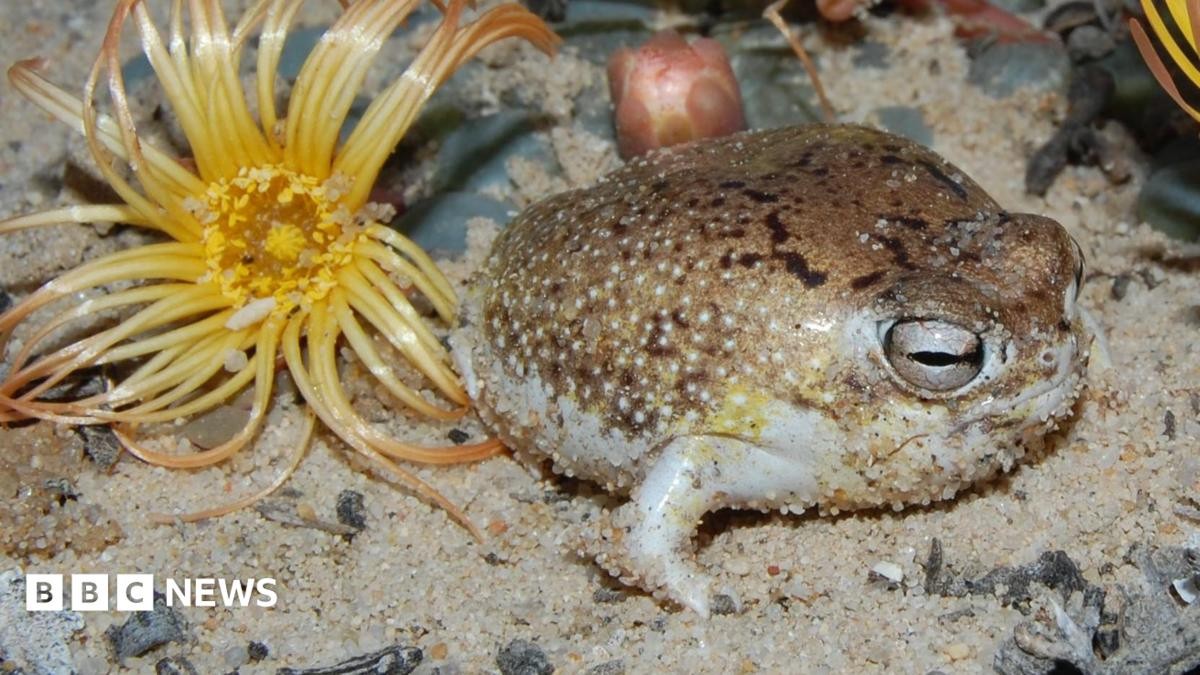
It made the internet laugh. Now it might vanish.
The desert rain frog recently joined the global registry of species facing imminent extinction. You know the one. It hides in narrow strips of sand dunes in Southern Africa, burying itself to survive, popping up only to breathe. Its defense mechanism is a high-pitched squeak, the sound that spawned a viral meme empire.
Cute kills. Or at least, it accelerates the timeline.
Conservationists predict a 20% drop in their numbers over the next twenty years. The primary culprit? Diamond mining. Energy projects are circling the dunes.
“Frogs that are so unique looking… can become victims of their own fame.” — Benjamin Tapley
He works at the Zoological Society of London, but the observation feels universal. Cuteness demands attention. Attention brings collectors. Pet traders want what is rare, and they see the squeak as a commodity, not a cry for help.
The frog cannot move. Its range is a ten-kilometer band of sand. No retreat to the north or south. If the habitat transforms, there is simply nowhere to go.
Alex Lawrence with Anura Africa insists hope isn’t dead yet. Mining will happen. The key is rehabilitation. Restore the dunes, maybe the frog returns.
They are extremely rare, he admits, extremely cute. But rarity is a double-edged sword.
Extremes invite exploitation.
The International Union for Conservation of Nature tracks this pattern. Species clinging to extreme niches—hot, cold, dry—are the first to feel the pressure. They lack the genetic flexibility of generalists.
This extends below the surface, literally. A tiny snail living near superheated deep-sea vents is now labeled Critically Endangered. These deep-ocean creatures, limpets and clams, face a different kind of hunger.
Deep-sea mining.
Companies want minerals for batteries. Governments want the green tech transition to proceed smoothly. Proponents argue pulling resources from the ocean floor is cleaner than digging into continents.
Scientists disagree. They warn of fragile, misunderstood ecosystems being pulverized. The consensus? Pause. Study. Then maybe dig. Rules are being written right now. What they say matters more than you think.
Even the British countryside is losing battles.
It is not just tropical or aquatic losses. Wilmott’s whitebeam, a tree restricted to the Avon Gorge near Bristol, has fewer than 50 wild specimens left. Railway expansion tore at its habitat. An unknown disease finished the job.
Emily Beech, a plant conservationist, points out the tragedy of the unnoticed. These treasures hide in plain sight, ignored until they are gone.
We curate the cute, mine the extreme, and overlook the ordinary. Which combination seals the deal?
Nobody knows yet. But the frog keeps squeaking, regardless of whether we listen. 🐸