Angiosperms didn’t need a dinosaur apocalypse to get big. They were already at it.
For decades, paleobotanists have sold a convenient narrative. Go back to the Late Cretaceous. See those small weedy plants? Yeah. Those were the flowering ones. Big seeds, fruit, all that nutritional baggage came after the asteroid slammed into Earth 66 million years ago. After the dinosaurs dropped. The void was empty so the plants moved in. Simple story. Clean timeline.
Jaemin Lee thinks that story is wrong.
Lee, a doctoral student at UC Berkeley, dug through fossils from New Mexico. Specifically the Jose Creek Formation. Dori’s tuff layer. Ash. Thick, suffocating, volcanic ash.
The date stamp? 75 million years years ago.
Nine million years before the big impact.
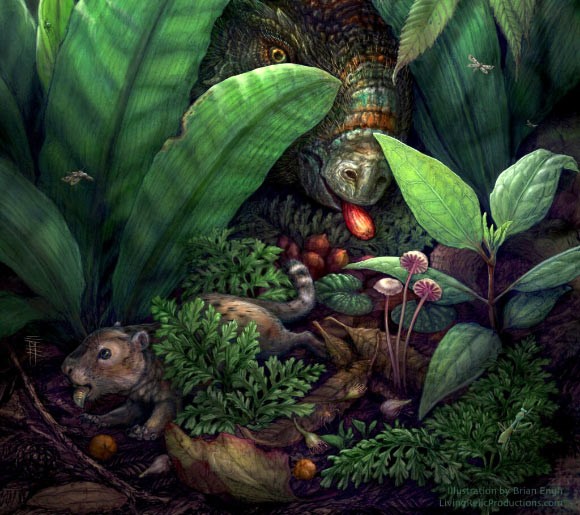
The forest was dense. Hot. Humid. And absolutely packed with flowering trees. Laurel relatives. Palms. Redwoods hung around too, along with ferns, but the angiosperms were no longer playing supporting cast.
“Our results show that, at least in… Late Cretaceous environments… well before the extinction boundary… angiosperms were already investing resources.”
Check the diaspores. The dispersal units. Seeds. Fruit. Whatever you call them. In other Cretaceous sites you find things the size of poppy seeds. Tiny. Wind-blown. Insignificant.
In Jose Creek? Large blueberries.
The volume increased over a hundred times. Not gradual. Not later. Here. Now. Seven-ten-five.
Wild watermelons back then? Maybe two inches wide. But that is still a start. Selective breeding is what turned that into the fruit you buy today. Evolution took its foot off the brake early.
The evidence is preserved because of disaster. Ash falls fast. Days. It buries everything. Leaves on the ground. Branches in the air. Canopy debris dropped instantly to the forest floor. No time to drift in rivers or rot in lakes. It is a snapshot.
Professor Cindy Looy calls it botanical Pompeii.
Usually fossils are a mashup. Debris washed downstream. Mixed eras. Mixed habitats. This? Just this. One moment. High fidelity. You can reconstruct the actual landscape. Who stood where. What grew under what.
It exposes ecological interactions we’ve lost. Plants that no longer exist interacting in ways we cannot guess from fragmented shale.
So much for the survival of the fittest relying on an empty niche. They crowded it anyway. They built the forest while the lizards still walked.
Did we just assume the easy explanation?
Maybe. Or maybe the asteroid was just an epilogue. The plot was written before it arrived.