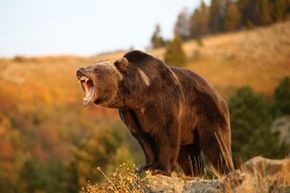
The answer depends on whether you are looking at a textbook or a legal document. It also depends on how you define a species. Researchers have long considered brown bears and grizzly bears to be separate entities. Currently, they are both classified under the same scientific name Ursus arctos. There is no global agreement on the classification of subspecies. An estimated 200,000 brown bears live in North America and Russia. A quick search revealed that the Mexican grizzly survives because it is a subspecies of the same species.
That quick search is misleading.
Judgment of the International Union for Conservation of Nature
The International Union for Conservation of Nature (IUCN) is the authority responsible for conservation. They classify animals as endangered, threatened or clearly safe. In 1982, the International Union for Conservation of Nature published a book stating that the Mexican grizzly bear was extinct. They classify the Mexican grizzly bear as a subspecies of the brown bear. Yet they listed the subspecies as extinct.
This creates a confusing picture. The species exists. The subspecies does not.
Rancher’s campaign
The story of the grizzly bear in Mexico has nothing to do with natural decline. It’s about human intervention. These bears live in the southwestern United States and parts of Mexico. They are small compared to those in the northern parts of Canada and the United States.
In the early 1960s, a Mexican rancher launched a campaign to kill them. He accused the bear of slaughtering cattle. Bears ate plants and insects. They rarely targeted small mammals. The rancher’s efforts have paid off. The Mexican grizzly was probably extinct by 1964.
Extirpation vs. Extinction
Ecologists have a special term for this condition. They believe the Mexican grizzly bear is extirpated. This means that the bears are locally extinct. This species thrives in North America, Europe and Asia. Certain populations in Mexico and the southwestern United States have disappeared.
So are Mexican Grizzly Bears really extinct? It is presumed to be so. The subspecies has disappeared. The broader species remains.
“Ecologists believe that the grizzly bear in Mexico is extirpated, which means it is locally extinct.”
Why Classification Matters
No consensus was reached on the subspecies, which makes tracking these animals difficult. If you count you count Ursus arctos. If you include the population of the Mexican subspecies, it is dead. IUCN treats them separately for conservation purposes. The rancher’s campaign was successful. These bears are gone from of their historic habitat.
The big picture
This incident highlighted the shortcomings in wildlife tracking. Too often we protect species and ignore subspecies. Mexican grizzlies are small. They do not threaten livestock. It was removed by the efforts of one man. It was declared extinct by the International Union for Conservation of Nature (IUCN) in 1982. That is decades after the likely demise.
We rely on definitions to understand loss. The definition has changed. Not so with bears. The Mexican grizzly bear is missing. Brown bears still exist. This distinction is important for policy. This is important for history. It matters for the land they once roamed.
This question is not just about biology. It’s about what we choose to protect. and what we choose to ignore