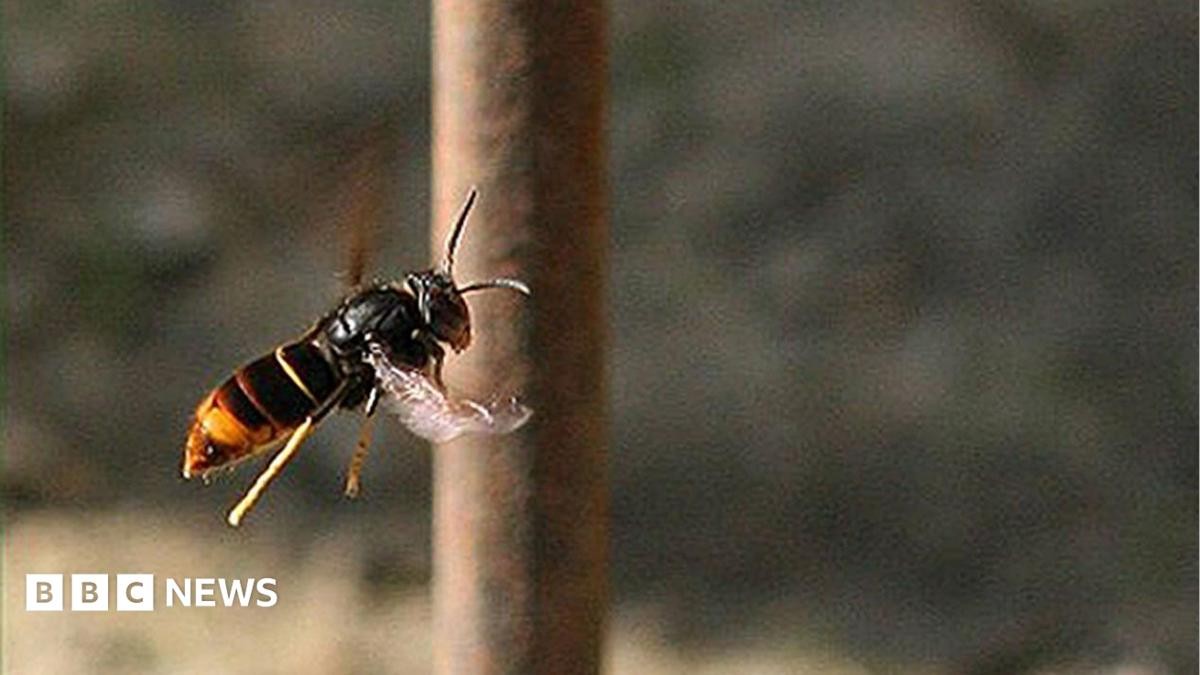
The rule is simple but counterintuitive for islanders. When you spot a large, orange-faceted bee buzzing near your window, don’t swat it. Don’t trample it. Track it.
Guernsey has launched a specific campaign to curb the Asian hornet invasion. The goal isn’t just to kill them. It’s to find where they are living so the primary nests can be destroyed. This is how you protect local biodiversity and keep honeybee populations from collapsing.
It makes sense when you look at the numbers. Honeybees make up roughly 39% of the island’s natural diet for native species. Without them, the ecosystem takes a hit. The Asian hornet (Vespa velutina ) sees those bees as a buffet. And the hornets are efficient hunters.
Why ‘Tracking’ Beats Killing
Killing a single worker hornet does little for the colony. The real damage is done at the source.
The States of Guernsey’s strategy is precise: “Track, don’t trample.” Residents are asked to photograph the insect. Note its direction. Submit the data. This allows authorities to trace the worker bee back to its nest. Once they know the location, teams can remove the nest safely.
Annelotte Baas-Jehan coordinates the Invasive Non-Native Species policy. She notes that volunteers are the backbone of this effort.
“Their work is incredibly important,” Baas-Jehan said. “With this information we can track hornets to their nests and ensure they are treated and removed safely.”
Simple observation yields high-value intelligence. A photo isn’t just a bug check-in. It’s a coordinate.
A History of Arrival
These hornets didn’t arrive by accident in a vacuum. They hitched a ride in a shipment of pottery from Asia into southern France back in 2004. From there, they spread through Europe. They reached Guernsey for the first time in 2017.
Since then, the threat has escalated. These invasive species pose a major risk to island ecology. The strategy aims to keep overall numbers low by targeting the queens and primary nests before colonies explode in size.
Results So Far
Is this working? The data suggests yes.
This year alone, residents and officials have caught 205 Asian hornet queens. Nine primary nests have been destroyed across Guernsey and the neighboring island of Herm.
That’s 205 potential future hives stopped before they could launch. Each queen represents thousands of workers if left unchecked.
Where to Look and What to Do
The hornets are sneaky. They prefer tall trees. They also hide in hedges. Brambles and even buildings are fair game.
But they are most dangerous in late summer. Nests can expand rapidly during August and September. A single nest can hold up to 2,000 aggressive hornets.
This is when residents need to be careful. If you plan to trim hedges or clear vegetation, check for signs of activity first. Do you hear buzzing? See orange flashes? Stop.
The States are explicit on one point: Do not attempt to remove nests yourself.