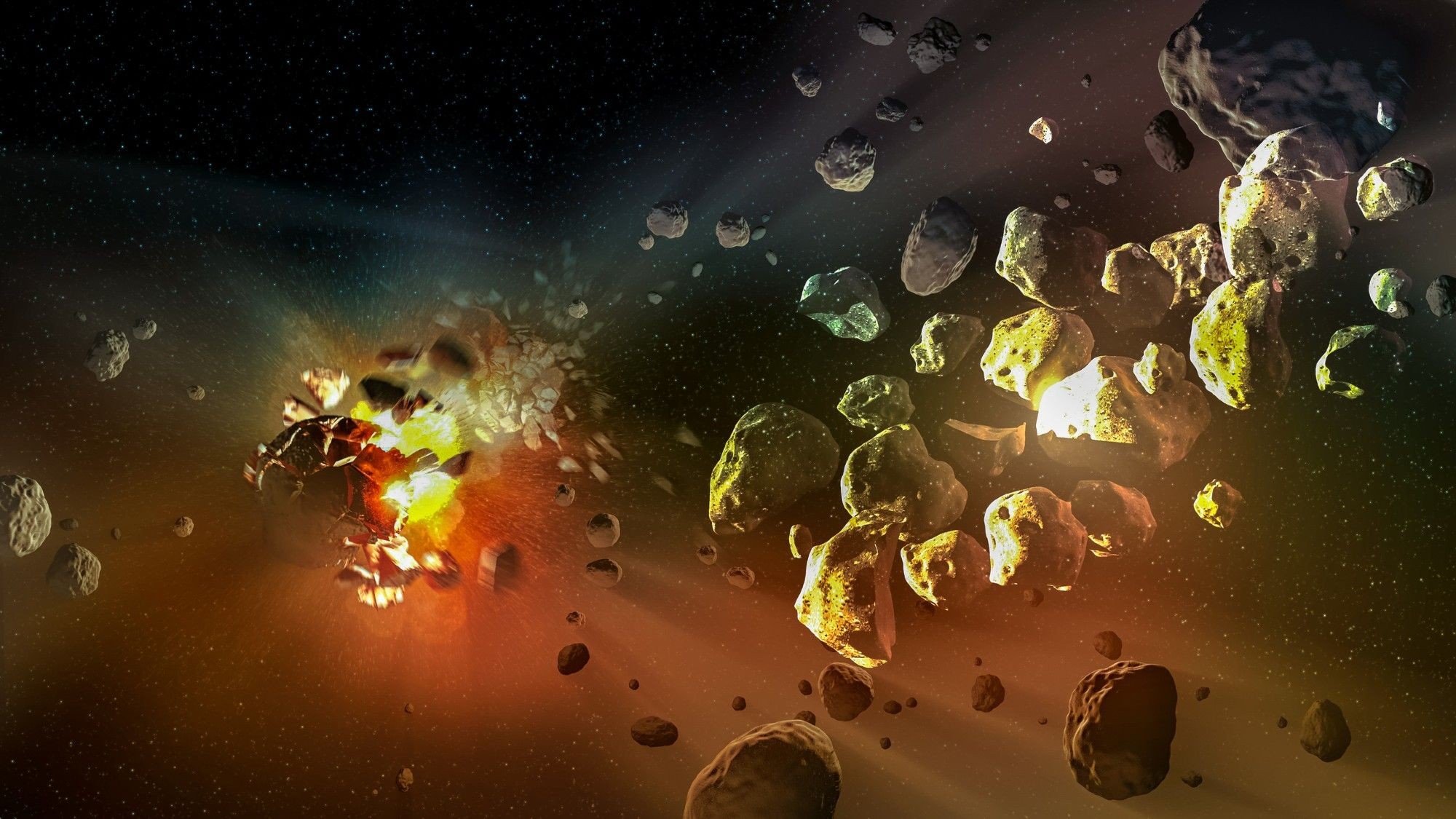
So a big rock is heading straight for Earth. What do you do? A new paper from Chinese researchers says you don’t just blast it from the surface. You dig.
Millions of asteroids wander the solar system. Most are harmless noise. A few are quiet threats. NASA watches the skies constantly, hunting for trouble. So far? No imminent deadlines. Apophis used to be on the radar. It wasn’t. That flyby in 2068? Scrubbed as a risk.
But we know gravity bites. Remember Chelyabinsk in 2013? A moderate rock broke windows, hurt people. Just a scratch on the planetary skin, sure, but it felt like a warning. Tens of meters in size isn’t scary if you’re far away. It’s terrifying when you’re close.
Assume the worst. A rock. Big. Over 330 feet. Coming fast.
Blasting it usually fails. Kinetic impacts? Too weak for short warnings. Long-term nudging? Takes too long. The researchers in Space: Science and Technology pointed this out. They looked for a better way. Not a gentle push. A violent shove.
Two options.
One, a simple impact detonation. Smack the asteroid. Make a shallow crater. Drop the bomb. Explode it.
Two, pre-excavation. This is the winner. Penetrate the rock. Dig deep. Then detonate a nuclear device inside.
Xiaowei Wang’s team at the China Academy of Launch Vehicle Technical ran the models. They factored in launch energy. Velocity. Changes in the asteroid’s speed. They tested both methods against a virtual database of threats, assuming we’d have anywhere from one to twenty years notice.
Time helps.
If you have it, dig deeper.
The flyby pre-excavation detonATION mode offers stronger energy coupling because it autonomously selects the cratering location.
Why does it matter? Deep detonation transfers energy better. It couples the explosion to the rock’s mass. The shallow method? Random. Weak coupling. Strict timing. You’re gambling with the nuclear device’s resistance. The deep method lets you choose where the bomb goes. You control the shock.
What’s the payoff?
You can destroy an asteroid 100 meters across. You can nudge one a kilometer wide by about 1 meter per second in sixty days. That’s not moving mountains, but in orbital mechanics, a millimeter adds up to a mile.
Real life isn’t a simulation though.
What’s the asteroid made of? A solid rock responds differently than a loose pile of rubble. One needs a surgical strike. The other needs containment. Then there’s the debris. Blasting a rock apart doesn’t stop the threat; it might just send a shotgun blast of shrapnel toward the same target.
And how do you get the nukes up there? That’s the question nobody answers in the press release. Technical issues aside, the political ones are heavier.
We can stop the rocks. Maybe. If we look early enough. If we dig deep enough.