


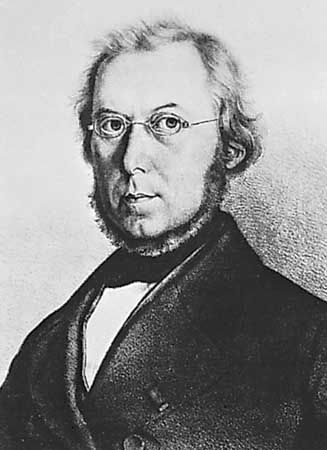
Hugo von Mohl didn’t just study plants. He looked at them under a microscope and realized they were living, breathing machines long before that was common scientific wisdom. Born in Stuttgart in 1805, this German botanist spent his life peering into the granular guts of plant cells. He died in Tübingen in 1872, leaving behind a foundation for modern cell biology.
His journey started in medicine. He got his degree from the University of Tübingen in 1828. Then he spent years in Munich, soaking up knowledge. By 1835, he was a professor at Tübingen. He stayed there until the end. But it was his work on plant anatomy that changed everything.
The Birth of Protoplasm
The big breakthrough came from watching the inside of a cell. Before von Mohl, people knew cells had nuclei. They didn’t know what the rest of the junk inside was doing. He figured out that the nucleus sat inside a granular, jelly-like substance. This was the main stuff of the cell.
In 1846, he gave it a name: protoplasm.
He didn’t invent the word. The Czech physiologist Jan Evangelista Purkinje had used it earlier to describe the material in eggs. But von Mohl applied it to plants. It stuck.
“The nucleus of the cell was within the granular, colloidal material that made up the main substance of the cell.”
Cell Division Is Real
Here is where things get interesting. Von Mohl was the first person to suggest that new cells aren’t just magically created out of thin air. They come from old ones splitting.
He saw it happen. Specifically in an alga called Conferva glomerata. Watch a cell divide. It’s not mystical. It’s mechanical. He proposed this idea, and it held up.
He also looked at the walls of plant cells. In 1851, he argued that secondary walls had a fibrous structure. We know he was right. The details are clearer now, but his core observation was solid.
Why Osmosis Matters in Plants
You might think water moving through a membrane is boring. It’s not. It’s life.
Von Mohl theorized about plastids—those small bodies inside specialized cells. He gave the first clear explanation of osmosis in plant physiology. Osmosis is simply the passage of a substance through a membrane from an area of higher concentration to one of lower concentration.
Plants rely on this pressure. It keeps them upright. It moves nutrients. Without understanding osmosis, you don’t understand how a tree grows or a leaf drinks.
He also studied stomatal openings in leaves. These are the tiny pores. He was one of the first to investigate how they move. Open. Close. Breathe. Control gas exchange.
The Legacy of a Microscope Watcher
Von Mohl didn’t just list facts. He connected the dots. He linked the structure of the cell to the function of the plant.
Most scientists today take cell division for granted. It’s basic textbook stuff. But someone had to look at that alga and say, “Hey,