


Rock music started in the 1950s and quickly became the heavyweight champion of global pop culture. By the end of the 20th century, it was arguably the dominant sound on Earth. It began in the US, jumped to English-speaking countries and Europe in the 1960s, and by the 1990s, its footprint was everywhere. You could see it in how multinational record labels were built, on the shelves of every international record store, and in the rotation policies of radio and TV. If you looked at classical, jazz, easy listening, country, or folk, they were often marketed as niche interests. Rock defined the mainstream. It became the most inclusive label in music because almost anything can be “rocked.”
Despite the threat of an outmoded business model in the 21st century, rock kept its grip largely because live performances flourished. But that very popularity and complexity make it the hardest genre to pin down. To answer the question of what rock actually is, you have to look at its roots and how it functions socially, not just sonically.
Why dictionary definitions of rock fail
Trying to define rock in a dictionary is a trap. The word hits differently in American English versus British English, with the American usage being much broader. Most dictionaries agree on one thing: rock has a strong beat. Anything beyond that gets messy.
The Collins Cobuild English Dictionary, which relies on massive British usage data, calls rock “a kind of music with simple tunes and a very strong beat that is played and sung, usually loudly, by a small group of people with electric guitars and drums.” It sounds clean. It is practically useless. There are too many exceptions.
Governments have tried to legislate a definition for regulatory reasons, and they did not do much better. The Canadian government defined “rock and rock-oriented music” as “characterized by a strong beat, the use of blues forms and the presence of rock instruments such as electric guitar, electric bass, electric organ or electric piano.” This assumes rock can be cut off from other music based purely on sound. In reality, the lines are ideological.
Rock was developed to distinguish certain listening practices from pop. It was less about the noise and more about the attitude. In 1990, British lawmakers defined pop music as “all kinds of music characterized by a strong rhythmic element and a reliance on electronic amplification for their performance.” The music industry pushed back hard. They argued this definition ignored the sociological divide. Pop was seen as “instant singles-based music aimed at teenagers.” Rock was “album-based music for adults.” The lawmakers wanted clarity. They missed the point entirely.
How rock history actually works
Lexicographers and legislators both want to hold a meaning in place so people can use words correctly. Like assigning a track to the right radio outlet: rock, pop, country, or jazz. The problem is that rock describes an evolving practice shaped by arguments about creativity, sincerity, commerce, and popularity.
A historical approach makes more sense. To understand what rock is, you have to look at the musicians who built it. The following artists were crucial to the genre’s history. What do they have in common?
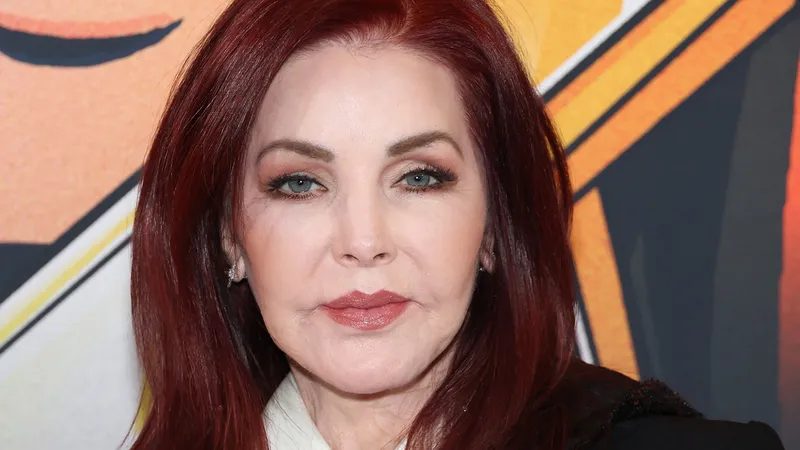

The American Sound: Elvis and the Teen Market
Elvis Presley didn’t just sing; he signaled a break. Coming out of Memphis, Tennessee, in the mid-1950s, he embodied a new strain of American pop. The sound was rock and roll. It was guitar-driven, backed by a beat that was strong but loose, pulling threads from southern African American and white traditions. Blues. Church music. Country. All mixed together.
His ascent was fast. That speed exposed a shift in power. Teenagers weren’t just listening; they were buying. Records, radio, television, and movies all targeted them. Elvis proved that youth culture had economic weight. The media industries noticed.
The British Invasion: Liverpool to Hamburg to London
Then there was the other side of the Atlantic. The Beatles, from Liverpool, England, carried their sound through Hamburg, Germany, before personifying a new form of British pop in the 1960s. Their style, Merseybeat, was a local take on that same Black and white rock and roll mix.
The lineup was standard for the time: lead guitar, rhythm guitar, bass, and drums. Vocals were shared. They played live versions of American hit records, mostly. But then they changed.
They stopped just covering. They started writing. They used the recording studio not just to capture a performance, but to build musical ideas. No commercial producer was steering the ship. The band did it themselves. That artistic self-consciousness set them apart.
Why Rock Became an Anglo-American Phenomenon
The Beatles’ success in the United States was unprecedented. It wasn’t just a hit; it was a takeover. That ensured rock would remain an Anglo-American phenomenon. The US and UK kept feeding each other. New sounds crossed the ocean, got adapted, came back changed.
Elvis showed the American engine was running. The Beatles showed the British engine could match it. Together, they defined the era. The competition didn’t kill the genre; it fueled it.


Why Bob Dylan and Jimi Hendrix Defined Two Different Eras of Rock
Bob Dylan didn’t just write songs. He built a new American musical identity from the rubble of the mid-1960s. Coming out of Hibbing, Minnesota, and then routing through New York City, he fused the amplified pulse of rock and roll with the political weight of folk music. He added the star power of pop and the arrogant wit of urban bohemia. The result was album-oriented music, not Top 40 fodder. Dylan forced the rock scene to take itself seriously. Youth stopped being just a demographic stat. It became an ideological stance.
Then there was Jimi Hendrix. Seattle to London. The late 1960s. While Dylan personified the idea of rock as art, Hendrix defined the genre itself. He learned his craft in R&B bands, but his approach was pure jazz. He treated collective improvisation as a non-negotiable part of the job.
His trio in London changed everything. Hendrix took the amplifier and made it an instrument. Not a tool. An instrument. He explored its possibilities in the studio and on stage. Suddenly, technical skill and versatility weren’t optional. They were the norm.
And then there was the noise.
The audience didn’t just clap. They roared. That sound became part of the music’s logic. Hendrix gave shape to the outdoor festival. The stadium concert. The event where the crowd’s volume is a structural element of the performance.
Dylan made rock think. Hendrix made it feel massive.
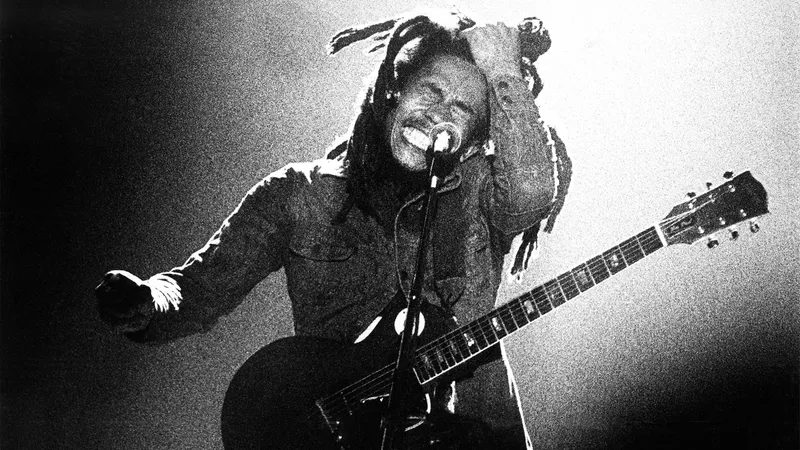
Bob Marley took the sweet, soulful vocal styles of Chicago groups like the Impressions and fused them with rock guitar, reggae beats, and Rastafarian mysticism. Coming from Kingston, Jamaica, and operating through London, he didn’t just make music; he personified a new kind of global popular sound in the 1970s. His commercial breakthrough proved Jamaica was a major source of international talent, stamping a reggae imprint on Western rock as well as local music scenes in Africa, Asia, and Australia.
Then there was Madonna.
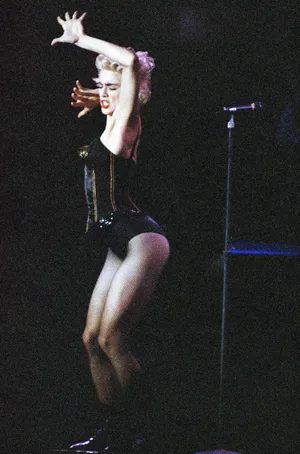
She emerged from suburban Detroit, moved through New York City, and became the face of a new global teen idol in the 1980s. Madonna didn’t just sing; she leveraged the technical devices of the NYC disco club scene and married them to the image-making opportunities of MTV. It was a double-edged sword. She positioned herself as a knowing American feminist artist while simultaneously serving as a global sales icon for brands like Pepsi-Cola.
By the late 1980s, Public Enemy from New York City changed the landscape again. They channeled the long history of African American rhyming into a sharper, political force. Using new digital technology, they sampled urban sounds and recast them through the lens of Black youth. The result was music that was locally attuned to political conditions but resonated internationally. By the mid-1990s, rap had become a primary expressive medium for minority social groups around the world.
Why Rock Defies Simple Genre Labels
This lineage reveals something fundamental: “rock” is too broad a category to organize taste effectively. Fans actually sort their preferences around more specific genre labels. The young Elvis Presley was rockabilly. The Beatles were pop. Bob Dylan was folk. Madonna was a disco diva. Marley and the Wailers were reggae. Public Enemy were rappers. Even Jimi Hendrix, who fits most naturally into rock history, also belongs in the archives of rhythm and blues and jazz.
These musicians developed rock by using different instruments, textures, melodic principles, and performance conventions. There is no single “rock sound.”
The Role of Eclecticism and Technology
Rock has always been a hybrid form. From its very start, it mixed country and blues, with African American musics at the center. White musicians took that material, filtered it through their own folk histories and pop conventions, and wrestled with issues of race to create something new.
This eclecticism mirrors the geographic mobility of rock musicians. Presley was the exception; he stayed rooted. Hendrix was the norm, restless and moving. While rock and roll had rural origins, its audience was urban from day one. Anonymous crowds sought community in dance halls, clubs, radio stations, and headphones. The music provided a global experience of belonging, whether to a local scene or a subculture.
You can map rock history by city. Philadelphia and Detroit. New York City and San Francisco. Liverpool and Manchester. Or you can map it by youth cults: rock and roll, heavy metal, punk, grunge.
Technology is the thread that ties it all together better than any specific instrument. Early stars like Presley and Buddy Holly relied on studio engineers’ trickery as much as their vocal skills. The guitar became central not because of its acoustic properties, but because of amplification. Rock history is tied to shifts in how sound is stored, retrieved, and transmitted.
- Multitrack tape recording turned the studio into a compositional tool.
- Digital recording blurred the line between music and noise.
- Musicians pushed amplification limits, inspiring new electronic instruments like the drum machine.
- Even the double-deck turntable became a instrument for “scratch” deejays.
Rock distinguishes itself by constantly chasing new sounds and sound devices. It is less about what the instrument is and more about how technology allows the artist to manipulate reality.
Rock music has always carried a heavy sociological tag: youth. Back in the 1950s and early 60s, the math was simple. Young bands played for young crowds. The lyrics dealt with puppy love and quick sex. Industry executives looked at this and saw a bubblegum trend, like a hula hoop or a yo-yo. They expected it to vanish.
They were wrong.
By the mid-1960s, “youth” stopped meaning just high schoolers. It became an ideological category. It encompassed college students, a specific brand of hedonism, and a commitment to individualism and modernism. Rock split into two functions simultaneously. It was party music on one hand. On the other, it was serious, intimate expression.
This dual nature allowed rock to stay “youthful” even as its fans aged and settled down. The music kept its radical edge by leaning into adolescent irresponsibility. Sex, drugs, and outrage became the currency. The consequences didn’t matter. The immediate thrill did.
This dynamic created a specific power structure. It’s not surprising that Madonna broke through as the first woman to make a significant splash in rock history. She understood the game. She focused precisely on the genre’s sexual assumptions.
Why authenticity and commercialism clash in rock
The tension between genuine artistic expression and commercial viability has always been the defining conflict in rock.

Defining the Paradox of Rock Authenticity
Madonna fits the rock star mold, not because of disco roots or teen idol status, but because she navigated a specific cultural contradiction. The core of rock ideology is authenticity. The genre claims to be non-commercial in motivation, even though it is produced, promoted, and sold by sophisticated multinational corporations. It is valued not for its production process but for what it represents: the authentic expression of a performer’s feelings and an honest representation of social reality.
This creates a tension. Rock sits at the mainstream of commercial music while simultaneously posing as a romantic art form and a voice from the social margins. Elton Presley’s debut RCA album in 1956 was carefully packaged to show him as an authentic, street-credible musician, plucking an acoustic guitar on the cover. Public Enemy’s It Takes a Nation of Millions to Hold Us Back, released in 1988 through Def Jam (backed by CBS), underwent similar packaging. Madonna’s deliberate artifice in the 1980s mirrored Bob Dylan’s approach in the 1960s. Both used specific aesthetics to signal their “realness” to the audience.
Why Rock Feels DIY Even When It Isn’t
To understand this ideological contradiction, two concepts are essential: presence and do-it-yourself (DIY).
Rock creates a unique sonic presence. Its musical promiscuity, use of technology, and emphasis on the individual voice allow it to dominate the soundscape while pulling the listener into the performer’s emotional life. However, the credibility of rock’s non-commercial claim relies on the belief that the music is pushed up from the bottom rather than imposed from the top.
This is why rock mythology is obsessed with independent record companies, local hustlers, managers, deejays, fanzines, and pirate radio. Even when the industry is a multimillion-dollar enterprise, the culture insists that people make this music for themselves. The historical question remains: what circumstances made that belief possible?
How 1950s Rock and Roll Emerged from New Technologies
Rock and roll appeared to spring from nowhere in the 1950s, but it actually evolved from developments in American popular music driven by new marketing technologies: records, radio, motion pictures, and the electric microphone.
By the 1930s, these technologies created a demand for vocal records over instrumental ones. Singers like Bing Crosby and Frank Sinatra became the stars. Songs were written to display the singer’s personality rather than the composer’s skill. The emotional weight came from the singer’s expressiveness, not the score. It was Sinatra’s feelings you heard, not just the writer’s notes.
By the early 1950s, it was clear that this new vocal pop star needed simpler, more directly emotional songs. Big publishers started looking at blues and country numbers released on small labels in the American South. While major record companies focused on Hollywood, national radio, and television, a separate system emerged to serve markets the majors ignored. Independent labels like Atlantic, Sun, and Chess, along with local radio stations and traveling deejays, catered to African Americans, Southern whites, and eventually youth.
Rural Music Goes Urban and Electric
Selling rural American musics like blues, folk, country, and gospel had always been the domain of small entrepreneurs. World War II changed the market. Hundreds of thousands of Southerners migrated north for work, bringing their music with them. Military service also broadened cultural horizons.
When rural music moved to urban settings, it became louder and more aggressive. This shift mirrors what happened to jazz in the early 1920s. Instruments, especially the guitar, had to be amplified to cut through city noise. As Black dance bands shrunk for economic reasons, brass and wind sections were replaced by guitar, bass, and a miked-up voice. Keyboards and saxophone became rhythm instruments, swelling the beat punched out by the drums.
Country dance bands made similar changes, emerging from 1940s jazz-influenced western swing. They amplified guitars and bass, gave the piano a rhythmic role, and emphasized the singer’s personality.
This music, rhythm and blues and honky tonk, was developed in live performance. Traveling musicians made their living by attracting dancers to bars, clubs, and halls. By the late 1940s, independent record companies were recording this music, aware of the musicians’ local pulling power and always looking for cheap repertoire.
As these records played on local radio, the appeal of the music—its energy, humor, and suggestiveness—reached white suburban teenagers who had no prior exposure to it. Rhythm-and-blues retailers, radio stations, and deejays like Alan Freed identified a new market: partying teenagers. Young white musicians began visiting these recording studios to make this music for themselves.
The result was rock and roll. It was the adoption of rural-urban, Black and white sounds by an emergent teenage culture. This culture gained international attention with the success of the film Blackboard Jungle in 1956.
How the 1950s economic boom turned rock into a billion-dollar brand
Young people in the 1950s had money to spend. The postwar economic boom gave them unprecedented disposable income, a sharp contrast to the prewar Great Depression era. Advertisers noticed. Record companies noticed. Everyone wanted a slice of that teenage purchasing power.
The shift wasn’t just about music. It was about marketing. Elvis Presley’s success signaled a new reality for the major record labels. It wasn’t about the raw, do-it-yourself hybrid nature of the music. It was about the sellability of a teenage idol. These stars needed strong visual images, marketable material for radio and television, and presence in movies and magazines.
American Bandstand became the model. Top 40 radio stations sold advertising time to companies targeting teens. The creative focus moved away from the performers and toward the manufacturing pipeline. Who was creating the music? Not the band. The songwriters in New York City’s Brill Building. Producers like Phil Spector. These were the architects who guaranteed a record had teen appeal and would cut through the static on a car radio.
The live rock and roll scene, largely performed by Black artists, got subordinated to this new factory system. The result was a wave of teenage pop stars, almost exclusively white. The product was manufactured, not discovered.
Why the 1960s rock scene was a Black and white hybrid
Rock and roll in the 1960s wasn’t one thing. It was a messy, loud hybrid. The separation between “rock” and “pop” started to blur, but the racial dynamics remained complex.
The “teen idol” model of the 50s didn’t disappear. It evolved. But the music itself drew from different roots. White rock bands looked at Black R&B and blues, picking up instruments, tempos, and attitudes. Black musicians continued to push the genre forward, often with more improvisation and vocal intensity than the polished, producer-driven pop records.
This era asked a difficult question: Who owned rock and roll? The commercial machinery of the 50s had packaged it for white consumption. But the 1960s saw a reaction. Bands like The Beatles and The Rolling Stones leaned into the hybrid nature, borrowing heavily from Black American music while maintaining a distinct white British identity. Meanwhile, artists like Otis Redding and Sam Cooke kept the fire alive in soul and R&B, which was its own version of rock, just with different marketing channels and audience expectations.
The “hybrid” label fits. It wasn’t pure rock. It wasn’t pure pop. It was a collision. And that collision created the sound that defined the decade.

Why British beat groups had to sound different than the American originals
The logic of “rock history” often follows a neat, repetitive loop: rock emerges, gets bought by big labels, fades into teen pop, then gets saved by a new wave. You’ve seen it before. The mid-1950s rock and roll gets absorbed by RCA after Elvis leaves Sun. Then the Beatles arrive in the mid-1960s, dragging young Americans back to the “roots.”
That narrative is lazy. It misses the point entirely. The Beatles didn’t blow up because they rejected pop in favor of authenticity. They blew up because they didn’t care about the difference. To them, the “real” sound of Chuck Berry and the “artificial” sheen of the Marvelettes were just different tools. That indifference is what made them dangerous.
In the UK, the situation was messy. Rock and roll had instant youth appeal, sure. Every country had its own Elvis clone. But national media was still largely state-controlled. Radio didn’t play the stuff. So local bands couldn’t just record and wait. They had to play live.
The template? Skiffle. It was the only local conduit for American music, borrowing from folk, jazz, and blues. The Beatles were just one of dozens of provincial bands in the late 1950s playing for friends in cheap, claustrophobic pubs. They covered everything: Berry, Shirelles, Perkins, Isley Brothers. The setup was simple. Rhythm section, guitar, shouting. You had to be heard over the noise in a tiny room.
How vocal technique replaced studio production in British pubs
Since you couldn’t afford a producer, you had to be your own producer. The instrument became the voice.
This is where it got technical. On American records, producers layered harmonies in the studio. British bands had to do it live. John Lennon and Paul McCartney developed a harsher, more aggressive attack. Their vocal harmonies had to carry the decorative weight that a studio engineer would normally handle.
This emphasis on live vocal texture is exactly why vocal rhythm and blues stuck. It fed directly into “mod” culture, that style-obsessed, consumption-driven youth movement of the 1960s. Ray Charles and Sam Cooke became the models. Then, as the decade wore on, the charts shifted to include harder-hitting African American voices like Aretha Franklin and Otis Redding.
Guitarists felt the same pressure. The loose, rhythmic strumming of skiffle started to die out. You needed more ornamentation. You needed lead lines. Eric Clapton was chasing B.B. King. He wanted the “authentic” blues voice, but he was filtering it through an art-school lens. That mix of technical homage and academic pretension is a very British problem.
Why writing your own songs became a matter of principle, not just necessity
By the late 1960s, writing your own stuff wasn’t just a smart business move. It was a moral stance.
There was a practical limit to how long a band could survive on covers. British professional songwriters didn’t understand these new forms anyway. But the shift was deeper. Self-expression became the dividing line between “rock” and pop “puppets.”
Take Cliff Richard. Groomed as Britain’s Elvis in the 50s, he moved from skiffle clubs to TV variety shows. By the end of the 60s, he was a family entertainer. His style barely even acknowledged rock and roll existed. The contrast with the Beatles, or even just the local pub bands who were learning to write, was stark.
The commercial challenge of making a record cut through the noise was also an artistic challenge. DIY technology wasn’t just a constraint; it was the creative engine.
That’s the part people forget. The “British Invasion” wasn’t just a cultural export. It was a technological and aesthetic workaround. When you can’t buy the studio, you build your own voice. And that voice, rough and unpolished, sounded more real than anything coming out of a New York or Detroit control room.
How folk rock merged the British Invasion with counterculture
The British beat boom created a strange inversion in the US. The Beatles wanted to be artists and ended up dominating pop. The Rolling Stones wanted to be blues purists and became massive pop acts. This “rock paradox” shook the American music scene. It proved to a generation that had already moved past rock and roll into urban folk that commercial success and artistic integrity could coexist.
Bob Dylan led the charge. He plugged in. The acoustic guitar gave way to the electric one. The beat sharpened. Folk rock was born.
Dylan’s approach did something specific. He demonstrated that a pop song could operate on two levels simultaneously. It could serve as social commentary while remaining a vehicle for self-expression. Protest and poetry stopped being mutually exclusive.
This shift pulled bohemia back into the fold. On both coasts, artists, poets, and musicians started listening again. San Francisco became the epicenter. Loose collectives formed. The Grateful Dead and the Jefferson Airplane stood out. They didn’t just play songs. They created acid rock. The music functioned as a soundtrack for a new identity: the hippie. The sound was an unfolding psychedelic experience. It wasn’t just background noise. It was the defining texture of a youth culture in motion.
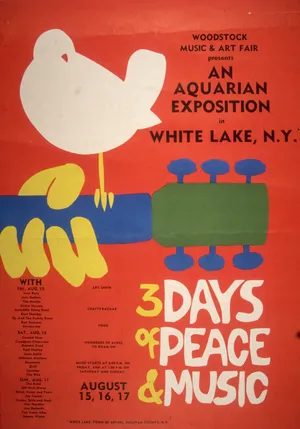

The feedback loop between American counter-culture and British rock defined the late 1960s. Vietnam War protests, the civil rights movement, and sexual liberation didn’t just happen alongside the music; they shaped it. Beat groups in the UK stopped thinking of their output as a commodity. They saw technology as the constraint, not the market.
This shift crystallized on the 1967 album Sgt. Pepper’s Lonely Hearts Club Band. The Beatles used it to symbolically align with the new hippie era, marking a decisive move from pop to rock. Meanwhile, bands like Cream and Pink Floyd raised the bar for technical imagination. They weren’t just playing songs; they were building complex musical structures.
Jimmi Hendrix emerged in this specific environment as the ultimate archetype. He wasn’t just a virtuoso. He was a commercial force and a cultural icon. By 1969, the central paradox of rock music was undeniable. Musicians who publicly despised chart success were becoming incredibly wealthy. Album sales and ticket prices had never been higher in popular music history.
The ideology was being written in magazines like Rolling Stone. The business side was being packaged by emerging labels like Warner Brothers in the US and Island in Britain. Rock fed into hippie rebellion, and rebellion fed back into rock. The 1969 Woodstock festival celebrated both sides of that equation. It wasn’t just a political statement; it was a massive commercial event.
Audiences were hungry. They wanted “progressive” rock, high-volume blues blasts, heavy metal, and sensitive singer-songwriter introspection. The money had found its new home.
The rise of the rock superstar in the 1970s
The 1970s started as the era of the rock god. Excess became the standard operating procedure.
The Rolling Stones are the prime example. It wasn’t just about private wealth or well-publicized decadence. It was about the scale of stage effects and studio costs. Album sales had grown so much that musicians held the power in negotiations. Their entourages of managers, lawyers, and accountants dictated terms to record labels. For a few years, the logic was simple: the more artistic self-indulgence you displayed, the bigger the financial return.
That logic broke by the end of the decade.
Twenty-five years of growth in record sales flatlined. Economic recession hit. Young people had new places to spend their leisure money, most notably video games. The music industry, which was now structurally based on rock, faced its first true crisis.
The Anglo-American market consolidated into the shape it still holds today. Companies stopped relying solely on the transatlantic route and started aggressively pursuing sales in new international markets. The era of unchecked growth was over.
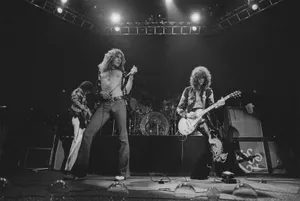

The 1970s locked rock into place. It wasn’t just a decade; it was the moment the industry figured out the rules. The sheer size of rock stardom pushed the culture in three different directions at once. You got the raw, DIY return to basics, think Bruce Springsteen or the British punk scene. You got the campy, self-aware mirror held up to fame by Bowie, Queen, and Roxy Music. And you got dance music, which the industry tried to grab as a new pop mainstream after Saturday Night Fever hit theaters in 1977.
By the early 1980s, disco didn’t stay mainstream. It retreated. It found a home in clubs, in deejays, and in the studios of African American, Latin American, and gay subcultures. Black music moved in parallel, using rock tech to either bridge racial markets (Stevie Wonder) or sharpen the divide (funk).
How rock became a business routine
Rock stopped being a revolution and became a routine. It was a money machine. A music-making machine. This shift created two big problems for the 1980s.
First, the tension between mainstream and margin stopped being a cultural spark. It got contained inside rock itself. Elton John became the face of the new mainstream, turning soul-inflected rock ballads into the dominant global pop sound for the next twenty years. At the same time, an “alternative” ideology took root, most loudly in British punk. These musicians built scenes on independent labels, using underground media to protect the “essence” of rock from commercial rot. The line between authentic and fake didn’t matter as much as the fact that rock defined itself by its own contradictions.
Second, sounds from outside the Anglo-American core started bleeding in. And they did it in weird ways.
- Europop: The clean, catchy sound of ABBA, the electronic machine music of Kraftwerk, and the Donna Summer and Giorgio Moroder collaborations in West Germany reshaped the New York dance scene.
- Reggae: Bob Marley proved you could apply a Jamaican sensibility to rock. Suddenly, reggae was a tool for rock musicians. Clapton and Keith Richards used it. The Clash used it. Through NYC Jamaican sound-system deejays, it became a key ingredient in the birth of hip-hop.
Digital technology and the rise of alternative rock
The music industry was saved, economically, by digital recording in the 1980s. The compact disc replaced vinyl. It was a technological revolution, but its effect was conservative. The biggest money came from buyers who had grown up on rock. They swapped their vinyl for CDs to hear the same old music on better systems. Rock became adult music.
The youthful fads still came and went, but they weren’t central to the rock process anymore. The 1970s superstars couldn’t match their old sales numbers with new releases, but they could still sell out stadium concerts. Those shows became nostalgic rituals. The Grateful Dead did it most unexpectedly.
For new white acts, the industry had to look elsewhere. They found alternative rock. A specific pattern emerged. R.E.M. perfected it in the 1980s. Nirvana did it in the 1990s. Local independent labels, college radio stations, and local retailers built a cult audience. Then a major label signed the act and mass-marketed them. Local record companies stopped being independent. They became research and development divisions for the multinationals.
The cycle is set. The tension is internal. The technology is digital. The audience is split between nostalgic adults and a new, manufactured alternative.

Dance music engineers rewrote the rules of rock
The biggest technological shifts didn’t happen in rock studios. They happened in dance music labs. Engineers sampling and manipulating sound blurred the line between live performance and recording. By the 1990s, this digital toolkit had leaked into every corner of rock production.
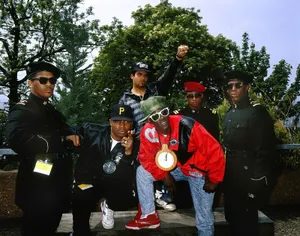
For groups like Public Enemy, the technology was about more than cool tones. It was a weapon. They used samples to insert the actual voices of the powerful and the powerless into the mix. Hip-hop gave young, disaffected groups around the world a way to talk back to the media.
MTV built the global stage
While artists fragmented, the industry tried to force unity. The 1985 Live Aid event broadcast charity concerts from both sides of the Atlantic to a worldwide audience. It exposed the rock establishment and proved television could sell music.
MTV took that potential further. The American cable network adopted the Top 40 radio format and made video clips as important as singles. They used satellite technology to push a “One world, one music” message.
Madonna and Michael Jackson were the first true video acts. Jackson’s 1982 album Thriller became the best-selling album of all time, crossing internal rock divides. Both artists used MTV to sell themselves as global stars. In turn, corporations like Pepsi-Cola used them as icons in advertising campaigns.
Fragmentation hit in the 1990s
The strategy of marketing a single global music failed. Rock culture broke apart. The 1990s had no unifying stars. The Spice Girls were huge, but never really taken seriously.
World music rose instead. More voices drew on local traditions and concerns. They absorbed rock rather than letting rock absorb them. Céline Dion, the biggest corporate star of the 1990s, started in the French-language market in Quebec.
By the end of the 20th century, hybridity meant musicians highlighted divisions within rock rather than forging new alliances. In Britain, the rave scene converged with “indie” guitar rock. Fueled by house and techno from Chicago and Detroit via Ibiza, Spain, this mix chased a nostalgic rock community that was ultimately a fantasy.
Groups like Primal Scream and the Prodigy seemed to contain 30 years of rock history. They remained on the fringes of most people’s listening. Rock had become too broad a range of sounds and expectations to be unified by anyone.
Why rock bands stopped selling albums and started selling memories
The early 2000s threw a wrench into the entire gear of rock economics. For decades, the album was the product. You bought the vinyl, then the cassette, then the CD, and the live show was just a support act to keep you coming back for more plastic discs. That model collapsed. But the live sector? It exploded.
Ticket prices skyrocketed starting in the mid-1990s. Suddenly, the money wasn’t in the shop; it was in the stadium. This created a strange new beast: the multinational live music corporation. Live Nation was the leader of this pack, originally a division of Clear Channel. Clear Channel spun it off to avoid looking like a monopoly, which was a smart legal move. Then Live Nation merged with Ticketmaster, the dominant global ticketing agency. The U.S. government approved the deal in January 2010, but not without strings attached. Live Nation Entertainment had to license its proprietary ticketing software to its biggest rival, Anschutz Entertainment Group (AEG), and sell its Paciolan division to Comcast Spectacor. It was a messy, corporate fix to a market that had fundamentally changed shape.
How classic rock tours became the business model
Why did the tour become more important than the record? Because the old giants still had the biggest bodies of work. The Rolling Stones and The Police (often referred to as the band’s legacy in this context, though the band had dissolved, the catalog remained potent) topped annual earnings lists. The logic flipped. You didn’t release an album to promote a tour. You released a record to promote a tour. The tour was the money maker.
David Bowie saw this coming early. In a June 2002 interview with the New York Times, he didn’t mince words about the future of copyright and distribution.
“I’m fully confident that copyright, for instance, will no longer exist in 10 years… Music itself is going to become like running water or electricity… You’d better be prepared for doing a lot of touring because that’s really the only unique situation that’s going to be left.”
He was right about the commodification of the file. Wrong, perhaps, about the speed of copyright’s death, but spot on about the shift in value. The unique experience of being in a room with 20,000 people became the only product that couldn’t be pirated.
Where new rock bands actually built their fans
If the giants leaned on nostalgia, the newcomers leaned on the internet. But not in the way you might expect. The digital revolution didn’t just kill the CD; it revived older, less corporate ways of consuming music. The iPod changed everything by making the single the primary unit of consumption again. No more needing to buy the whole album to get the one song you liked. Just the track.
This fragmented consumption pushed marketing back to the grassroots. For bands like Arctic Monkeys and Kings of Leon, social networking sites were the engine. They didn’t rely on top-down media campaigns or radio playlists. They built audiences from the bottom up. Word of mouth went global at the speed of a refresh button. MySpace and YouTube replaced radio stations and record stores as the hunting grounds for new music. Even the niche communities of vinyl collectors found their homes in specialist web sites, keeping the physical format alive as an aesthetic object.
Rock festivals in Europe became the dominant marketing vehicle for new releases. Think of it like a giant variety show. A mix of acts, a package deal. It echoed the era of the Beatles, where the live package was the event. The “local” buzz that used to drive rock and roll now had an immediate, global resonance. You could hear about a band in Manchester on a forum in Tokyo the same day.
Why rock became the default soundscape for mainstream pop
Rock hit middle age. It became as much about nostalgia as it was about youth. And the two biggest pop phenomena of the century? They had almost nothing to do with digital innovation.
Mamma Mia! , the stage show and film based on ABBA songs, was the first great karaoke musical. Sure, ABBA was pop, not rock. But the vibe was the same. It was echoed by the thousands of rock tribute bands playing in bars and venues around the world. Then there was Pop Idol and its international clones, like American Idol. Rock fans often rolled their eyes at this “manufactured” music. But the show proved something undeniable: television still had the power to orchestrate public enthusiasm.
More importantly, it showed how the conventions of the rock ballad had become the default language of emotional expression. The winners of these shows almost invariably stuck to that format. Fifty years after rock was born as an alternative to mainstream pop, the lines had blurred. Mainstream pop was rock now. The alternative had become the standard. Whatever happens to the music industry’s corporate structure, rock remains the soundscape of most people’s lives. It’s not just a genre anymore. It’s the background music for the century.
Rock as a Mirror: How the Genre Tracks Social Shifts
Judging rock’s contribution to music history isn’t about counting hits versus misses. It is not a simple ratio of masterworks to dross. Rock does not sit in a glass box, influencing other genres from a distance. It colonizes them. It blurs the boundaries until the lines disappear. Trying to build an objective rock canon is a failed project. Rock is not an autonomous aesthetic form bound by rigid rules.
Instead, look at how rock reflects society. The question is not how rock changed the world, but how it mirrored the world changing around it.
The Breakdown of Music-Making Roles
For musicians, the most significant shift since the 1950s is the collapse of labor divisions. When Elvis Presley became famous, roles were sharp. The performer performed. The writer wrote. The arranger arranged. Session musicians played. Producers produced. Engineers recorded.
By the time Public Enemy entered the studio, those walls had crumbled from both sides. Performers wrote, arranged, and produced their own material. Engineers became co-creators of the sound, not just technicians capturing it. Technology changed the definition of the instrument. Multitrack tape, amplifiers, synthesizers, and digital gear erased the line between producing a sound and reproducing it.
Music Everywhere: The End of the Special Occasion
Listeners experienced a similar collapse. The distinction between music and noise dissolved in the second half of the 20th century. Music became ubiquitous. It filled public spaces as background for every activity. It saturated the home, with a radio, CD player, or cassette deck in every room. The line between public and private consumption blurred through Walkmans, boom boxes, and karaoke machines.
The compact disc accelerated this process. Music from any place and any time became permanently available. Listening stopped being a special place or occasion. It became a special attention. A decision to focus on a specific sound at a specific moment.
Rock addressed these new conditions directly. It kept faith with the idea that music is a form of human conversation, even when mediated by television, radio, filmmakers, and advertisers. Rock maintained a commitment to access. It remained a way to do mass music for oneself, surviving the centralization of production and the rising costs of promotion and distribution.
Rock remains the most democratic of mass media—the only one in which voices from the margins of society can still be heard out loud.
The Digital Crisis: Napster and the Fight for Control
At the start of the 21st century, rock and the music industry faced a new crisis. Digital technology allowed music to be stored in easy-to-use files. These files could be transferred from personal computer to personal computer via the Internet.
This shift triggered legal and corporate disputes over new formats like MP3 and services like Napster. Rights holders saw a commercial opportunity: making money every time a song was downloaded. They also felt fear: songs exchanged without money changing hands.
Starting in late 1999, the Recording Industry Association of America, Bertelsmann AG, and various artists sued Napster. The company’s “peer-to-peer” file-sharing program let users download music for free. Artists split on the issue. Bertelsmann eventually became the majority owner of Napster, aiming to create a fee-based service.
This was only the beginning. The record industry engaged in an ongoing war to prevent free exchange of digital music. They extended copyright protection. They pursued “illegal” Internet services and users through courts. They implemented digital rights management technologies. Simultaneously, they developed paid downloading systems like Napster and iTunes.
Why the Internet Won
Despite iTunes’ commercial success, the record industry failed to halt the Internet as a source of free music. The story line is not new. Emergent technology creates new commercial opportunities. Fledgling entrepreneurs explore these opportunities first. Larger corporations, now as likely to be telecommunications or computer firms as music companies, absorb and reorder them later.
The new uses of the Web drew heavily on rock practices. File-sharing services following Napster created a global network of home “tapers.” They relied on the rock ideology of DIY, community, and anti-commerce. Networking sites like MySpace and YouTube were quickly adopted by rock groups and fans. Their use of new promotional possibilities became a model for other entertainment sectors.
However the legal and economic issues resolve, rock music will remain central to 21st-century practices. Rock does not just reflect social and cultural change. It is a social force in its own right.


