Two years ago. July 2024. A sonic boom rattled windows across New York City.
Not a plane. Not thunder.
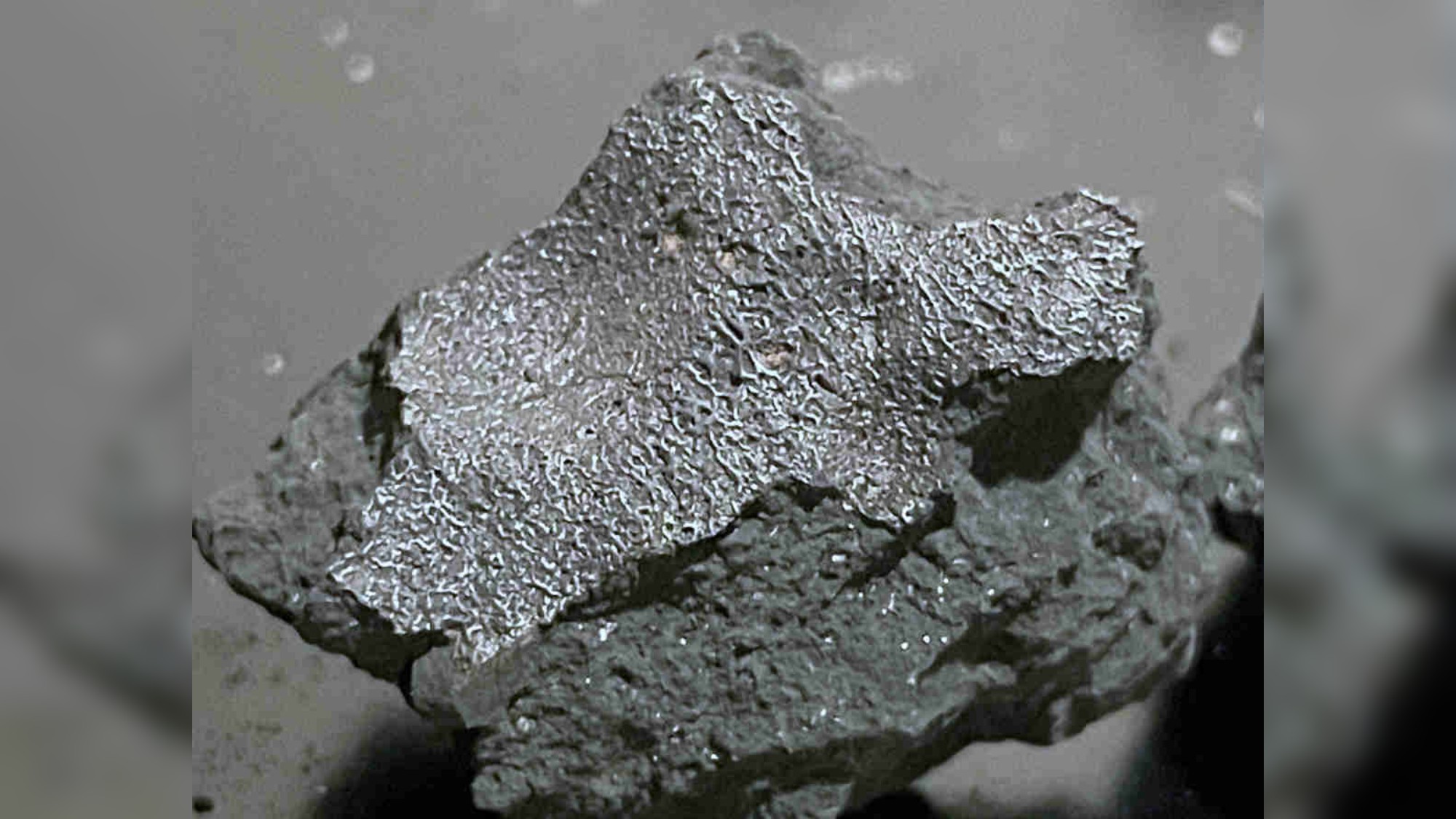
A fireball. Roughly the size of an airline carry-on bag weighing in at about 110 pounds. It screamed down the East Coast and ended its journey by smashing through a bedroom ceiling in Hillsborough. New Jersey.
The homeowner woke up to sulfur. A sharp. chemical stench that doesn’t linger. He looked around. There it was. Pieces of space rock scattered across his floor.
“You can think of it as smelling the atmosphere at the start of life,”
Peter Jenniskens is a meteor astronomer with SETI and NASA Ames. He knows what this smell means. To most people. it’s just rotting eggs. To scientists like Jenniskens. it’s the scent of origins.
The Gloves Matter
Here’s where most stories end badly. Most people find a hot. smoking rock. They touch it with bare hands. Sweat and oil from their skin soak into the porous material. The data is gone. Contaminated. Useless.
This guy? He acted fast. He found gloves. He found jars.
He bagged the rocks without touching them. He called the American Meteor Society immediately. It’s rare. A stroke of absolute luck. Or maybe just a calm person in a chaotic situation.
There are some issues. Yes. Fiberglass. Carpet fragments stuck to the surface. Junk from the house invasion. But beneath the debris. the meteorite is pristine. Remarkably so.
Not Like The Others
Mike Zolensky led the analysis at NASA Johnson Space Center. What they found changed the classification game.
The Hillsborough meteorite is a CM2 carbonaceous chondrit. Primitive stuff. Formed when the solar system was young. Usually. CM2s come from asteroids that haven’t seen much water. CM1s are the watery ones. Heavily altered.
This rock? It’s somewhere in between.
A CM1/2 hybrid.
It’s full of organic compounds. Amino acids. And signs of water that shouldn’t be there for a CM2. Just the second one of its kind ever seen.
Inside. researchers found salty fragments. Tiny traces of brine. This suggests the rock broke off near the surface of its parent asteroid. A place where liquid saltwater once sat. Evaporated. Left behind its secrets.
Why care about brine?
Because brine might be the spark. Some theories suggest life on Earth began not in warm pools on Earth itself. but on rocky worlds elsewhere. Minerals. Organic molecules. Water. Stirring together. The Hillsborough sample offers a pristine window into that specific cocktail. The amino acids likely formed on that asteroid. Not here. Out there. In the dark.
From Orbit To Doorstep
We didn’t just guess where it came from.
Public footage. Dashcams. Ring cameras. A neighbor’s doorbell video catching the streak in the sky. Experts stitched it all together.
Doppler weather radar at Newark Airport helped. It tracked the trail of pebbles. Chunks breaking off as the rock disintegrated over Staten Island. Heading toward New Jersey.
Speed. Direction. Origin point.
All calculated. The trajectory points to the inner asteroid belt.
There’s a kicker. NASA’s Lucy mission recently did a flyby in that exact area. Exploring Jupiter’s trojans and other rocky bodies. Could Lucy have snapped photos of the exact asteroid that spat this rock onto a New Jersey bedroom ceiling?
Maybe.
Probably.
Check Your Cameras
If you hear a boom. Check your security footage. Your phone gallery. Dashcams don’t care if the image is grainy. They record time and light. That’s gold for astronomers.
You might think it’s nothing. Just a bright star moving too fast.
But it could be the missing link to why we’re here.
Fragments are headed to the American Museum of Natural History in NYC. If you live there. go look at it. Touch nothing.
Just stare.