Abstract.
Academic.
Ancestor.
These aren’t just words from a textbook glossary.
They are the coordinates for a life lived between the board and the bench.
Science isn’t about silence and sterile white rooms. It’s about getting wet.
Most researchers stay inside. They look at screens. They analyze data points in a climate-controlled void.
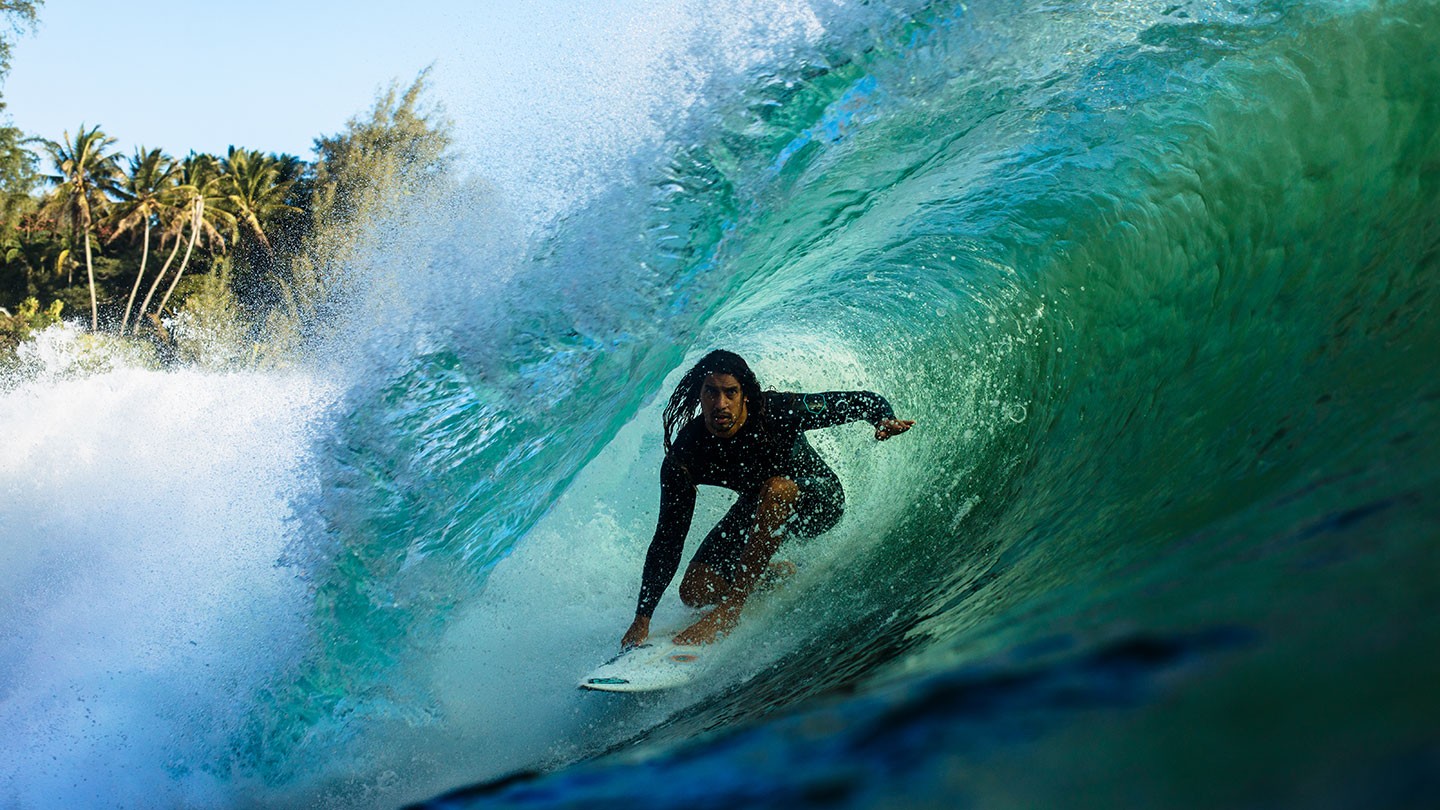
This surfer-scientist doesn’t have that luxury. Or maybe she chooses not to.
She works where the water crashes against the reef.
Think about the scale here. We’re talking Hawaii. That crescent-shaped chain of eight islands.
It spans 2,400 kilometers across the central Pacific.
Each island is basically a volcano that sprang up from the ocean floor long ago.
It’s raw geology. It’s old.
When she dives into the work—mapping the bathymetry of the seafloor—she isn’t just looking at sand.
She’s charting curves and projections. The underwater landscape has bones.
Coral lives there. Hard exoskeletons of dead ancestors building the homes for the living.
It’s a system.
A network of parts.
The water isn’t just a place to swim.
It’s an environment full of variables.
Temperature. Humidity. The way light hits a specific depth.
To navigate this requires more than intuition. It takes intelligence.
Not book smarts exactly, though that helps.
The kind of intelligence that collects and applies skills when a wave changes shape on you.
Citizen scientists play a role too.
Public volunteers. People of all ages.
They help collect data.
Why?
Because you can’t hire enough trained scientists to stand in every shoreline from Oahu to Niihau.
The public brings reach. They bring eyes.
They allow research to scale to a macro level.
Technology bridges the gap.
Cell phones relay signals from base stations covering tiny cells.
It seems small. A phone. A signal.
But it connects the isolated surfer on the beach to the larger society.
Media spreads the word.
Not just the old school papers and magazines.
Digital outlets. Instagram. TikTok. WhatsApp.
Information travels fast now.
If you have a good model—a computer simulation predicting an outcome—it needs to reach people.
But what does it all mean for culture?
Scientists used to think only humans had culture.
Beliefs. Values. Symbols passed down through generations.
Now they know better.
Dolphins show it. Primates show it.
Even the reef has a rhythm.
The surfer doesn’t fit the box of the academic or the athlete.
She is a role model in that she refuses to separate them.
She preserves conservation of both mind and tide.
The water moves in waves. Disturbances.
Regular, oscillating fashions traveling through matter.
You can predict the pattern. You can model it.
You can stand on the shore and calculate the break.
But the ocean is concrete.
Tangible.
Touch.
It pushes back.