John Rennie didn’t just build bridges. He built the infrastructure that allowed London to breathe.
Born in Phantassie, East Lothian in 1761, the Scottish engineer became the go-to person for anything to do with water, stone or iron. He lived until 1821 and died in London, where he left most of his fingerprints. Three of his spans crossed the Thames. This is no small feat. It’s a signature.
Before he was moving tons of rocks, he was moving gears.
Rennie started out as a millwright. That means he fixed the things that kept the industry going. His first big break? Machine design for Albion flour mills. It was a joint project between Matthew Boulton and James Watt. You know them? They made the steam engine practical. Rennie saw an opportunity to upgrade the hardware.
He didn’t just use wood. He expanded the use of iron in gears.
Think about the weight of a wooden gear compared to iron. Think wear and tear. The iron lasted longer. It took the pressure. Rennie realized that if you want a machine to run all day, every day, you need materials that won’t die in the heat.
This change was important.
Canals needed locks that didn’t block. Docks needed cranes that wouldn’t break. Ports needed breakwaters that could withstand storms. Bridges were needed to hold wagons, horses and eventually trains. Rennie understood how it all worked.
He didn’t just design. He improved.
Take the canals. He made it deeper. He made them more efficient. He connected cities that had not been connected before. Trade picked up. Goods moved faster. Prices dropped. People ate better.
Take the docks. He built new piers. He organized the chaos of loading the ships. London became a hub just because it was on a river. This was because Rennie made the river usable.
And the bridges?
Most people remember what a bridge looks like. They don’t think about the engineering. Rennie cared about the engineering. His Thames bridges were not pretty for pretty’s sake. They were sturdy. They were functional. They lasted.
Why is this important today?
Because we still use his systems. The principles he applied to gears still apply to engines. The logic he used for canals still applies to logistics. His way of handling load-bearing structures continues to influence construction.
He didn’t invent the wheel. He made it roll further.
Some engineers dream in blueprints. Rennie dreamed in iron.
The Albion Flour Mills project was his testing ground. He showed that iron can replace wood without sacrificing strength. In fact, it increased strength. That discovery rippled through his career.
When he moved to docks, he used iron whenever possible. When he worked on bridges, he reinforced key points with it important points. He wasn’t afraid to try something new. He wasn’t afraid to break tradition.
That’s why his name sticks.
Three bridges over the Thames. Dozens of canals. Countless improvements.
He didn’t ask permission. He just built.
And now?
We walk across his bridges. We drive over them. We don’t even notice the
Canal Network and industrial drainage
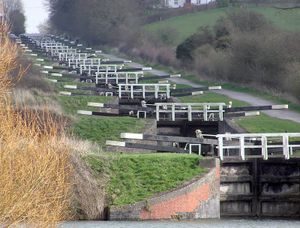
Before John Rennie became a household name for his bridges, he was busy shaping the English landscape. In the 1790s he began work on the Kennet and Avon Canal in Wiltshire. He didn’t stop there. He took on canal projects in Rochdale and Lancaster. At the turn of the 19th century, his focus shifted to marshy lowlands. He managed extensive drainage works on the Lincolnshire fens.
He also touched the coast. He built or modernized ports at Wick, Grimsby, Holyhead and Hull. In London he built the London Docks and the East and West India Docks along the Thames. His naval work was equally extensive. He improved the docks at Plymouth, Portsmouth, Chatham and Sheerness. He even built a breakwater that protects Plymouth Sound. It wasn’t just buildings. They were the infrastructure that kept the empire moving.
Rennie’s most famous bridges
However, Rennie is best known for his bridges in London: Waterloo Bridge (1811–17; replaced 1937–45), which consists of masonry arches; Southwark Bridge (1814–19; replaced 1912–21), consisting of three cast-iron arches; and the New London Bridge (opened in 1831 and moved to Lake Havasu City, Arizona, USA over 130 years later), which consists of several masonry arches.
The timeline here is revealing. Waterloo Bridge took six years to build. Southwark came five years later. New London Bridge opened in 1831. It stood for over a century. Then it was dismantled. It was sent to Arizona. It is now located in Lake Havasu City. London landmark. In the desert.
Passing the Baton
Rennie died. His sons took over. The business did not collapse. It split. George, the older son, worked in mechanical engineering. John, the younger, was in charge of the civil side. He completed London Bridge. He completed the Plymouth breakwater. John later became Sir John. The legacy remained. For a while.