


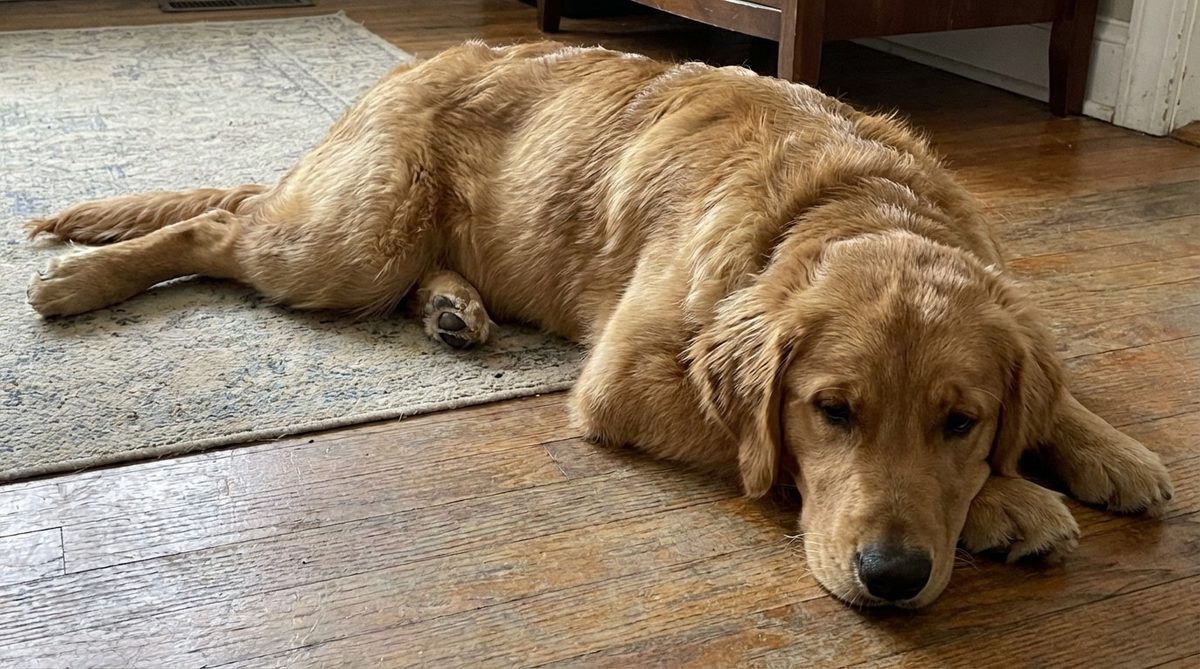
Your dog seems different lately. Less bouncing. Less frantic tail wagging when you come home from work. Maybe he just stands there, looking at you with a vacant stare while the February cold presses against the window. It is easy to blame the weather. It is even easier to blame “getting old.”
But that lethargy is rarely just sadness or a lazy afternoon. It is often pain. Specifically, joint pain.
With canine osteoarthritis symptoms affecting nearly 80% of dogs over 8 years old, that sudden lack of energy is a medical signal, not a mood swing. If you miss it, the pain becomes a background hum your pet has to live with. Learning to read the subtle signs is the only way to stop that suffering before it takes over their life.
Morning stiffness is not fatigue; it is cold-weather arthritis
Watch how your dog wakes up. Does he stretch for an unusually long time? Does he whine softly, barely audible, before finally putting his paws down?
This is a classic symptom of dog joint pain in winter. Arthritis causes what doctors call cold stiffness. After resting, the fluid in the joints thickens. The cartilage, already worn down, grinds against bone. Your dog walks on eggshells for the first few minutes until the movement warms the area up.
This is not muscle soreness from yesterday’s walk. It is a mechanical failure. The cartilage is degrading. If your dog hesitates for several seconds to stand up from his bed, or keeps shifting position without ever settling, he is trying to find a pose that does not hurt. He is managing a chronic condition that you might mistake for general tiredness.
Why your dog refuses to climb stairs anymore
Remember when he could jump into the car trunk with zero effort? Now he stops at the bottom of the stairs. He looks up. He waits. He does not move until you pick him up or offer a ramp.
This hesitation is one of the most visible signs of hip and knee arthritis in dogs. It is not a behavioral caprice. The dog anticipates the pain of the push-off and the impact of the landing.
You will see other changes too.
– The back rounds up.
– The head drops lower.
– Weight shifts away from the painful leg.
Avoidance is the dog’s primary strategy. If he drags a paw, slows down on walks, or refuses uneven terrain, his body is telling you his willpower is outpacing his physical ability. He wants to go. He just can’t.
How to modify your home to help an arthritic dog
Diagnosis is not the end of the road. Osteoarthritis is irreversible, but the damage to quality of life is manageable. You do not need to renovate the house, but you do need to change how your dog interacts with it.
The single biggest upgrade is the bed. A memory foam orthopedic dog bed is not a luxury. It distributes pressure points and insulates the joints from the cold floor. This allows for true restorative sleep, which reduces inflammation and morning pain.
Beyond the bed, consider these specific adjustments:
- Install ramps. If he jumps onto the couch or into the car, put a ramp down. This eliminates the high-impact landing.
- Elevate food and water bowls. This takes the strain off the neck and shoulders when he is eating.
- Add non-slip surfaces. Tile and hardwood are dangerous for arthritic joints. A slip from a stable footing can worsen joint damage permanently. Place rugs or anti-slip mats in high-traffic areas.
Why early intervention matters for senior dogs
It is tempting to think there is nothing to be done. That is wrong. Arthritis affects about one in five adult dogs, but it does not have to be a silent, accepted fate.
Age is not a disease. Pain is. And pain can be treated. The difference between a miserable end and a comfortable one often lies in noticing the small things. The hesitation. The stiffness. The change in posture.
Your dog cannot say it hurts. He just stops playing. He just stands still. But if you look closely, you will see the struggle. And you will have the power to make it easier.


