


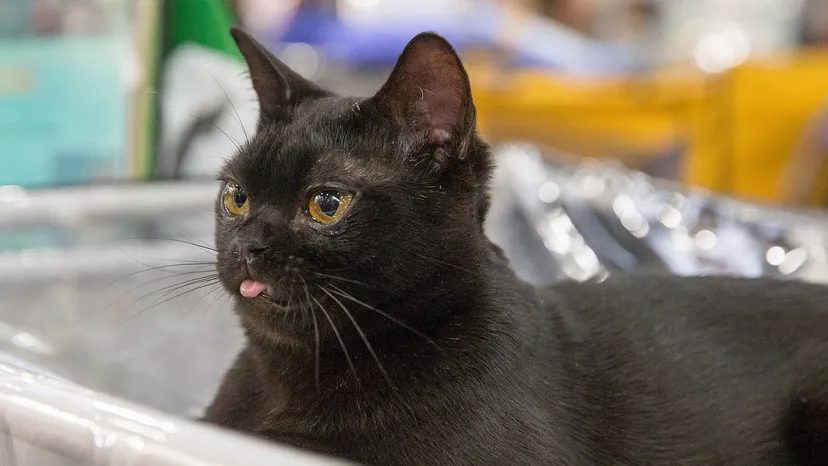
Look at a black cat. It is just a black cat. Not necessarily. That logic fails when you start talking about Bombay cats. They are sleek. They are jet black. But they are not just random alley cats with a dark coat. The difference lies in pedigree. A Bombay must trace its lineage to other Bombays or specific crosses designed to meet a strict standard. Color alone does not make a breed. It is about the bloodline. And the history here is wild.
Creating a Miniature Panther
The story starts in 1953. That was the year Dwight D. Eisenhower became president. In Louisville, Kentucky, a woman named Nikki Horner was busy creating something new. She did not just want a black cat. She wanted a specific look. She had her sights set on the Indian black panther. She wanted that animal in miniature form.
To get there, she crossed two very different cats. A black American Shorthair. A sable Burmese female. The goal was specific. She needed copper eyes. She needed a shiny black coat. She needed a frame that was sturdy yet elegant. It was a deliberate experiment in genetics. It was not accidental.
The “Patent Leather” Look
By the time the 1960s rolled around, Horner’s breeding program was working. The traits were consistent. The cats were completely black. Even the paw pads are black. This creates a stark contrast against the eyes. They are round. They are gold or copper. The Cat Fancier’s Association describes the breed as a “patent leather kid with new penny eyes.” That is a vivid image. It captures the shine. It captures the intensity.
Official recognition did not come quickly. The Cat Fancier’s Association recognized the Bombay breed in 1970. It took until 1976 for them to accept the breed for championship status. That is a six-year gap between recognition and full competition status. It shows how strict the standards were.
Not Just a Pretty Face
The numbers remain low today. They are rare. But those who own them say they are worth the hunt. They are loving. They are affectionate. They act like dogs. You might find a Bombay playing fetch. You might see one on a leash during a walk. They are social animals.
Physically, they hover around 12 pounds. Males can grow larger. When they walk, they have a sway. It is hypnotic. It reminds you of their panther inspiration. It is subtle. But it is there.
American vs. British Varieties
There are two versions of this cat. The American Bombay is the original. It comes from Bombay-to-Bombay breeding or Bombay-to-Burmese crosses. It is recognized by major associations. The American Cat Fanciers’ Association. The Cat Fanciers Association. The Cat Fanciers’ Federation. The International Cat Association. All of them certify it for official championships.
The British Bombay is different. It breeds Burmese to British Shorthairs. As of 2020, it is still an experimental breed. It has not yet crossed the finish line for full recognition.
The Rarity Factor
Most cats are not a single breed. They are a mix. A combination of lineages. They fall into two categories: long hair or short hair. The USDA’s Animal and Plant Inspection Service estimates that only 2 percent of cats in the United States belong to a specific breed. The Bombay is part of that tiny fraction. It is not common. It is curated.
So why does this matter? Because we are looking at a living sculpture. A creature built by human hands to mimic a wild apex predator. It sits on your lap. It purrs. It looks at you with those penny eyes. It is a domesticated illusion. A black cat that is not just a black cat. It is a piece of history. It is a genetic experiment that stuck.
The British version is still waiting for its moment. Will it ever get there? We will see. The American one is here. It is rare. It is real. And it is watching you.


