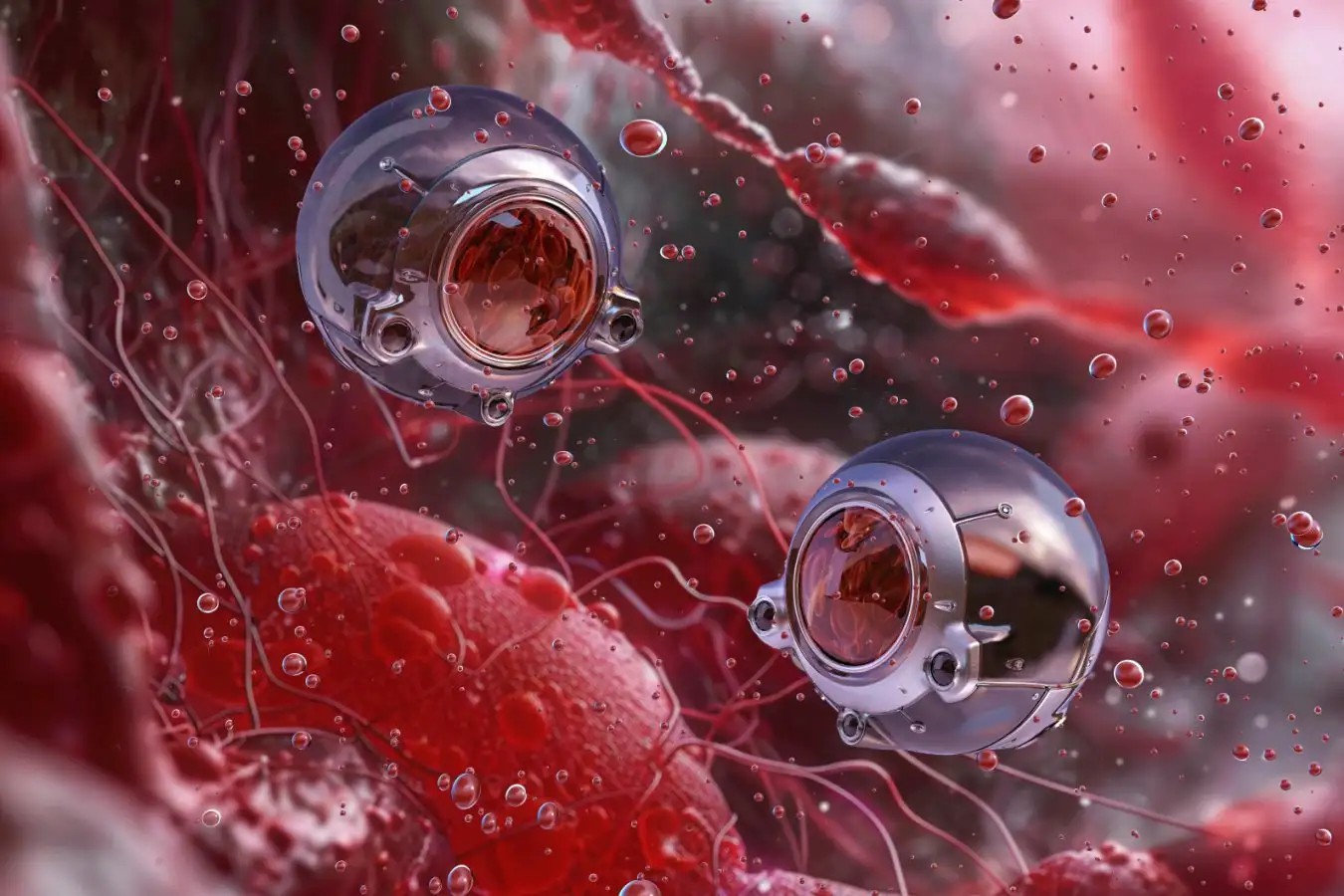
The robot army that actually saves lives won’t look like Terminator. Forget those little dancing androids in China or Elon Musk’s clumsy Optimus prancing around for show. The real deal is microscopic. Made of algae and bacteria. Living organisms mixed with synthetic parts.
Engineers call them biohybrid microrobots.
You’ve seen this trope before. Innerspace. Pills that crawl into your lungs. It’s a sci-fi staple because we’ve always dreamed of machines that can navigate the capillaries of the human body. Tiny soldiers hunting down cancer cells. One by one.
But biology beats engineering here. Synthetic engines? They dissolve in minutes. Algae? They swim. And swim.
“Algae just swims and swims,” says biomedical engineer Joseph Wang.
At UC San Diego, Wang joined forces with chemical engineer Liangfang Zhang. They created swarms of cyborg algae. Specifically Chlamydomonas reinhardtia. This single-celled critter has a flagellum—a tail it uses to paddle around. It also loves blue light. So the researchers shine blue light through masks with shapes cut out of them.
The algae herd into formation. Circles. Squares. The shape of Africa under a microscope. Then they hit the switch for red light, and the swarm disperses. It’s simple programming. Blue means move. Red means break it up.
To turn these swimmers into medics, they stick nanoparticles to the algae’s membrane. Electrostatic force holds it all together. Half-life. Half-machine. All bot.
Why bother?
Because current drugs are lazy. Passive. You swallow a pill, and it circulates everywhere, hitting good tissue and bad tissue alike. Side effects galore. These new bots are active. They seek their target. Doctors could guide them straight to a tumor. Or create custom bandages from living algae right over a wound.
Stomach acid is another beast. Regular algae die there. So the team went looking elsewhere. Mining sites. Toxic, acidic wastelands where tough algae thrive. Those hardy survivors might soon deliver cancer drugs inside your stomach lining.
Who would’ve guessed toxic sludge holds the cure?
Magnetotactic bacteria work differently. These guys navigate using Earth’s magnetic field. Scientists attach payloads to them, then steer the swarm with electromagnets. No light needed. Just a magnetic nudge.
The goal is simple: effective therapies. Fewer side effects. Less invasive treatment.
This isn’t just for human health, either.
Wang’s lab puts chemicals on algae to clean rivers. The bots wiggle through the water for days, absorbing toxins until the poison is gone. Other teams are testing fully synthetic bots for plastic cleanup. Nature provides the motor; we provide the purpose.
The future isn’t humanoid soldiers. It’s swarms. Invisible armies of microscopic helpers cleaning up our messes or patching our insides.
They live inside us briefly. They travel in packs outside. Maybe the scariest part of this tech isn’t what the bots can do to us, but what they’ll force us to realize about the scale of our own bodies. We are just ecosystems waiting for help.