It happened.
Astronauts have finally taken diagnostic-quality X-rays on the actual space station. No simulation. No brief parabolic flight that mimics gravity for ten seconds. We’re talking orbit. The results landed in Radiology, proving that what looked like science fiction just became routine medical procedure up there.
Think about the timeline. Since Yuri Gagarin broke the sound barrier of history in 1961 humans have been drifting, floating, and living in space for more than 65 years. We have had a permanent population on the ISS. But until now we’ve been blind when it comes to looking inside the body.
For four decades ultrasound was the king of space imaging. Why? Because it is portable. It is safe. You just stick the wand against a chest wall.
X-rays demand stillness. Ultrasound demands only proximity.
That is the core problem with X-rays in zero-G. You need a source. A detector. A patient positioned perfectly between them. And they all have to stay put. In a world where coffee floats in globules keeping a detector still for the duration of an exposure sounds impossible. It almost was.
Then technology shrank. Battery-powered, wireless digital generators became small enough to carry on a person. The theory held up during those weird 20-second gravity simulations in 2022. But theory is cheap. Proof is hard.
So SpaceX’s Fram2 mission tried it for real. Three and a half days. Polar orbit. All civilians.
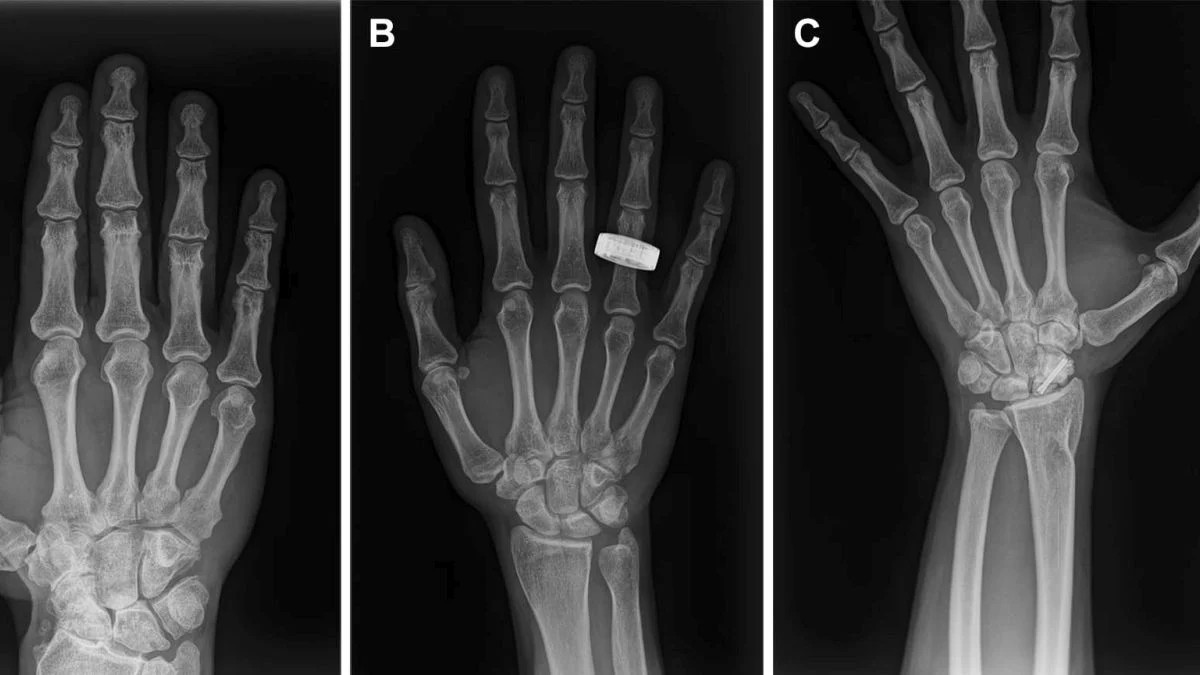
They brought an ultraportable system. Four hours of training. That’s it. The crew scanned themselves. Hands. Forearms. Chests. Pelvises. Even a smartwatch. And a phantom object to serve as a control.
The radiologists back on Earth looked at the scans. The verdict was straightforward.
The images were good. Not just good enough for a glance, but diagnostic quality. The hands came out clean, crisp. Arms were easy. The trickier bits—the chest, the abdomen, the pelvis—were a little murkier. Movement is the enemy of resolution. But they passed the threshold. You could trust them to diagnose a break. A tumor.
Which is exactly the point.
As we prep for Mars for the Moon we cannot keep calling home every time an astronaut gets hurt. Real-time telemedicine is a luxury of low Earth orbit. Out in the deep black delay kills. The crew will need to know what they have. And likely how to fix it.
This tech does more than check bones.
That smartwatch in the scan? It proved X-rays can inspect hardware. Non-destructive testing. Checking for micro-cracks in spacecraft walls without tearing them open. Medical tool doubles as engineering maintenance kit.
There are catches.
The device sustained damage on return to Earth. It survived the ride but it is not exactly rugged. For a Martian expedition we will need something built to tank the abuse. Also in-flight time is limited. You cannot scan every body part every day. The team suggests AI might eventually fill the gap. Letting the astronauts analyze their own scans when Earth is too far to hear you scream.
We are leaving the cradle. We will need tools that work in the dark. This was the first step. It worked. Now we need it to last longer.