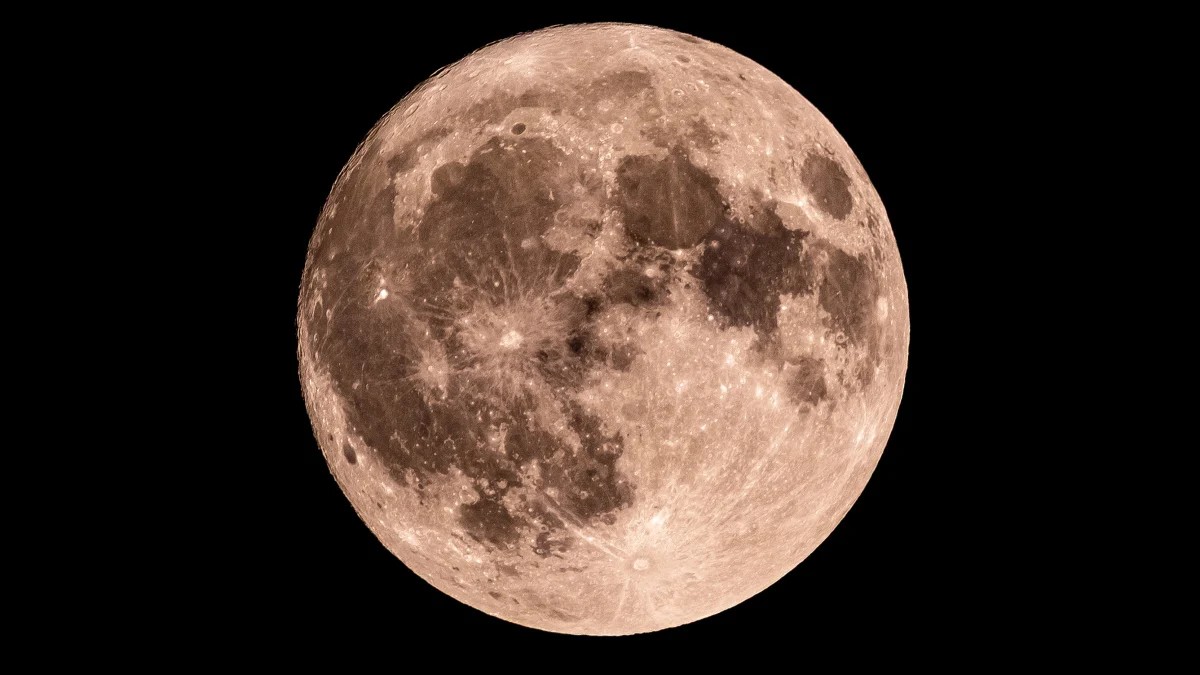
It’s night. The moon isn’t quite dark yet but it’s fading. Specifically it is in a Waning Gibbous phase right now. That puts us at day 19 of this cycle.
What you are actually looking at
NASA says about 84% of the surface is visible. You don’t need gear just to see it. With bare eyes you can spot Mares Imbrium and Serenity. Kepler Crater is there too if you know where to look.
Want more? Grab binoculars. Posidonius Crater appears. The Alps Mountains on the moon are visible. So is Grimaldi Basin.
Get a telescope? The view gets crowded. Apollo 11 and 11 landing sites come into view. Rima Ariadaeus too. Why do we go through all this trouble to see rocks from space? Because they look better from home.
When does it fill up again?
Wait until July 29 for the next Full Moon. Until then the light shrinks a bit more every evening.
Why does it change shape
Orbit time. Roughly 29.5 days to loop Earth. Eight phases total. The moon always shows the same face but the sunlight hits different angles as it moves. Shape shifts from a sliver to a quarter. Then it bulges into a full circle before shrinking back. This loop is the lunar cycle.
Here is how the lights break down.
- New Moon: Between us and the sun. Side we see is black. Invisible really.
- Waxing Crescent: Sliver on the right for Northern viewers.
- First Quarter: Half lit right side. Looks like a semi-circle.
- Waxing Gibbous: Past half full. Getting bright.
- Full Moon: All light. Whole face visible.
- Waning Gibbous: Right side starts fading in the North.
- Last Quarter: Half moon again. Left side is the bright part now.
- Waning Crescent: Thin edge on the left before darkness returns.