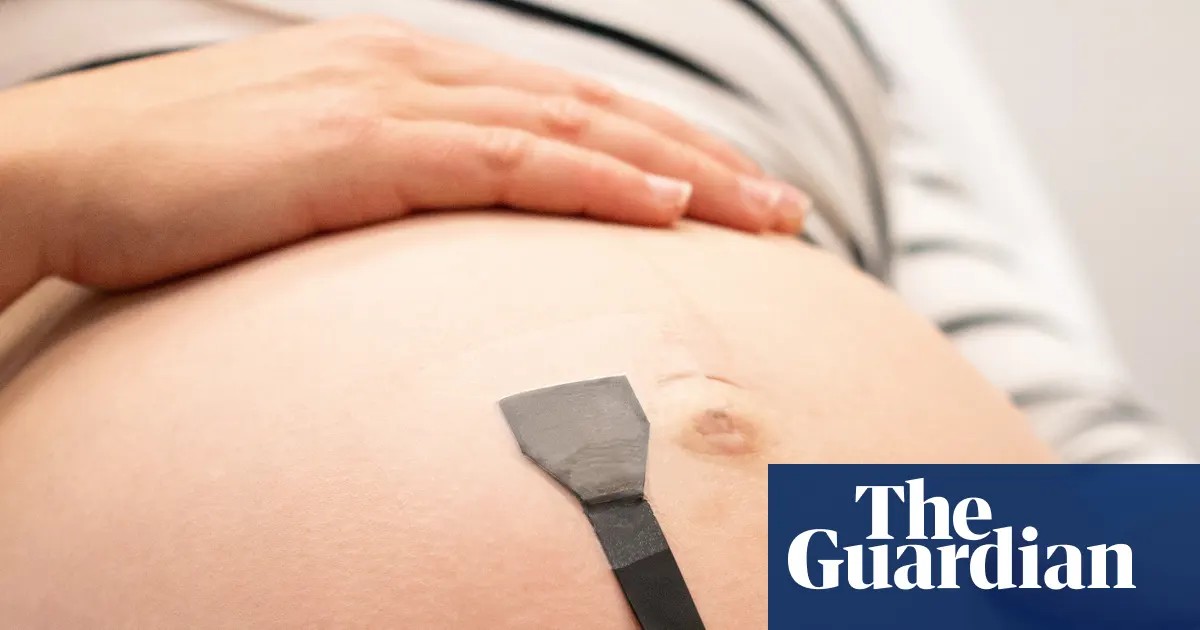
Ultrasound just got wearable. And it sticks.
For too long, prenatal checkups have been snapshots. Literally. A handheld device. A few seconds of sound. A glance. Then you’re done until the next appointment. It’s a fragmented view of a living, breathing fetus.
Scientists at Stanford and Oxford wanted to fix that gap. They built the UPatch. It’s a flexible ultrasound patch you can wear on your stomach. It stays there for hours. Maybe even all day. It records continuous data. Not just when you’re sitting in a hospital chair with gel on your skin. But while you’re living your life.
Current methods? They’re noisy. False alarms are rampant because traditional monitoring picks up everything without context. Handheld scans are limited by the skill of the operator and the time they have.
“Current diagnosis devices are intermittent… The patients can only do such measurements in hospital. They miss a lot.”
— Prof Sheng Xu, Stanford
The UPatch changes the game by tracking blood flow in real time. It watches the umbilical cord move. It maps the heart rate not as a single beat but as a rhythm that shifts with the mother’s movement.
Is it perfect yet? No. It’s still tethered to external computers. You need a standard ultrasound to place it initially. It’s proof-of-concept hardware, published in Nature Biotechnology. But the signal it pulls from the depths of the womb is clear.
The team ran trials in the US and UK. Sixty-two pregnant participants wore the patch. The numbers matched handheld devices exactly. But the handheld devices couldn’t do what the patch did: wait. Watch. Detect changes.
Here is where it gets serious.
Fifty-two women were monitored continuously for heart rate and flow. In one case, the patch flagged trouble that brief scans missed. It showed severe intrauterine growth restriction linked to pre-eclampsia. The medical team acted. They delivered via C-section. A stillbirth was likely averted.
Did we really know what we were missing all along?
Park, a lead researcher from UC San Diego, notes that fetal blood flow isn’t static. It fluctuates. Temporarily. A dip in the afternoon doesn’t always mean disease. It might just be a dip.
Brief scans confuse the dip for disaster. Continuous data sees the pattern. It distinguishes noise from threat.
Now the goal is wireless. No tethers. No hospitals required. Just a patch in your pocket or stuck to your side.
Xu argues this is essential for low-resource settings. Not everyone has a skilled sonographer within miles. Georgieva adds that the academic value is huge. We could finally see why some pregnancies fail while others thrive. The data is right there. Hidden in the gaps between visits.
We’re waiting for the battery tech to catch up. But the window into the womb is opening. Wider. Constant. Unblinking.
What happens when we see everything? 🌑