


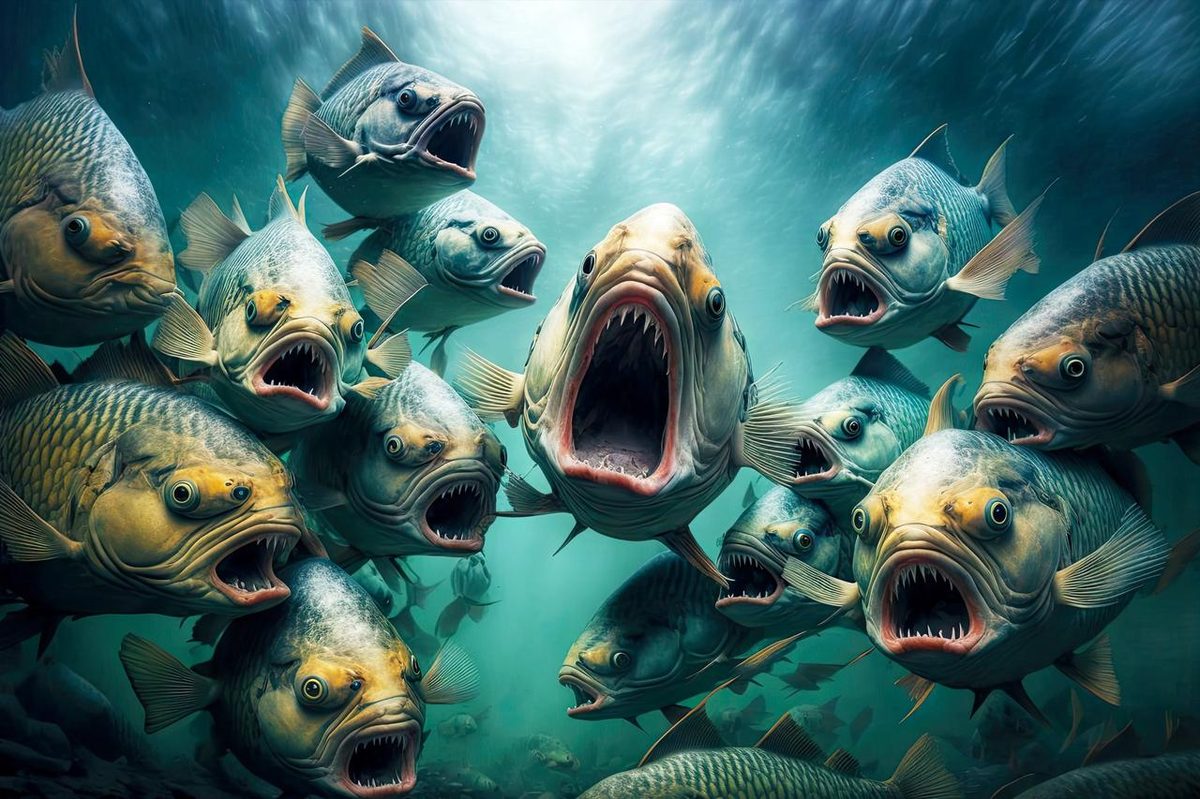
If you think a piranha is just a fish with sharp teeth, you’re only half right. The word itself—often spelled piranha or piragna —is a catch-all term for several distinct species. Despite its literal translation as “devil fish,” the group actually contains around 80 different kinds of fish.
They aren’t all monsters. Some species are vegetarians, subsisting on fruits, seeds, and plant matter. Then you have the carnivores. These are the ones drawn to the scent of blood. Their diet includes insects, mollusks, rodents, snakes, and yes, other fish. And since other fish often includes other piranhas, these creatures are indeed cannibals.
To be precise, cannibalism is consuming any part of an individual from your own species. That’s exactly what’s happening here. But this distinction matters when we discuss whether piranhas eat humans. That specific act is called anthropophagy. People often confuse the two, but the difference between eating your own kind and eating a human is massive. We need to be clear on that because the question of whether piranhas are anthropophagic keeps coming up.
They’re also opportunistic eaters. If an animal is sick or injured, even something much larger than them, they’ll take a bite. They’re not picky.
Geographically, you don’t need to worry about them while swimming in the ocean this summer. Piranhas are endemic to the fresh waters of South America. They only live there.
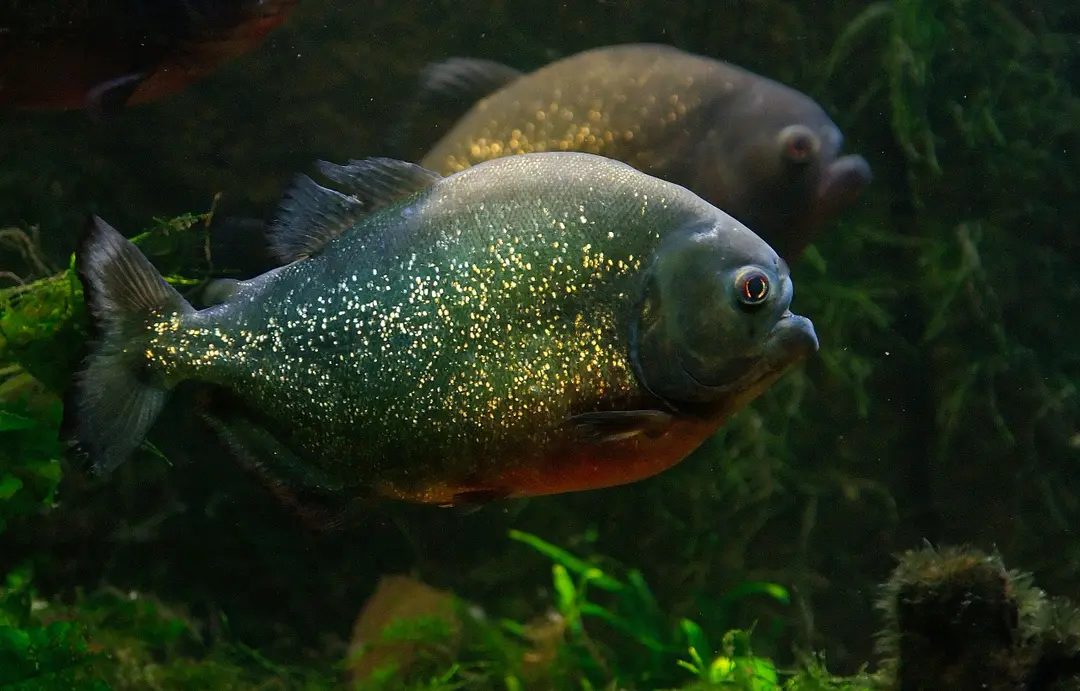

The reputation of piranhas is built on fear. They are widely considered to be voracious, extremely aggressive predators capable of stripping a human down to the bone in minutes. It’s a terrifying image. When you see viral videos of piranhas swarming chicken legs in murky water, it’s easy to believe the hype. But does reality match the horror?
The truth is less sensational. Their hunting techniques are far from the frenzied bloodbath portrayed in movies. Piranhas primarily react to vibrations and sounds produced by splashing. If an animal is dying or struggling in the water, the distress signals draw them in. They are also attracted to the scent of blood, leading them toward injured creatures. These fish are opportunistic scavengers. They rarely target healthy, living animals. Attacks on robust prey are usually defensive measures or acts of prevention, not predation.
Why Piranhas Become Aggressive
Piranhas can become notably aggressive during the dry season. The reason is straightforward: drying water sources force large populations into small, confined spaces with scarce food resources. When food is this limited, competition skyrockets. Any movement triggers a feeding frenzy.
This environment creates tension. But even in this heightened state, the likelihood of a piranha attacking a human is statistically negligible.
The Myth of the Man-Eater
Here is the most important statistic: no fatal piranha attack has been recorded since 1870. It is a stark contrast to their reputation. To be bitten by a piranha, you actually have to invite it. You have to be in the water, bleeding, and vulnerable.
The myth of the man-eating piranha likely stems from a single historical event in the 1870s. During the War of the Triple Alliance, Brazilian soldiers fought against Paraguay. Weakened and wounded soldiers attempted to cross the Paraguay River to seek medical care. They never reached the opposite bank. The soldiers, already compromised by injury and exhaustion, were devoured by piranhas attracted to the blood in the water.
This incident was sensationalized. Cinema took this event and amplified it, giving the fish almost supernatural, werewolf-like qualities. It became a convenient monster for storytelling. But since that massacre, no one has died from a piranha attack.
Real Risks in the Water
While death is virtually impossible, injury is still a risk. Piranhas have powerful jaws and sharp teeth. In 2013, approximately sixty people were attacked by a school of piranhas on a beach in Argentina along the Paraná River. The water was murky that day. Victims did not see the fish approaching.
People felt bites on their feet and hands. Some lost small pieces of flesh. These were not coordinated attacks on humans as prey. They were defensive reactions or mistaken identities triggered by the presence of humans in a crowded, stressed fish habitat.
The lesson is clear. Piranhas are not mindless killers waiting for victims. They are opportunistic scavengers reacting to specific stimuli. Fear is natural. But understanding their behavior reduces the danger.
Piranhas are not man-eaters. They are scavengers that respond to vibration and blood.
Respect the water. Stay aware. But don’t let old myths dictate your fear.
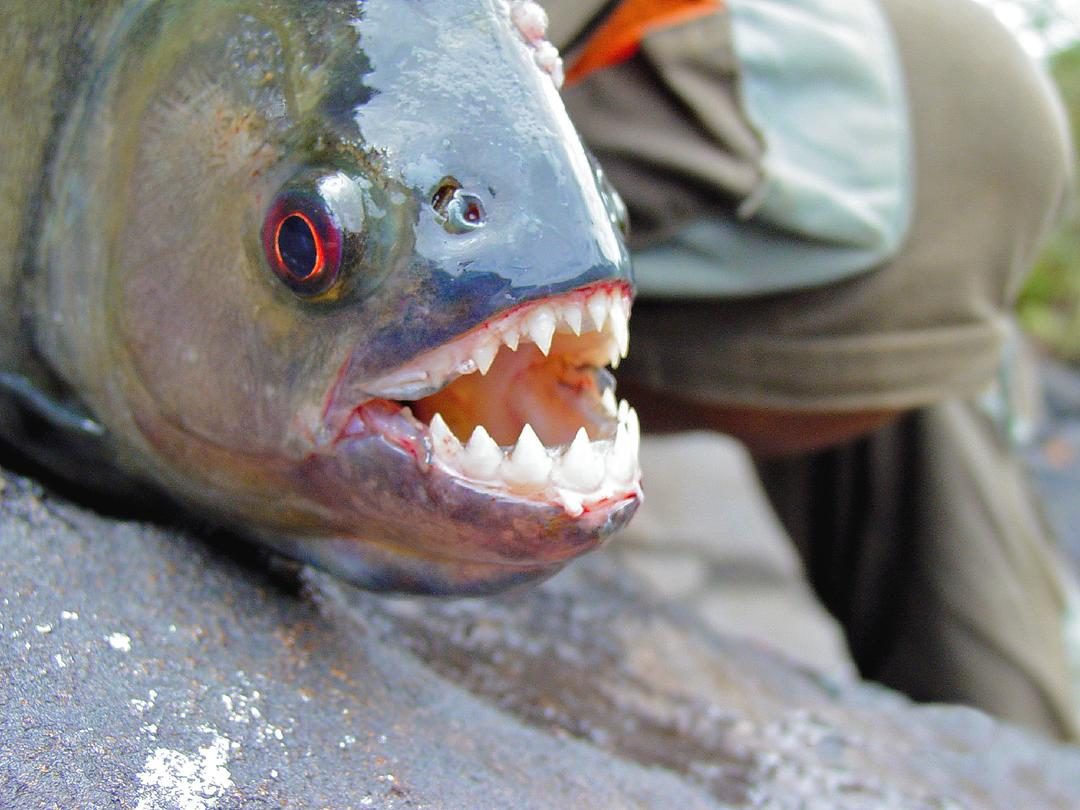


It sounds horrific. A seven-year-old girl losing a finger. The image sticks with you. But panic is a luxury you can’t afford here because the reality is statistically absurd. The risk to a healthy adult is effectively zero. People living near Amazonian rivers bathe daily with piranhas and suffer no incidents. The real danger isn’t the toothy fish below. It’s the caimans lurking in the mud. Or the freshwater sharks. Or the anacondas. You’re much more likely to be killed by a crocodile than a piranha. But that doesn’t mean you should ignore the water entirely.
Which Species Actually Pose a Risk?
If you’re traveling to South America, knowing which fish to avoid is basic survival prep. Not all piranhas are created equal. Some are shy. Some are solitary. Some are simply misunderstood. Let’s look at the specific threats.
First, there is the Black Piranha. It doesn’t school. It hangs out alone. And that makes it dangerous. Its jaw strength is disproportionate to its size. It can bite with a force roughly thirty times its own body weight. If it bites, it breaks bone. Keep your toes out of the water when you see them.
Then there is the Red-Bellied Piranha. This is the poster child for the myth. Their bellies turn red during breeding season. Unlike the solitary black variety, they travel in groups. They are responsible for the majority of documented amputations. Fingers. Toes. Fishermen have lost limbs to this species. It’s aggressive. It’s curious. It’s not worth testing.
Next is the São Francisco Piranha. Native to Brazil. It holds the title of one of the most dangerous species in the region. In English-speaking circles, they are often called man-eating piranhas. The nickname is misleading. They don’t hunt humans. But they are large—up to 50 centimeters long. And they travel in packs. They can deliver a devastating bite. If you see them, you move.
The Myth of the Man-Eater
Here is where the narrative breaks down. We have spent centuries fearing a fish that mostly eats scraps. The idea that piranhas will leap from the river to devour a human is fiction. It is sensationalism.
There was that one incident in 1870. A war campaign where soldiers waded through swamps. The reports were exaggerated by propaganda and horror. Since then, there have been no confirmed cases of piranhas hunting humans as prey. They are scavengers. They are opportunistic. They clean up dead animals. They do not hunt living, healthy adults.
You can still get bitten. If you bleed in the water, the scent travels. Blood attracts attention. That is the only reason you are in danger. A healthy swimmer is not on the menu. A bloody fisherman is.
So, respect the river. Respect the caimans. Respect the anacondas. But don’t let a movie script dictate your anxiety. The piranha is a fascinating creature. It is a apex predator in its niche. It is not a monster. It’s just a fish that wants to eat what it can find. Keep your fingers dry. Keep your bleeding wounds covered. And enjoy the water. The danger is real, but it’s not the one you think it is.