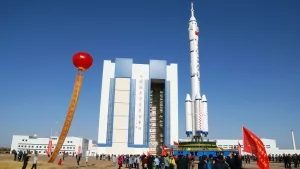
China isn’t just knocking on the door of deep space anymore. It’s kicking it down. The People’s Republic has laid out a roadmap that reads like science fiction turned into a budget line item. We are talking about lunar missions. Mars expeditions. And a permanent space station of their own.
Some observers squint at these plans with genuine skepticism. They wonder if the ambition outpaces the engineering reality. Others? They look at China’s explosive economic growth and nod. The money is there. The industrial capacity is there. The question isn’t really if these things can happen. It’s when.
So, what exactly is Beijing planning for the next few years? Here is the breakdown of the most critical missions on the books.
The Lunar Base Strategy
The moon isn’t a destination anymore. It’s a proving ground. China’s long-term vision includes establishing a research station on the lunar surface. This isn’t about planting a flag and driving away. It’s about staying put.
The core of this effort is the International Lunar Research Station (ILRS). While the name suggests global partnership, the lead is distinctly Chinese. The plan involves launching multiple robotic missions first to map resources. Then, crewed landings. The goal is a sustained human presence.
“China views the moon not as a final frontier, but as a stepping stone for deeper space exploration.”
This base serves a dual purpose. It tests technologies for long-duration stays. It also secures China’s position in a potentially resource-rich environment. Helium-3, water ice, rare earth minerals. The strategic value is immense.
Mars: The Next Big Leap
If the moon is the practice field, Mars is the championship game. China’s space agency, CNSA, has been quietly preparing for a Mars landing for over a decade.
The success of the Tianwen-1 mission changed the conversation. When the Zhurong rover successfully touched down in 2021, China became only the second nation to land and operate a rover on the Red Planet. The US had done it. Russia tried and failed. China succeeded.
Future plans point toward sample return missions. This is the holy grail of planetary science. Bringing Martian soil back to Earth requires a level of precision that most countries have not yet demonstrated. The timeline suggests launch windows in the mid-2030s.
Why does this matter? It’s not just about bragging rights. Mars offers clues to the origins of life. It provides data on how to survive off-planet. And it forces engineers to solve problems no one else has solved yet.
The Tiangong Space Station
You can’t reach for the stars if you can’t keep your own house in order. The Tiangong space station is already in orbit. It’s fully operational. It’s hosting international crews from developing nations.
But the work isn’t done. Tiangong is a laboratory. It tests biological experiments in microgravity. It studies materials science. It builds the muscle memory for long-term orbital habitation.
The station will remain in orbit until at least 2030. After that? It will be deorbited. But not before becoming a cornerstone of China’s space infrastructure. It’s the launchpad
Wu Yanhua didn’t mince words. The goal for China’s space agency is explicit. By 2030, they want to be among the top spacefaring nations on Earth. Big talk? Maybe. But the numbers back it up. Their aerospace industry is expanding at the same blistering pace as their economy. Decades ago, Beijing bought outdated rockets from Russia. Today, the Long March 5 booster competes directly with American thrust systems. And since 2016, a compact space station has been orbiting steadily.
The trajectory is clear. They aren’t just watching anymore. They are building.
Why Chang’e 4 Targets the Dark Side of the Moon
2018 was supposed to be a busy year for Beijing. Forty launches were scheduled. That is double the number from the previous year. But the real headline wasn’t the volume. It was the destination.
The Chang’e 4 mission aimed for a soft landing in autumn 2018. This was their second attempt at a lunar touchdown. The payload included a rover designed to analyze moon rock and soil. Standard procedure? No. The twist was the location. Chang’e 4 targeted the far side of the moon. Never before had a spacecraft landed there.
The far side remains largely unexplored. It is always facing away from Earth. We never see it. That is why it gets labeled the “dark side.” It isn’t dark in terms of sunlight. It is dark in terms of visibility. Landing there is a logistical nightmare. Communication with Earth is blocked by the moon’s bulk. Signals have to bounce off a relay satellite. Experts thought it might be impossible. They were wrong. It was feasible.
Beyond the Landing Pad
The data from Chang’e 4 isn’t just for history books. It is foundational. The results will help chart the course for future manned missions. When will Chinese astronauts walk on the lunar surface? No one knows for sure. The timeline is blurry.
But the plans extend further than a simple footprint. China is not working in isolation anymore. They are partnering with the European Space Agency. The concept? A “moon village.” This isn’t just a flag-planting exercise. It is an outpost. A hub. Think about what that implies. It could serve as a launchpad for Mars missions. It could support tourism. It could facilitate mining operations for rare resources.
Pal Hvistendahl from the ESA put it bluntly. The Chinese have an aggressive lunar program ready to go. The landscape has shifted. It doesn’t look like the 1960s race anymore. The dynamics of space exploration have changed. If space is to be used for peaceful purposes, international cooperation isn’t just nice to have. It is necessary.
The moon was once a battleground for ideology. Now it looks like a workshop. The shift is subtle but profound. We are moving from competition to infrastructure. From flags to foundations.
Does this mean the Cold War rivalry is over? Not entirely. But the rules of engagement are being rewritten. And Beijing is helping hold the pen.
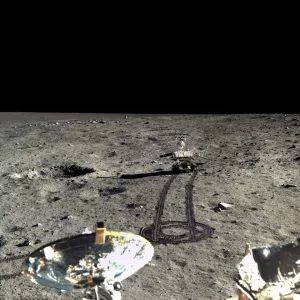

The Red Planet has always been the ultimate horizon for dreamers and scientists alike. Will there be alien life out there? Could humans walk its dusty surface within our lifetimes? China is asking these same questions. In July or August of 2020, Beijing launched its first dedicated Mars mission. It was a two-part effort involving an orbiter and a rover designed to touch down on the surface.
Zhang Rongqiao, the chief designer of this Mars mission, noted that progress was surprisingly smooth given the sheer difficulty of interplanetary travel. The goal wasn’t just to look. The rover was tasked with analyzing the atmosphere and soil chemistry. It searched for the basic building blocks of life, scanning the Martian regolith for signs that the planet wasn’t entirely barren.
This was just the beginning. The Chinese space agency has far grander plans on the table. They aim to return Martian soil to Earth within the next few years. Even bigger dreams involve sending humans to the Red Planet sometime between 2040 and 2060. Those dates are still distant. Details remain vague, but the trajectory is clear.
Expanding Beyond Low Earth Orbit
Mars is the long game. In the near term, China is focused on its own orbital infrastructure. The United States blocked China’s entry into the International Space Station (ISS) in 2007 citing national security concerns. That rejection forced Beijing to build its own capability rather than rely on Western partnership.
Tiangong-1, China’s first prototype space lab, made headlines not for what it achieved, but for how it ended. It de-orbited and crashed into the Pacific Ocean in April 2018. Tiangong-2 followed, but it was a temporary solution. The capsule measured only four by ten meters. It could hold two taikonauts for a maximum of thirty days. It was a proof of concept, not a home.
The real shift began with the construction of a permanent station. Scheduled for completion around 2022, this new complex consists of multiple modules. Its design draws comparisons to the Soviet-era Mir station, which served as a modular precursor to today’s ISS.
The Tiangong Space Station: A New Era
The core module, named Tianhe-1, launched into orbit in 2019. This marked the start of a permanent human presence in Chinese-controlled space. Unlike the cramped capsules of the past, the new station allows three taikonauts to live and work aboard for extended periods. Supply modules were already in Earth orbit, ready to keep the crew fed and fueled.
Why does this matter right now? Timing is everything. The ISS, operated by a coalition of Western and Russian partners, is scheduled to be retired around 2028. If China’s station remains operational, it could become the only active human space laboratory in low Earth orbit.
This isn’t just about prestige. It is about independence. Having a self-sufficient orbital platform means China controls its own research environment. It can conduct experiments without political restrictions. It can host international partners on its own terms. As the ISS fades, the Tiangong station stands ready to fill the void.
The implications are vast. Scientific data gathered in microgravity on Tiangong will contribute to global knowledge. Medical research, material science, and atmospheric studies will all benefit. But there is also a strategic dimension. Controlling the only remaining space lab in the 2030s gives Beijing significant leverage in