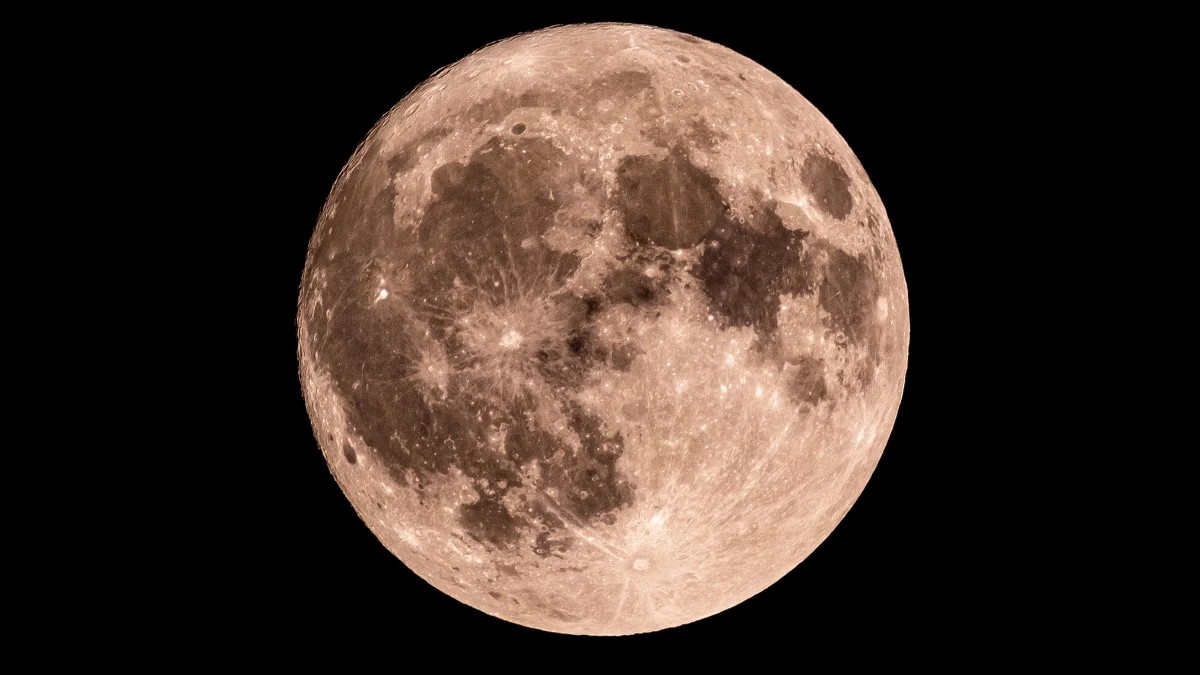
The sky is bright. Tonight, you’re looking at a Moon that’s practically begging to be seen. We are standing on the precipice of the Full Moon, which means the light is peaking. But it isn’t there yet. Not quite.
If you look up on July 27, you’re catching the moon phase today in its Waxing Gibbous stage. Specifically, NASA’s Daily Moon Guide says 95% of the surface is visible. It’s huge. It’s glowing. And it’s changing fast.
What can you actually see on the surface tonight?
You don’t need a degree in astrophysics to spot details. You just need to know where to look. With the naked eye, you can identify three of the major lunar seas. Mares Fecunditatis (Sea of Fecundity), Serenitatis (Sea of Serenity), and Tranquillitatis (Sea of Tranquility) are visible. They appear as dark, flat patches against the bright highlands.
Wear out your binoculars if you have them. That extra magnification pulls back the veil on Mare Nectaris (Sea of Nectar) and Mare Humorum (Sea of Humor). You’ll also catch the Endymion Crater, a large impact scar on the lower right limb.
Got a telescope? Good. Now you’re in business. A modest scope will reveal the Apollo 12, 116, and 17 landing sites. You might even pick out the debris fields if the atmosphere holds still. These spots are tiny. Pinpricks on a disk. But they represent human history.
Why do we care about the dates? Because timing is everything in skywatching.
When is the next Full Moon?
Mark July 29 on your calendar. That is the official Full Moon. We are two days away from that moment. In between now and then, the illumination creeps from 95% to 100%. The difference is subtle. To the untrained eye, it’s negligible. To an astrophotographer, it’s critical.
The Moon will look slightly less sharp at peak brightness due to the “full moon opposition surge.” Dust grains on the surface reflect light directly back to the source. At other phases, shadows hide the texture. Tonight, the texture is still somewhat visible. Tomorrow, it flattens out. Enjoy the contrast while you can.
How do lunar cycles actually work?
People often get this wrong. The Moon isn’t changing shape. Earth isn’t blocking the Sun. That’s a shadow myth. The reality is geometry.
The Moon takes roughly 28.5 days to orbit our planet. During that time, the angle between the Sun, Moon, and Earth shifts. This changes which portion of the lunar surface is illuminated. The side always facing us doesn’t change. But the sunlight hitting it does. This creates the cycle we’ve seen for millennia.
Here is the breakdown of the eight phases, according to NASA:
- New Moon: The Moon is between Earth and Sun. The face we see is dark. Invisible without specialized equipment.
- Waxing Crescent: A small sliver appears on the right side if you are in the Northern Hemisphere.
- First Quarter: Exactly half is lit. It looks like a semi-circle. The right half is bright.
- Waxing Gibbous: More than half is illuminated. This is where we are right now. 95% full.
- Full Moon: The entire face is lit. Fully visible.
- Waning Gibbous: Light begins to recede from the right side.
- Third Quarter (or Last Quarter): Another half-Moon. Now the left side is lit.
- Waning Crescent: A thin sliver remains on the left. Then it disappears again.
The cycle repeats. Always. It’s a mechanical certainty in a chaotic sky.
Why does this matter?
We spend a lot of time ignoring the sky. We look down at screens. We forget that a giant rock is hanging there every night, reflecting sunlight we emitted thousands of years ago.
Tracking the phases connects us to that. It’s not about astrology. It’s about orientation. Knowing that July 27 is a Waxing Gibbous means you know the next night will be brighter. You know the tides will be higher. You know the nocturnal predators will have more light to hunt.
The Moon is always there. It’s just a matter of whether we’re looking.