


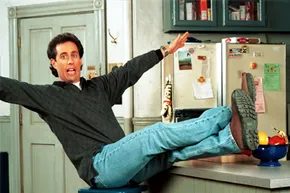
Jerry Seinfeld has always been pretty clear about his superhero allegiance. It isn’t Batman. It isn’t Aquaman. It’s Superman. Period.
To Jerry, any suggestion that another hero holds a candle to the Man of Steel is basically blasphemy. George Costanza put it best when he noted that Jerry’s entire life revolves around Superman and cereal. There’s even that awkward bit where Jerry draws nude sketches of Lois Lane, which he insists is perfectly normal. But this obsession isn’t just character flavor text. It’s a central pillar of the show’s mythology.
For years, fans have circulated a rumor that Superman is mentioned in all 172 episodes of Seinfeld. It sounds plausible given how often the character pops up. But is it true? And if it is, does that mean the writers forced a Superman reference into every script? Or is Jerry’s real-life fandom just bleeding into the dialogue?
Let’s settle this once and for all.
The Myth of the 172 Mentions
First off, let’s address the headline-grabbing statistic. The claim that Superman appears in every single episode is a stretch. A massive one.
Barry Freiman, who runs Superman Homepage, spent time actually digging through the archives. He didn’t just glance at the titles. He watched. He listened. And he counted.
Freiman found references in only 46 episodes.
That’s it. Less than a third of the series. If you are one of those people who thinks you can point to Superman in Episode 105 because a character dropped the word “hero” during a dinner reservation dispute, you might want to check your facts.
There are only two episodes that are overtly, undeniably Superman-themed.
- “The Race” (1994): Jerry races against an old elementary school nemesis. The dramatic music? It’s the Superman theme song.
- “Bizarro Jerry” (1996): Jerry accidentally becomes Bizarro Jerry. The episode leans hard into the doppelgänger lore.
But the references go deeper than just those two. In “The Stock Tip,” Jerry and George get into a heated debate about whether Superman actually has a sense of humor. In “The Café,” Jerry wonders if Superman would just be another average New Yorker if he weren’t so powerful.
What Counts as a Reference?
Here is where the definition gets fuzzy. Does saying the name “Clark Kent” count? What about seeing Jerry’s Superman statue on the desk?
Freiman has strict rules.
He counts mentions of other superheroes. He counts Lex Luthor. He counts the red and blue sweatpants Jerry wears in the pilot episode as a visual homage.
He does not count the Superman statue. He does not count the refrigerator magnet.
There is also a secondary theory from the “every episode” camp. They point to the actors who played Superman-related roles after Seinfeld ended. Teri Hatcher (Lois Lane in Lois & Clark ) appeared in the show. Patrick Warburton (Duckman, but also later in Superman Returns and as the voice of Kronk, wait, no, Warburton was in Men in Black and Cobra Kai, but he voiced characters in animated Superman projects? Let’s stick to the text). The text says Warburton appeared in Superman-themed productions. Freiman counts Hatcher’s appearances because of her role. He doesn’t count Warburton’s.
So, the actor cameos don’t push the number to 172 either.
Why Superman?
If the writers weren’t obsessively inserting Superman into every script, why is he there so much?
Peter Mehlman, a writer and producer for most of the show’s run, gave the definitive answer in 2013. He told Parade magazine that there was no concerted effort to mention Superman in every episode.
“He just magically appeared early in the series and evolved into a go-to guy for humor,” Mehlman said.
Think about it. Seinfeld is a show about people who are selfish. They are cowardly. They are petty. Superman is the opposite. He is brave. He is heroic. He does the right thing.
The writers realized that Superman was the perfect foil for the gang. You can’t have a joke about George’s cowardice without contrasting it with Superman’s bravery. You can’t have a scene about Jerry’s pettiness without the shadow of the Man of Steel looming over it.
So they worked him in wherever they could. It evolved naturally. It wasn’t a quota. It was a comedic device.
The Verdict
So, should you dust off your DVD set? Should you start a


