It starts with the stuff you can’t see. Or barely can.
Science loves definitions, but let’s be real, it’s just us trying to pin down a world that refuses to stay still. So here is what they are saying about the invisible crew running your life.
The Water Dwellers
Algae. We used to call them plants. We were wrong. They aren’t plants, even though they need sunlight to cook their food like green stuff does. They are their own thing, mostly living in water, some as single cells, others as clumps of them.
Then there are bacteria. Singular is bacterium, but who cares. They are everywhere. Seriously. Under your skin. At the bottom of the ocean. Inside the plants you eat. They are one of the three big buckets of life on this rock.
Which brings us to the cell. The basic unit. The Lego brick of life. Most of them are too small for your naked eye to spot, just a bag of watery fluid with a wall or membrane around it. You? You are a colony. Trillions of them working together. Or are you just a yeast or a mold or some algae, then it’s all you have. Just one.
And what holds these bags together? Chemistry.
Science is just us figuring out what stuff is made of, and then making more of the useful kinds.
Chemists deal with composition. Structure. Properties. How things bounce off each other. They use the recipes to cook up new medicines or old plastics. It’s not magic, it’s just knowing which atoms play nice together.
The Sleepers and the Feeders
Sometimes life stops. It gets dormant. Active life is demanding, so some things hit the pause button, slowing their bodies down to near nothing until the heat death of the universe—or just spring, whichever comes first.
But not everything sleeps. Fungi don’t do photosynthesis. They eat. Mold. Yeast. Mushrooms. They are organisms, sometimes just one cell, that reproduce via spores. They feed on the living and the dead alike, scavengers of the biological world.
Speaking of spores.
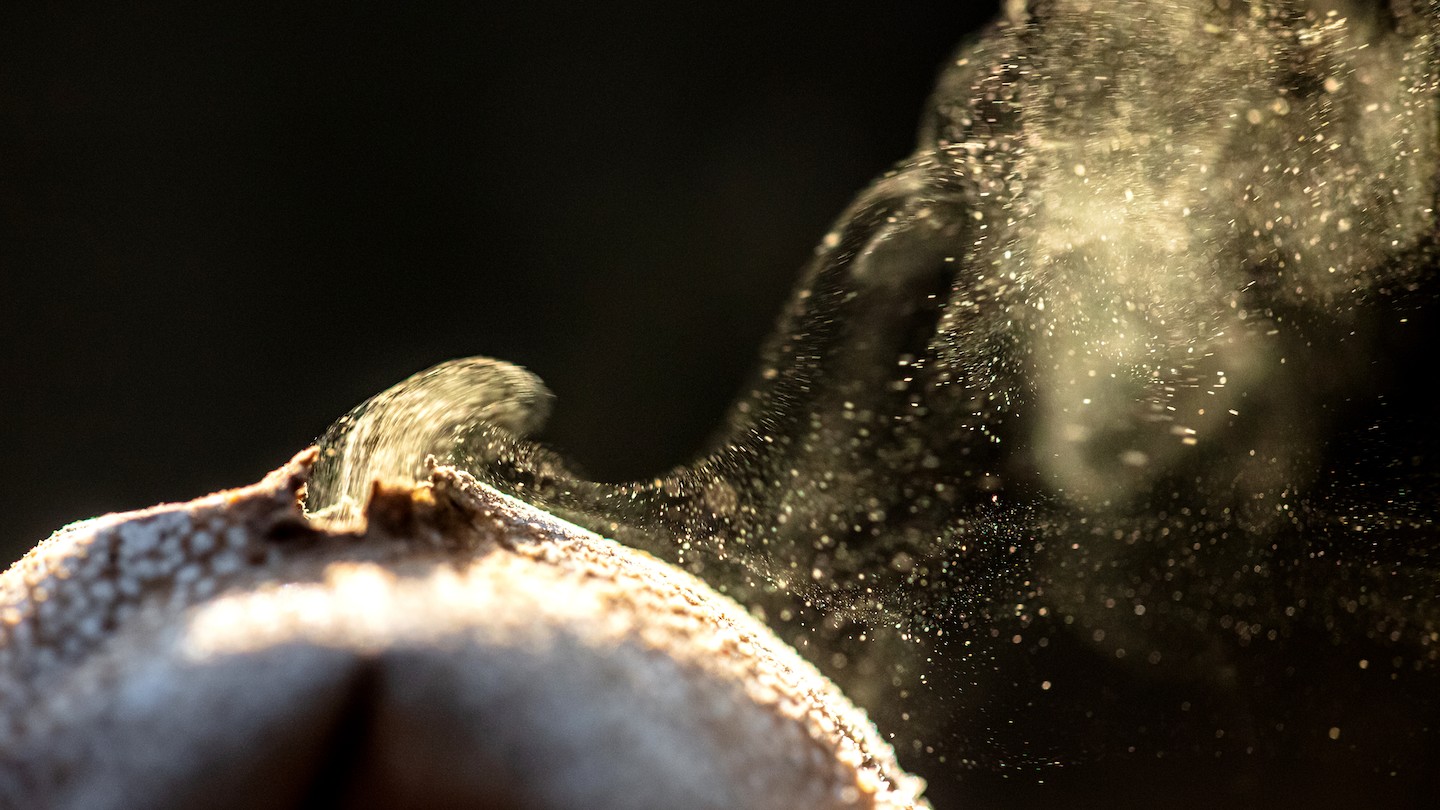
A spore is tiny. Usually just one cell. It’s how bacteria hide from bad weather. Or how fungi throw their genetic lot into the wind, like seeds, waiting for a wet rock or a gust of air. They are tough. Drying out? No problem. Heat? They’ll wait it out. They just hang in the void until it’s time to grow.
To see any of this, you need a microscope. Without one, you are blind. You can’t see bacteria. You can’t see the single cells of a plant leaf. It’s just an instrument. Glass and light and lenses. Essential.
The Building Blocks
What is that cell actually made of? Mostly proteins.
Proteins are long chains of amino acids, tangled and folded into complex shapes. They do the work. They build your muscles. They are the walls of your cells. Enzymes? Protein. Antibodies? Protein. Even hemoglobin. Medicine often works by grabbing onto a specific protein and changing what it does. If you want to hack life, you start with proteins.
But before you get proteins, you have atoms. Groups of atoms make molecules.
Water. O2. Those are molecules. The smallest chunk of a compound that still acts like that compound. Air is full of oxygen molecules, two atoms holding hands. Water is hydrogen and oxygen, stuck together in a specific ratio. It’s the smallest piece. Break it further and you lose the water.
Energy and Danger
Energy moves in three ways. We know conduction (touch). Convection (flow). But radiation is the spooky one. Electromagnetic waves. No material needed. It jumps through empty space. Heat from the sun? That’s radiation. Light? Radiation.
Which brings up the concept of risk.
It’s math. It’s probability. It’s the chance that something bad happens. Radiation is a hazard. Yes, it warms you, but it’s also a cancer risk. There’s a difference between the exposure and the danger, but the lines get blurry. Risk is just the ghost of a potential accident waiting in the numbers.
Love in the Time of Cells
It isn’t just chemistry and radiation. It’s reproduction.
You need two halves. A sperm cell from the testes, an egg from the ovaries. Each holds half the genetic data required to make a person. They meet. They fuse. Boom, zygote. That single new cell is the start. The very first step. One cell, carrying all the code for what comes next.
The Small Plants (Kinda)
Let’s look at the moss. It looks like a plant, sure. It’s green. It likes damp places, growing in carpets or puffy cushions. But no roots. Not really. And no flowers.
It reproduces asexually sometimes, just breaking apart and letting pieces drift. Other times it releases spores from little capsules on stalks. It’s a middle ground. Simple. Quiet. Growing where other things can’t.
Empty Space
Finally, the void.
A vacuum. Space with almost nothing in it. Labs use machines to pump air out of a chamber to create this emptiness. Why? Sometimes you need to test things without the atmosphere getting in the way. Or maybe you just like the silence.
The absence of matter is just as much a thing as matter itself.
These words. They’re tools. Definitions. They help us point at the invisible and say, “That is there.” But they don’t fully capture the messiness. Life doesn’t fit neatly into a glossary. It leaks out of the definitions, dormant cells waking up in a vacuum chamber, proteins folding themselves into new shapes we haven’t named yet.
What do we miss when we try to pin it all down with just a list?