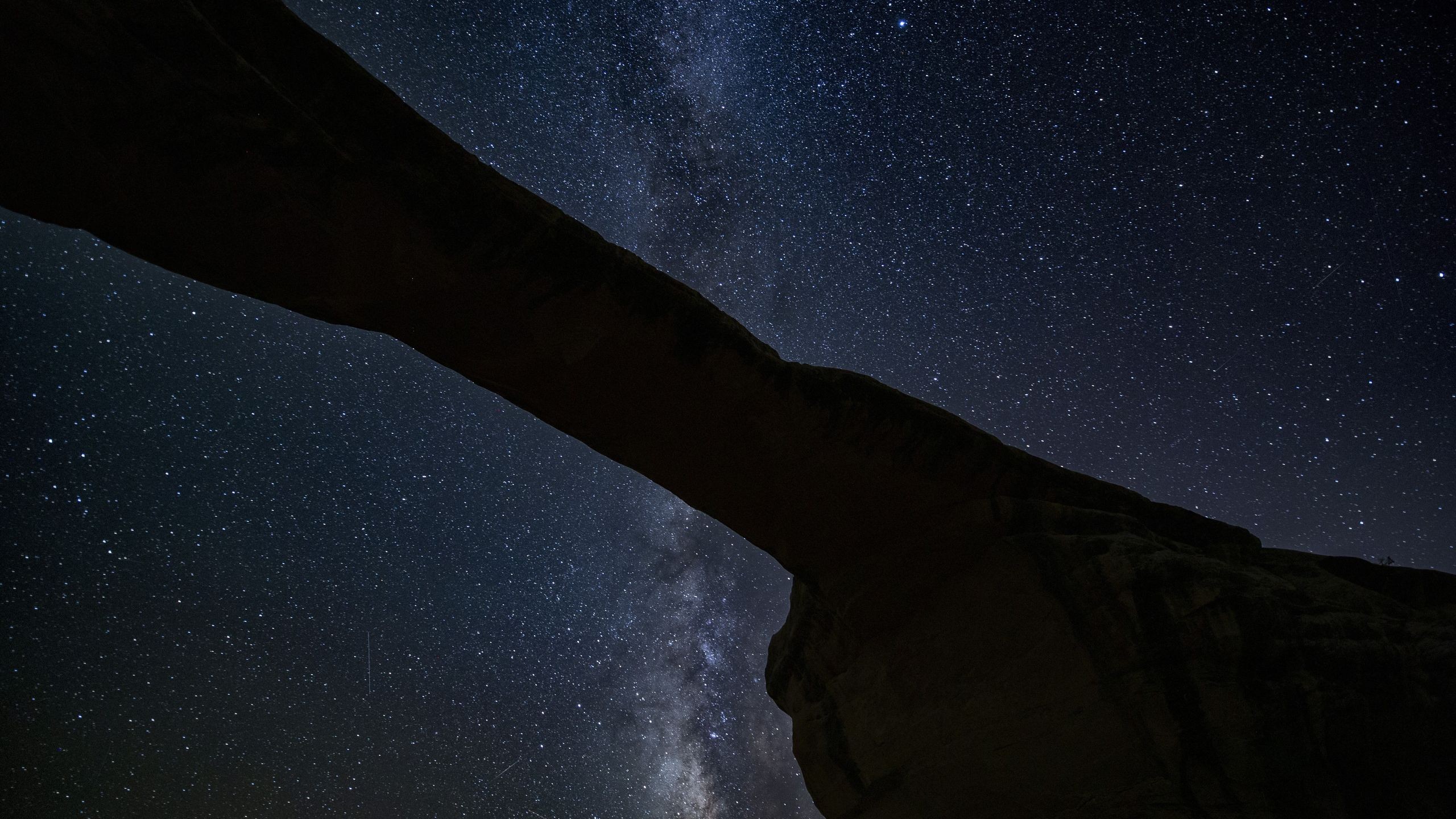
A few years ago, a friend returned from a trip to Jordan with a complaint that stumped me. He had visited Wadi Rum, a location I had enthusiastically recommended as one of the planet’s premier destinations for viewing the Milky Way. It is a vast, high-altitude desert, notoriously dry and virtually free of artificial light pollution. I had painted a vivid picture for him: a river of starlight arching over the sand dunes.
Instead, he saw very few stars.
“It was just a really bright moon,” he explained.
The location was perfect. The season—September—is ideal for Milky Way viewing. Yet, the experience failed because of one overlooked variable: the phase of the moon.
While humans are drawn to the romantic glow of a full moon, astronomers know it as nature’s most potent form of light pollution. No amount of careful planning regarding dark-sky reserves or light-pollution maps can compensate for a bright lunar glare, which overwhelms all but the brightest celestial objects. If you travel during the week leading up to a full moon, the moon dominates the evening sky, effectively erasing the fainter wonders of the cosmos.
This incident highlighted a crucial truth: stargazing is not just about where you go, but when you go. It requires a blend of astronomical knowledge, biological awareness, and patience. Here are seven essential lessons that transform a casual glance upward into a profound experience.
1. The Moon Dictates the Schedule
The single most important factor in deep-sky observation is the lunar cycle. There is a specific 10-night window —from last quarter moon through to just past the new moon—when the evening sky remains free of bright moonlight.
Outside this window, moonlight gradually washes out faint stars and deep-sky objects like nebulae and galaxies. Once you internalize this rhythm, you stop fighting the sky and start planning around it. By consulting a moon phase calendar, you can align your trips to dark-sky parks or observatories with these optimal nights, dramatically improving what you can see.
2. Cities Are Valid Starting Points
There is a common misconception that you need pristine, dark skies to begin stargazing. While true dark skies are breathtaking, they can be overwhelming for beginners. In a city, light pollution filters out the fainter stars, leaving only the brightest constellations visible.
This simplification is actually an advantage for learning. Think of the urban sky as a simplified map. It allows you to focus on major patterns and learn the basics without the distraction of thousands of faint stars. Light pollution is certainly a scourge that deserves combat, but dismissing city stargazing is like refusing to read because you can’t yet tackle a novel. It is the perfect place to start.
3. The Sky Is in Constant Motion
The night sky is not static; it changes every night. As Earth orbits the sun, stars appear to rise approximately four minutes earlier each night. While this seems negligible, it accumulates rapidly. Over a month, those four minutes add up to a two-hour shift.
This means constellations that were low on the horizon one month ago will dominate the sky two hours earlier in the evening the next month. Understanding this annual rhythm unlocks the logic of the seasons. If you cannot predict at least three constellations visible tonight, you are likely still in the early stages of learning.
4. Consistency Beats Intensity
Many aspiring stargazers believe they need long, uninterrupted sessions under perfect conditions to make progress. In reality, short, regular sessions are far more effective for learning.
Spending just 20 minutes outside at the same time each night allows you to track changes and reinforce memory. Find a constellation one night, and locate it again the next. This repetition builds intuition and familiarity far better than occasional, intense marathons. The sky becomes a familiar landscape through consistent, bite-sized exposure.
5. Protect Your Night Vision
Your eyes require time to adapt to darkness, a process that can take up to 20 minutes. During this time, exposure to bright white light—such as from a smartphone screen—resets the adaptation process entirely.
Many amateur astronomers, and even some professionals, make the rookie mistake of using star-charting apps with full brightness. To preserve your night vision:
* Avoid looking at bright screens.
* If you must use an app, switch it to red light mode, which is less disruptive to dark adaptation.
* Give your eyes at least 20 minutes in the dark before expecting to see faint star clusters or galaxies.
6. Use Your Peripheral Vision
Human biology plays a surprising role in stargazing. The center of your retina (the fovea) is packed with cone cells, which are great for color and detail but poor in low light. The edges of your vision, however, are dominated by rod cells, which are highly sensitive to dim light.
To see faint objects like nebulae or distant galaxies, look slightly to the side of them rather than staring directly. This technique, known as “averted vision,” leverages your peripheral sensitivity. For example, when looking at the Pleiades star cluster, staring directly reveals only six or seven stars. Glancing to the side suddenly reveals the full, glowing extent of the cluster.
7. Manage Expectations for Meteor Showers
Finally, it is important to address the gap between expectation and reality. Meteor showers rarely look like the dramatic photos seen in media. Professional images are often long-exposure shots that capture dozens of meteors over an hour, compressed into a single frame.
In real-time, meteors are fleeting, quick streaks. While still beautiful, they do not fill the sky simultaneously. Understanding this prevents disappointment and helps you appreciate the subtle, random beauty of each individual shower.
Stargazing is less about equipment and more about preparation. By respecting the moon’s cycle, protecting your eyes, and understanding the sky’s rhythm, you can transform a simple night out into a meaningful connection with the cosmos. The universe is always there; you just need to know how to look.