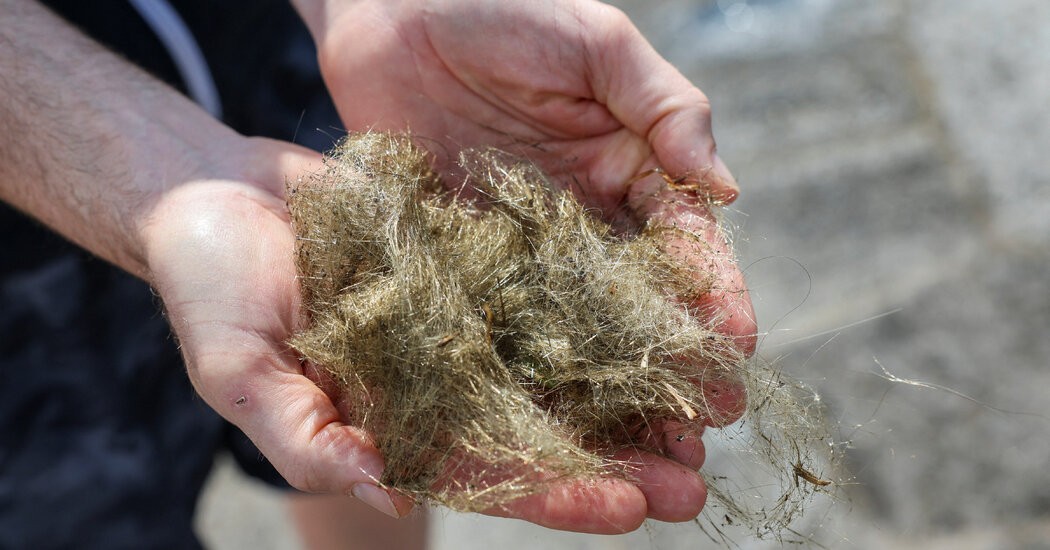
Volcanoes don’t just erupt in fire and ash; they also create delicate, glass-like strands resembling human hair. These formations, known as Pele’s hair, are thin volcanic glass fibers found near active volcanoes in places like Hawaii and Iceland. The name comes from Pele, the Hawaiian goddess of volcanoes.
How Pele’s Hair Forms
Researchers have discovered that these strands form when bubbly magma is stretched out by volcanic gases and wind. Unlike obsidian, another volcanic glass, Pele’s hair is typically light brown or yellow. Some strands can grow up to two feet long, carried by the wind for miles. In recent activity on Kilauea volcano in Hawaii, these strands were found as far as 20 miles away in Pahala.
The Science Behind the Strands
The process involves lava being tossed into the air and then spun out by jets of gas. According to Janina Gillies, a geologist at the University of Canterbury, “They can get spun out by the wind.” This stretching creates incredibly thin glass fibers, distinct from the thicker, glossy black obsidian.
Why This Matters
Pele’s hair is a fascinating example of how volcanoes create unexpected formations. While beautiful, it is a reminder that volcanic activity can send materials over long distances, impacting nearby communities. Studying these strands provides insight into magma behavior and gas dynamics within volcanic eruptions.
Volcanic glass strands are a unique byproduct of magma stretching and spinning, offering a rare look into the processes shaping volcanic landscapes.