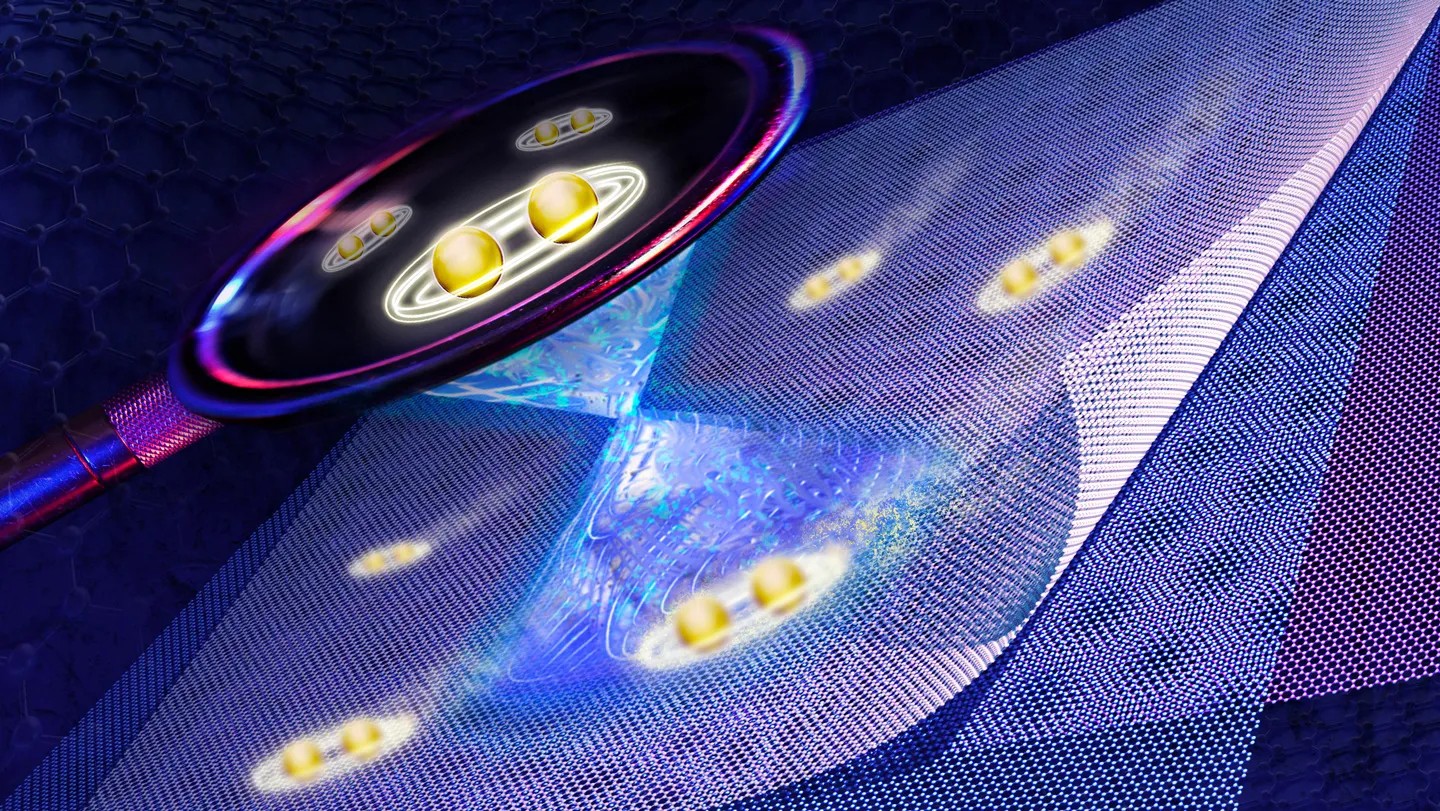
Scientists have definitively confirmed that specially twisted layers of graphene exhibit superconductivity, a phenomenon where materials conduct electricity with zero resistance. The latest findings, published in Science on November 6th, strengthen the case that this “magic-angle” graphene belongs to a puzzling class of superconductors that defy conventional explanations. This discovery could be a crucial step toward understanding and engineering superconductors that function under less extreme conditions, potentially even at room temperature.
The Puzzle of Unconventional Superconductivity
Superconductors have long been sought after for their efficiency in energy transmission, but most require extremely cold temperatures to operate. Conventional superconductors rely on electrons pairing up via interactions with the material’s atomic structure. However, in the 1980s, researchers found materials – like cuprates – that superconducted in ways this model couldn’t explain. These unconventional superconductors remain poorly understood, yet hold potential for more practical applications.
How Twisted Graphene Fits In
The key lies in stacking graphene sheets (single-layer carbon) and twisting them to a precise “magic angle.” In 2018, researchers led by Pablo Jarillo-Herrero first observed superconductivity in this configuration, but definitive proof remained elusive. Now, the team has provided compelling evidence that triple-layered twisted graphene behaves like other unconventional superconductors, including the presence of nodes in its energy gap.
Nodes mean electrons in certain directions aren’t bound into pairs (Cooper pairs) – a hallmark of many unconventional materials. The energy gap, which dictates how much energy it takes to break those pairs, varies depending on the electrons’ momentum. This behavior was confirmed by creating a graphene-insulator-graphene sandwich and measuring electron tunneling, which revealed the energy gap’s structure.
Simplicity as an Advantage
The appeal of magic-angle graphene isn’t just its superconductive properties, but its simplicity. “This is a chemically pristine system. It’s just carbon,” explains physicist Ali Yazdani. Unlike complex cuprates, graphene offers a cleaner environment for studying the fundamental physics of unconventional superconductivity.
The Path Forward
The growing consensus among scientists – backed by multiple experimental confirmations – suggests that twisted graphene could be the ideal testing ground for developing a unifying theory of unconventional superconductivity. If researchers can decipher the underlying mechanisms, they might engineer materials that superconduct at higher temperatures, revolutionizing energy technology.
The more consistent the evidence from different experiments, the closer we get to a breakthrough. Understanding how these materials work will unlock possibilities we haven’t even imagined yet.