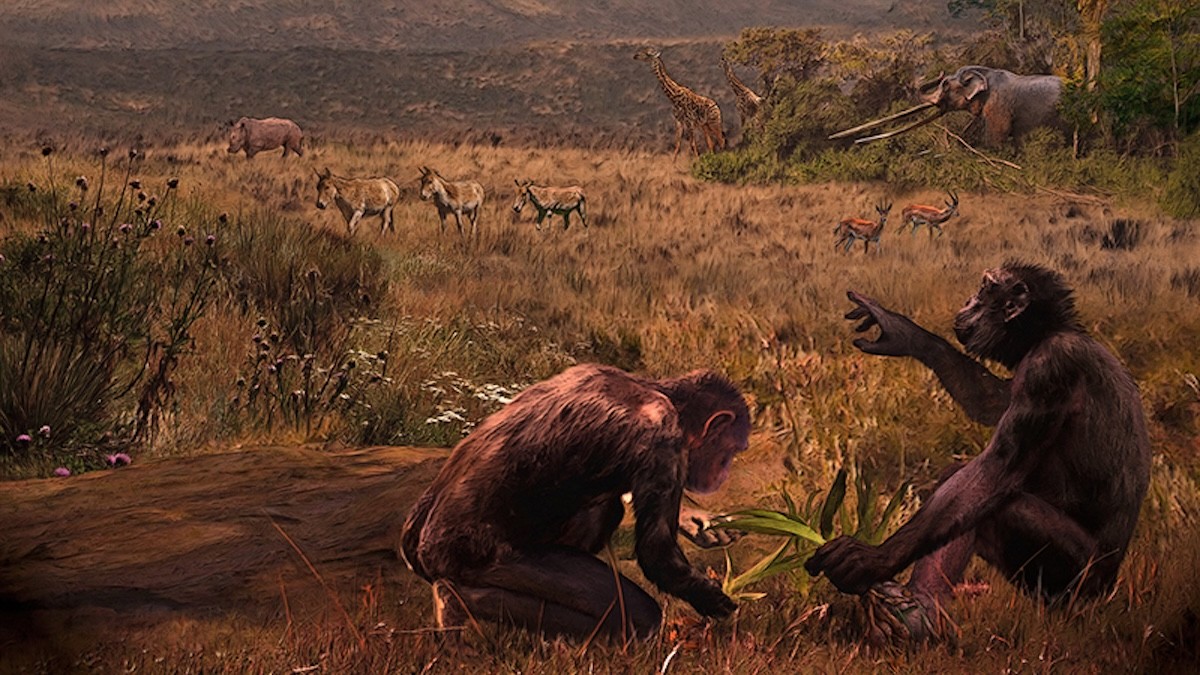
A newly analyzed fossil thighbone from Bulgaria indicates a 7-million-year-old ape, Graecopithecus freybergi, may have been one of the earliest hominins — a creature capable of walking upright. This discovery challenges the prevailing theory that human evolution began exclusively in Africa.
The Fossil and Its Implications
The femur, belonging to a small female ape weighing approximately 53 pounds, displays anatomical features suggestive of bipedalism. Key indicators include a relatively long femoral neck, enabling greater leg mobility, and muscle insertion points consistent with upright walking. This morphology suggests Graecopithecus occupied a transitional stage between quadrupedal apes and habitual bipeds.
Researchers posit that this creature could represent the oldest known human ancestor, potentially originating in the Balkans before migrating to Africa. The Azmaka excavation site, where the femur was found, also yielded a lower jawbone and premolar tooth previously attributed to Graecopithecus. The environment at the time—a shifting landscape of sparse forests and grasslands—may have favored bipedalism as a survival adaptation, allowing for better predator scanning, foraging, or infant transport.
Controversy and Ongoing Debate
The claim that human origins lie in Europe, rather than Africa, remains contentious. Critics point to the limited fossil evidence and question the geographical plausibility of a European ancestor for modern African hominins. Other experts suggest that Graecopithecus may have been a side branch of evolution, rather than a direct ancestor to Homo sapiens.
Environmental Context and Dispersal
Climate shifts in the eastern Mediterranean during the late Miocene period caused periodic desertification, potentially triggering migrations of Eurasian mammals into Africa. Researchers suggest Graecopithecus may have been among these migrants, contributing to the development of African savanna fauna. However, the idea that a hominin ancestor evolved in relative isolation in southern Europe before colonizing Africa remains highly debated.
This discovery underscores the fluidity and uncertainty inherent in reconstructing human origins. New fossil finds continually challenge existing theories, forcing scientists to re-evaluate our understanding of where and how the human lineage emerged.
The fossil’s features suggest Graecopithecus was likely a facultative biped, capable of walking upright when advantageous but also comfortable moving on all fours. This discovery serves as a reminder that the story of human evolution is far from settled, and further research is needed to fully understand our complex ancestry.