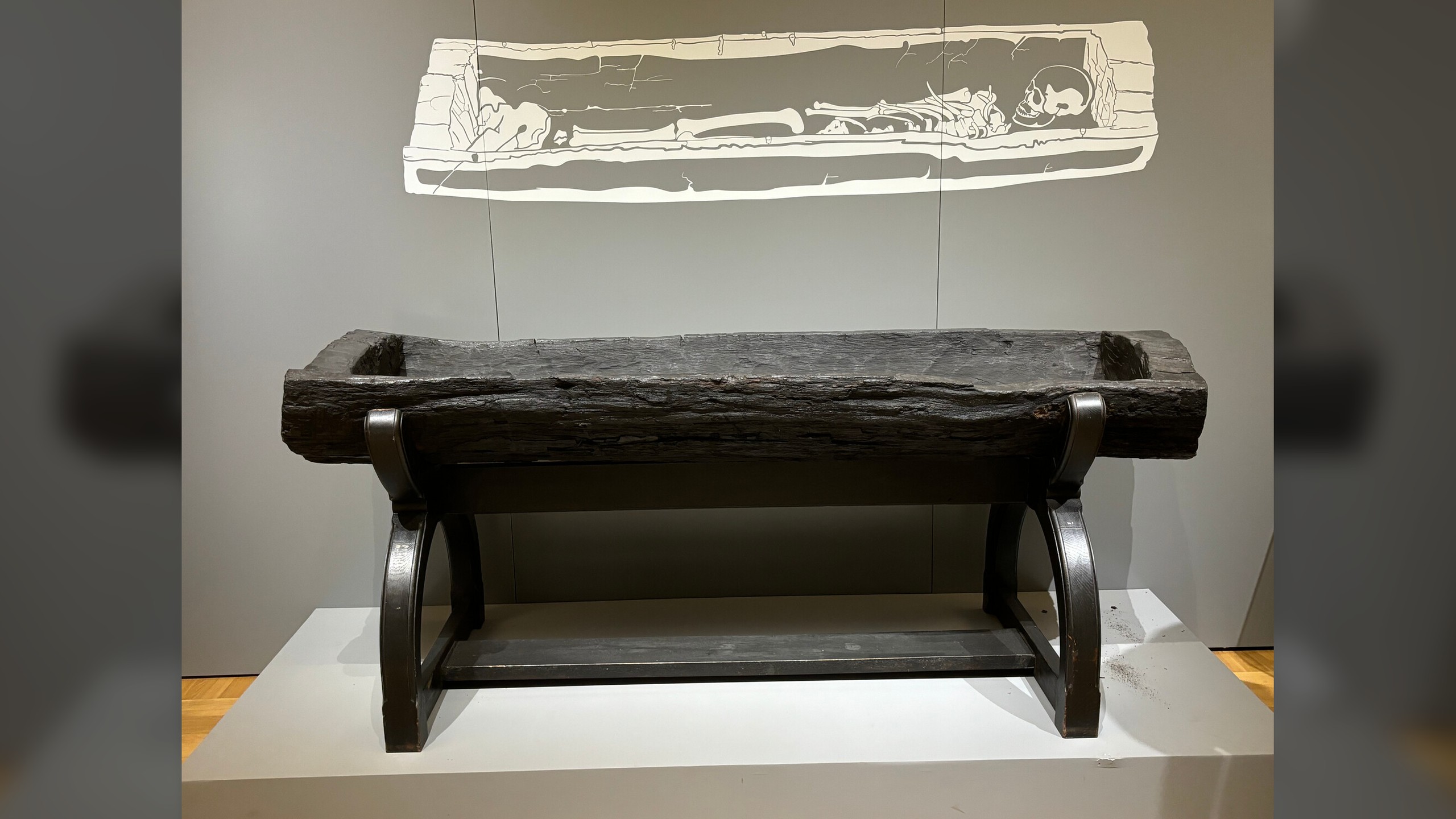
For over a century, the identity and precise death date of a woman buried in a uniquely preserved log coffin in Poland remained a puzzle. Now, a new study has resolved the discrepancy, confirming she lived in the 2nd century AD, not centuries earlier as previous radiocarbon dating suggested. The discovery offers rare insight into the funerary practices of the Wielbark culture, linked to the Goths, and highlights the challenges of accurately dating ancient remains.
The Discovery and Initial Confusion
The coffin, dubbed that of the “Princess of Bagicz” due to her unusual burial style and artifacts, was discovered in 1899 after falling from an eroding cliff near the village of Bagicz in northwestern Poland. This is the only known preserved wooden sarcophagus from the Roman Iron Age, carved from a single tree trunk.
Early analyses placed her death sometime during Roman times, but carbon dating of her tooth yielded conflicting dates—ranging from 113 BC to AD 65. This discrepancy puzzled archaeologists because it would mean she was older than the artifacts buried with her.
The Dendrochronological Breakthrough
To resolve this conflict, researchers led by Marta Chmiel-Chrzanowska of the University of Szczecin used dendrochronology: the study of tree rings. By analyzing growth rings in the coffin’s wood, they determined the oak was felled around AD 120, meaning the coffin was likely constructed shortly after. This aligns with the style of grave goods found within, including a bronze pin, glass and amber beads, and bronze bracelets.
The team concluded that the earlier radiocarbon date from the woman’s tooth was likely inaccurate. Carbon dating can be skewed by dietary factors, particularly the consumption of seafood, as marine carbon is older than terrestrial carbon. This phenomenon, known as the marine reservoir effect, can push dates back by hundreds of years.
What This Reveals About the Past
The case illustrates how environmental conditions can preserve rare archaeological finds. The wet, humid climate of Bagicz helped the wooden coffin survive for centuries, a testament to the durability of oak in specific conditions. More broadly, the research underscores the need for careful interpretation of radiocarbon dates, especially when dealing with ancient human remains.
The woman was estimated to be between 25 and 35 years old when she died. She exhibited signs of osteoarthritis, suggesting physically demanding work. Contrary to the “princess” nickname, she likely represented a typical member of the Wielbark culture.
Future Research
Researchers are now attempting DNA analysis to learn more about her ancestry and origins. Previous attempts failed, but the team plans to drill into her skull for samples without causing significant damage. The Princess of Bagicz continues to offer valuable clues about life and death in ancient Europe.
The preservation of this coffin is a remarkable anomaly, providing a rare window into burial practices and the environmental conditions that allowed for such exceptional organic survival. The case reinforces the importance of combining dating methods with contextual analysis to reconstruct the past accurately.