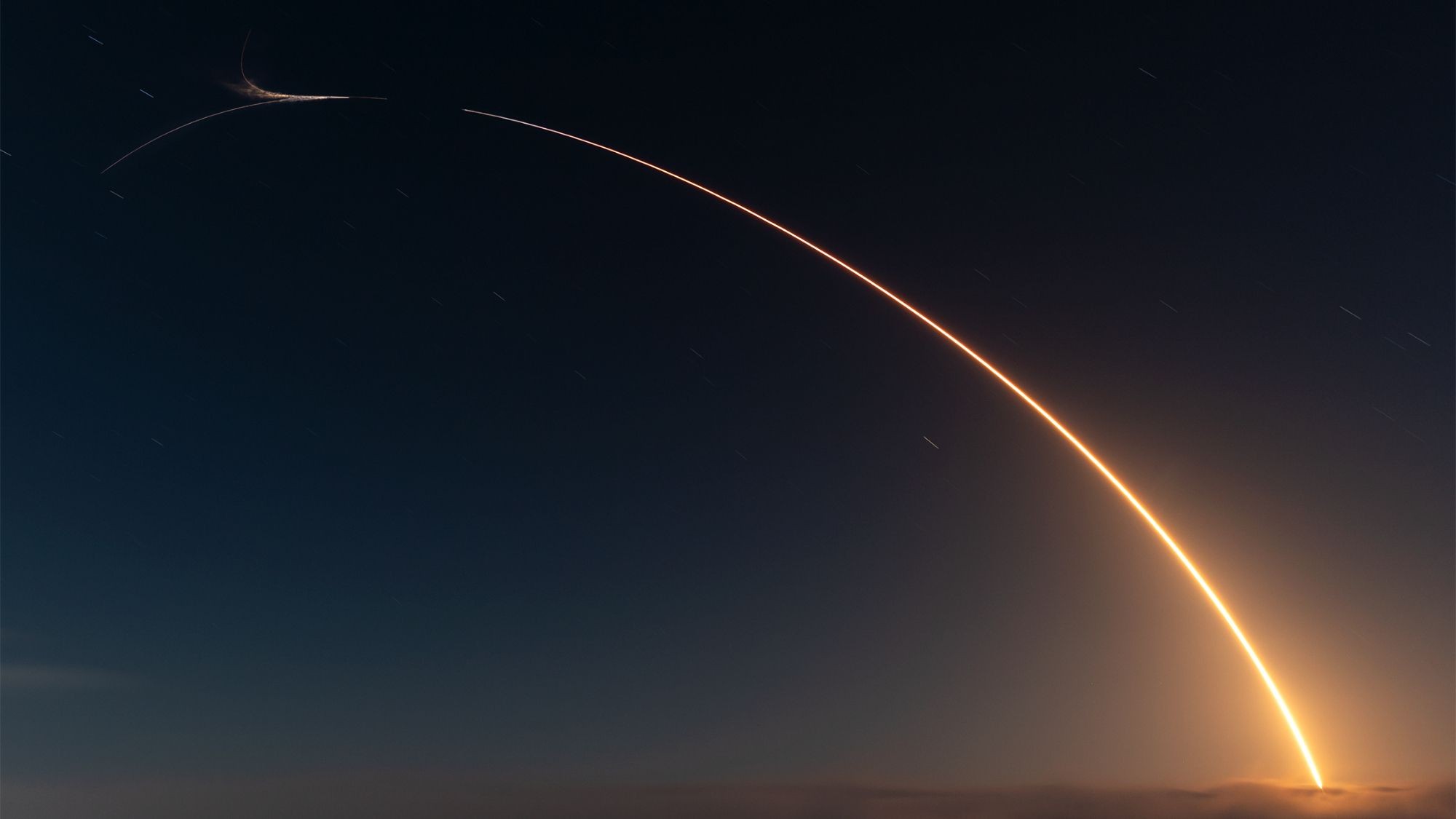
SpaceX successfully deployed 45 satellites into orbit early Sunday morning, May 3, in a mission that highlighted both the resilience of international space cooperation and the company’s relentless launch cadence. The flight, which lifted off from Vandenberg Space Force Base in California, carried a significant payload for South Korea: the CAS500-2 Earth-observation satellite, a spacecraft whose journey to space was delayed by nearly four years due to geopolitical turmoil.
A Mission Rescued from Geopolitical Disruption
The primary passenger on this Falcon 9 rocket was not just any satellite, but a symbol of diplomatic endurance. Developed by the Korean Aerospace Research Institute (KARI), CAS500-2 was originally scheduled to launch in 2022 aboard a Russian Soyuz rocket. However, Russia’s invasion of Ukraine in February 2022 severed the international partnerships necessary for that launch, effectively grounding the satellite for years.
This Sunday’s launch marks a successful recovery for South Korea’s CAS500 (“Compact Advanced Satellite 500”) program. The initiative aims to operate a constellation of five satellites in low Earth orbit to monitor disasters, observe agricultural conditions, and support environmental research.
With CAS500-2 now in space, the constellation is filling out its ranks:
* CAS500-1 : Launched in March 2021 via a Russian Soyuz.
* CAS500-3 : Launched in November 2025 aboard South Korea’s indigenous Nuri rocket.
* CAS500-2 : Now operational, launched via SpaceX.
The successful deployment of CAS500-2 underscores how commercial launch providers like SpaceX have become critical alternatives for nations seeking to maintain space capabilities amid shifting global alliances.
A Diverse Cargo of 45 Satellites
While CAS500-2 was the headline payload, it was far from the only one. The Falcon 9 upper stage acted as a delivery truck for 44 additional satellites from a wide array of operators, demonstrating the growing trend of rideshare missions that lower costs for smaller space companies.
Customers on this flight included:
* Planet Labs : Known for daily global imaging.
* Lynk Global : A satellite broadband provider.
* Argotec S.r.l., Exolaunch, Impulso.Space, Loft-EarthDaily, and True Anomaly.
All payloads deployed as planned. CAS500-2 was the first to separate, roughly 60 minutes after liftoff, followed by the remaining satellites over the next hour and a half.
Pushing the Limits of Reusability
Beyond the payload, the launch itself was a testament to SpaceX’s engineering efficiency. The Falcon 9’s first stage booster, designated B1071, touched down at Vandenberg approximately 7.5 minutes after launch. This marked its 33rd flight and landing, a staggering achievement in aerospace history.
This near-record reuse highlights a key trend in the space industry: maximizing hardware lifespan to reduce costs. Only one flight separates B1071 from the company’s all-time record, which was set in late March during a Starlink mission.
A Prolific Year for SpaceX
This mission was SpaceX’s 54th launch of the year, maintaining a pace that continues to dominate the global launch market. As of this flight, every mission in 2026 has been conducted by a Falcon 9, with the sole exception being a single flight by the heavier Falcon Heavy earlier in the year.
Conclusion
The successful launch of CAS500-2 not only fulfills a long-delayed commitment to South Korea’s space program but also reinforces SpaceX’s role as the backbone of global satellite deployment. By combining high-frequency launches with extreme hardware reusability, SpaceX continues to reshape the economics and accessibility of space access.