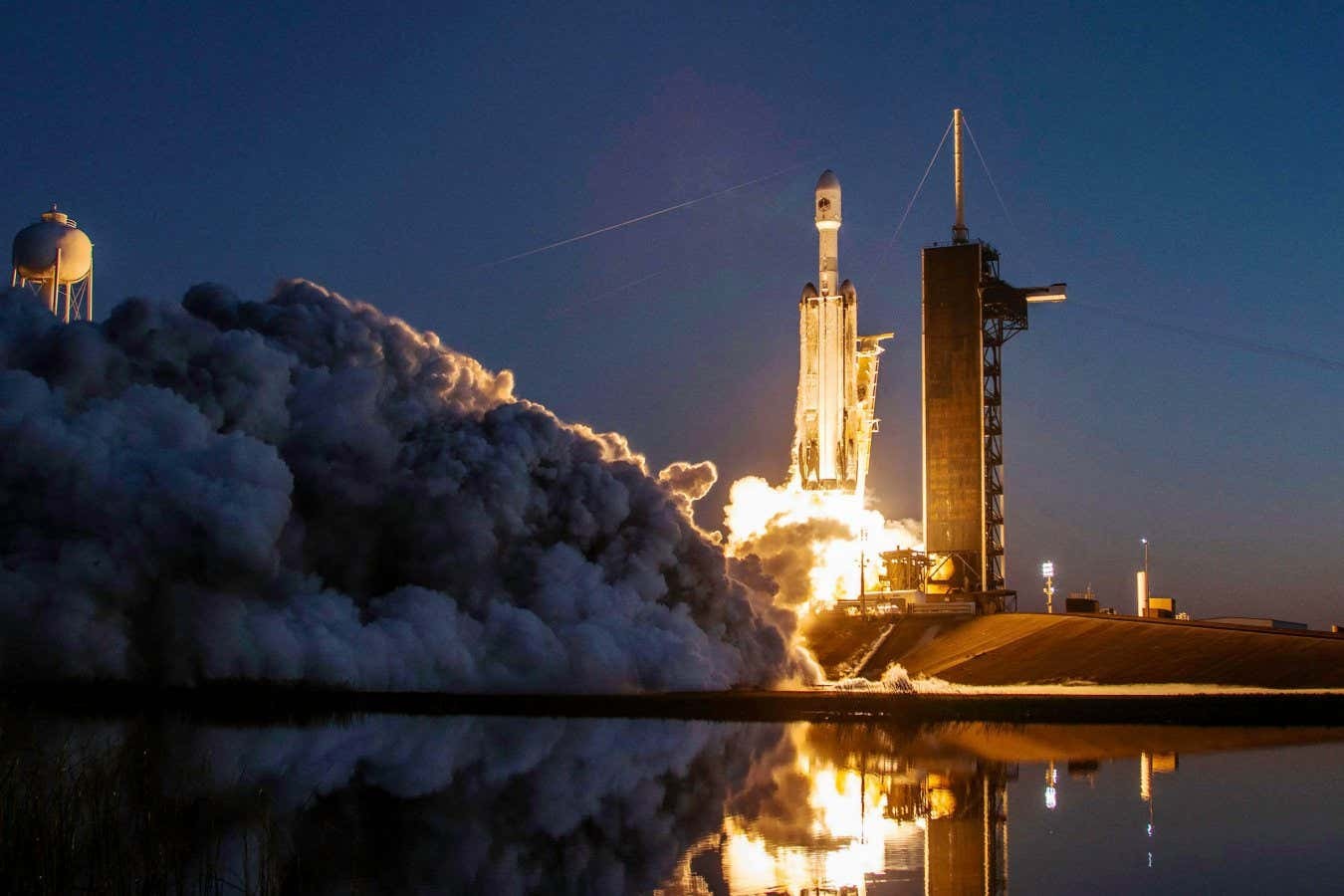
SpaceX has filed an unprecedented request with the US Federal Communications Commission (FCC) to launch 1 million orbital data center satellites. This move, revealed in early 2026, dwarfs previous proposals, including SpaceX’s own 2019 application for 42,000 Starlink satellites. The company’s goal is to power artificial intelligence (AI) with space-based infrastructure, and the scale of this project signals a dramatic shift in how we view orbital space.
The Rationale Behind Orbital Data Centers
The demand for energy-intensive AI processing is driving interest in orbital data centers. Unlike Earth-based facilities, satellites can access continuous sunlight, offering uninterrupted power. SpaceX CEO Elon Musk has framed this as a step toward becoming a “Kardashev II-level civilization” – a benchmark of technological advancement. The company already dominates low Earth orbit with its Starlink internet constellation (around 9,500 active satellites, representing just 1% of the proposed new fleet), but the new project is of an entirely different magnitude.
Collision Risk and Launch Feasibility
The existing satellite environment is already crowded. SpaceX alone had to dodge 300,000 potential collisions in 2025. Adding another million satellites will exacerbate these risks. However, Musk claims SpaceX’s reusable Starship rocket – the most powerful ever built – can deliver millions of tons to orbit annually, making the deployment feasible. He envisions launches happening every hour, carrying 200 tons per flight.
Regulatory Hurdles and International Competition
The FCC will review SpaceX’s application, opening it for public comment before making a decision (which could take months). SpaceX has requested a waiver of the usual requirement to deploy half the constellation within six years, arguing that optical communication will minimize interference. Meanwhile, China has also submitted an application to the UN’s International Telecommunications Union (ITU) for 200,000 satellites. While no hard limits exist on satellite numbers, operating beyond 100,000 becomes exceedingly difficult to manage.
Impact on Astronomy and Scientific Discovery
The proposed mega-constellation raises concerns about light pollution and interference with astronomical observations. Studies suggest that adding 500,000 satellites would contaminate nearly every telescope image, hindering scientific progress. Orbital data centers, with their large solar panels and heat radiators, may be even more disruptive. SpaceX claims it will collaborate with the scientific community, but the sheer scale of the project casts doubt on that promise.
Is This Serious?
Experts question whether SpaceX is genuinely pursuing this extreme scale. Ruth Pritchard-Kelly, a satellite regulation expert, suggests the proposal may be a “shock and awe” tactic, with the actual deployment likely to be smaller. SpaceX and the FCC have not yet responded to requests for comment.
Ultimately, SpaceX’s ambition to deploy 1 million satellites marks a pivotal moment in space infrastructure development. Whether this is a realistic plan or a strategic maneuver remains to be seen, but it underscores the growing commercialization of orbit and the escalating competition for space resources.