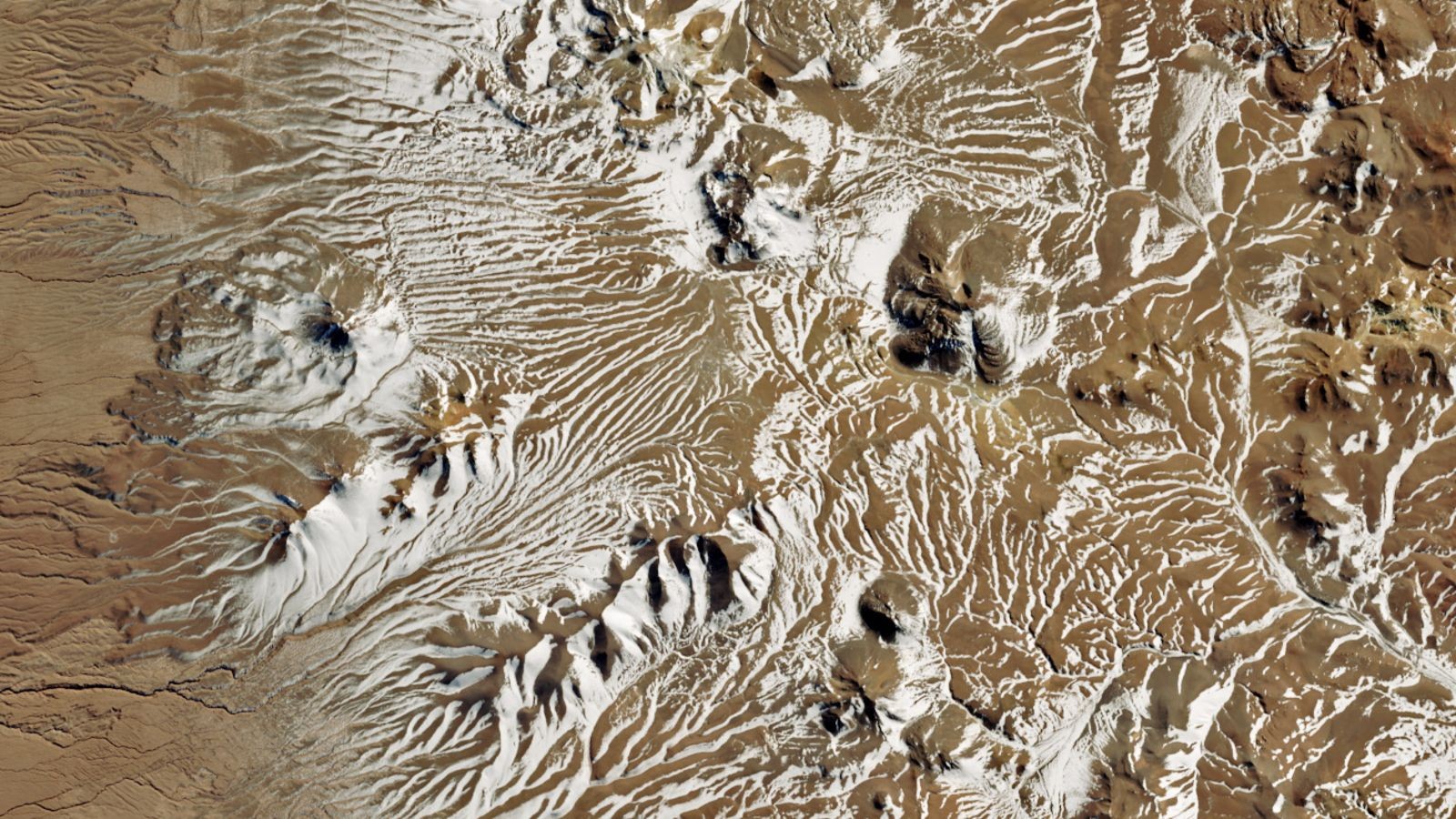
The Atacama Desert, famously the driest non-polar region on Earth, experienced an unusual snowstorm in late June, temporarily disrupting operations at the Atacama Large Millimeter/submillimeter Array (ALMA) – one of the world’s most powerful radio telescopes. Satellite imagery confirmed the striking event, with a layer of snow covering portions of the arid landscape.
The World’s Driest Desert
The Atacama, stretching across 40,500 square miles in northern Chile, has remained exceptionally dry for at least 150 million years. Some areas receive less than 0.002 inches of rain annually, and certain locations haven’t seen measurable precipitation in nearly 400 years. This aridity is due to the Andes mountains blocking eastward moisture and cold ocean currents suppressing evaporation on the Pacific side. The Altiplano Plateau within the Atacama receives sunlight levels comparable to Venus, making it one of the sunniest places on Earth.
The June Snowstorm and its Impact
On June 25, a cold-core cyclone unexpectedly moved south, blanketing over half of the desert in snow. The higher elevations of the Chajnantor Plateau, home to ALMA, were particularly affected. The observatory was forced into “survival mode,” repositioning its 50+ radio dishes to prevent snow accumulation and halt observations. While the Southern Astrophysical Research (SOAR) Telescope experienced minor disruption, the Vera C. Rubin Observatory remained unaffected.
The snow quickly subsided, sublimating in many areas due to intense sunlight. Similar events have occurred in 2011, 2013, and 2021, though they remain rare.
Extreme Weather Trends in the Atacama
While snow is unusual, the Atacama has also seen increased bouts of heavy rainfall in recent years. In 2015, extreme rainfall triggered deadly mudflows, killing at least 31 people. Conversely, unexpected rains can also trigger vibrant desert flower blooms outside of their normal spring season, as seen in 2024.
The increasing frequency of these extreme events raises concerns about the impact of climate change on the Atacama. If this trend continues, the desert may no longer maintain its title as one of the driest places on Earth.