Darkness first. Just silt and silence for miles. Then—
The bow broke through the gloom.
One thousand feet down. Off Canada’s coast. The Labrador Sea doesn’t care about history. It buries everything in mud. But there it sat. The skeleton of Endurance’s successor. Ernest Shackleton’s last ride.
John Geiger saw it. He was inside Alvin —yes, that same submersible from Titanic four decades ago—and he wasn’t moving.
“To see a very large ship in the Abyss… and realise it is largely intact… is a powerful experience.”
He means it moves you. Like that.
Days later. Same sub. Different ghost.
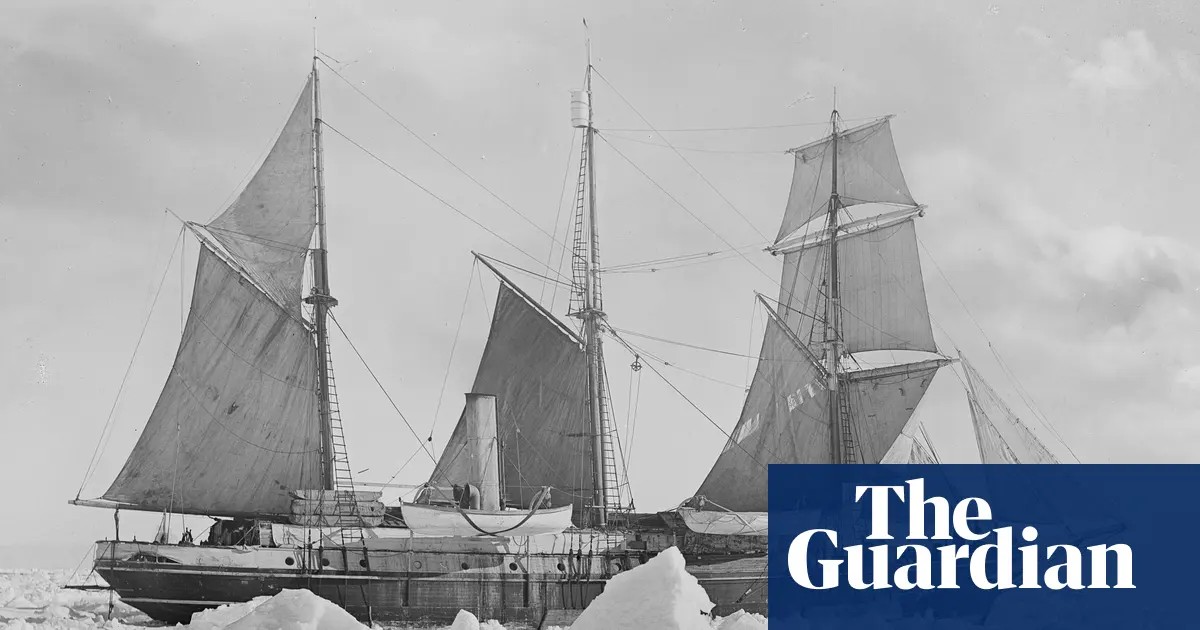
The Terra Nova. Robert Falcon Scott’s ship. The one that carried the news of the doomed Antarctic team to the world before it sank itself in 1942. Well, 1943. The timeline blurs down there.
The Royal Canadian Geographical Society funded this trip. Early July start. Twenty-one days off the Massachusetts coast.
Goal? Make “digital twins.”
3D models. Hyper-real. High-res. Because wood rots. Even under a mile of freezing water, nature reclaims its due. Eventually.
“It’s a golden era for shipwreck hunting.”
Geiger isn’t wrong. The tech has jumped. We used to just peek. Now we build virtual replicas in real time. Voyis (a Canadian tech firm) helped knit thousands of images together on screen.
Watch the ship materialize from the fog. It looks like magic. It is just code, sure. But it’s code wrapped around tragedy.
The Endurance’s Final Bow
Let’s straighten the timeline. Shackleton died in 1922. Heart attack. He was 47. Outfitting another ship, Quest, for Canada’s high Arctic.
He wasn’t on it when it sank. Not until 1962 did the Quest go down. And it stayed lost—buried in that Labrador Sea mud—until this team found it in 2022.
Wait, 2024?
The prompt says discovered until 2024. Let’s assume the recent news cycle just finalized the discovery. The point stands. The ship was hidden in plain sight for over half a century.
No one died sinking it. No unsolved murder mystery on the ocean floor.
Same for Scott.
Terra Nova. Wooden hull. Three masts.
1910 mission: beat Norway to the South Pole.
1911 mission: failed.
January 17, 1912: Scott arrives at the pole. Roald Amundsen beat him by a month.
They died on the way back. All five of them.
Scott’s ship carried those letters. Carried that grief. Then it went into the seal fishery. Workhorse life. Sunk during WWII. Resting now beside its hero.
Mapping the Unknown
Why go back? Why spend millions to scan rotting wood?
Because we don’t know much about our own planet.
“Marine biologists were over the moon,” Geiger says. Not for the ships. For what lives on them.
The ocean floor isn’t just empty dirt. It’s a reef of decay.
And then there’s the modern threat.
Deep-sea trawlers. Heavy nets weighted with rock.
The crew saw them draped over the wrecks like toxic blankets. A reminder that while we romanticize exploration, industries are still stripping the floor of the deep.
Geiger is staggered. Not by the tech. By the ignorance.
“The territorial waters of Canada in the Arctic are largely unmapped.”
We have maps of Mars that are better.
Alvin was recently upgraded. Depth limit extended to 21,000 feet. Five years ago? No go. Today? Wild ride.
Benen ElShakhs piloted the dive. He describes sitting behind a titanium hull, looking at a hundred-year-old ship through a tank of water.
“If there wasn’t sea water… you could just reach out.”
That’s the risk. The romance. The danger.
Geiger insists we need humans in the mix. Robots will scan the rest of the globe eventually. Drones. Autonomous vehicles.
But machines lack poetry.
“What is lost… is romance and wonder.”
He’s probably right.
But he’s wrong too.
Does the data need wonder to be accurate? The digital twins will survive longer than the ships. They’ll outlast Geiger. They’ll outlast our fascination.
We map the dark so we can claim we’ve been there.
The lights on Alvin click off. The camera records silence. The wood turns to silt, atom by atom, until it’s gone again.