Stars die. The universe insists on it. But usually? They don’t die alone.
We humans tend to project our loneliness onto the sky. Our Sun sits solo. So we assume all stars must be solitary too.
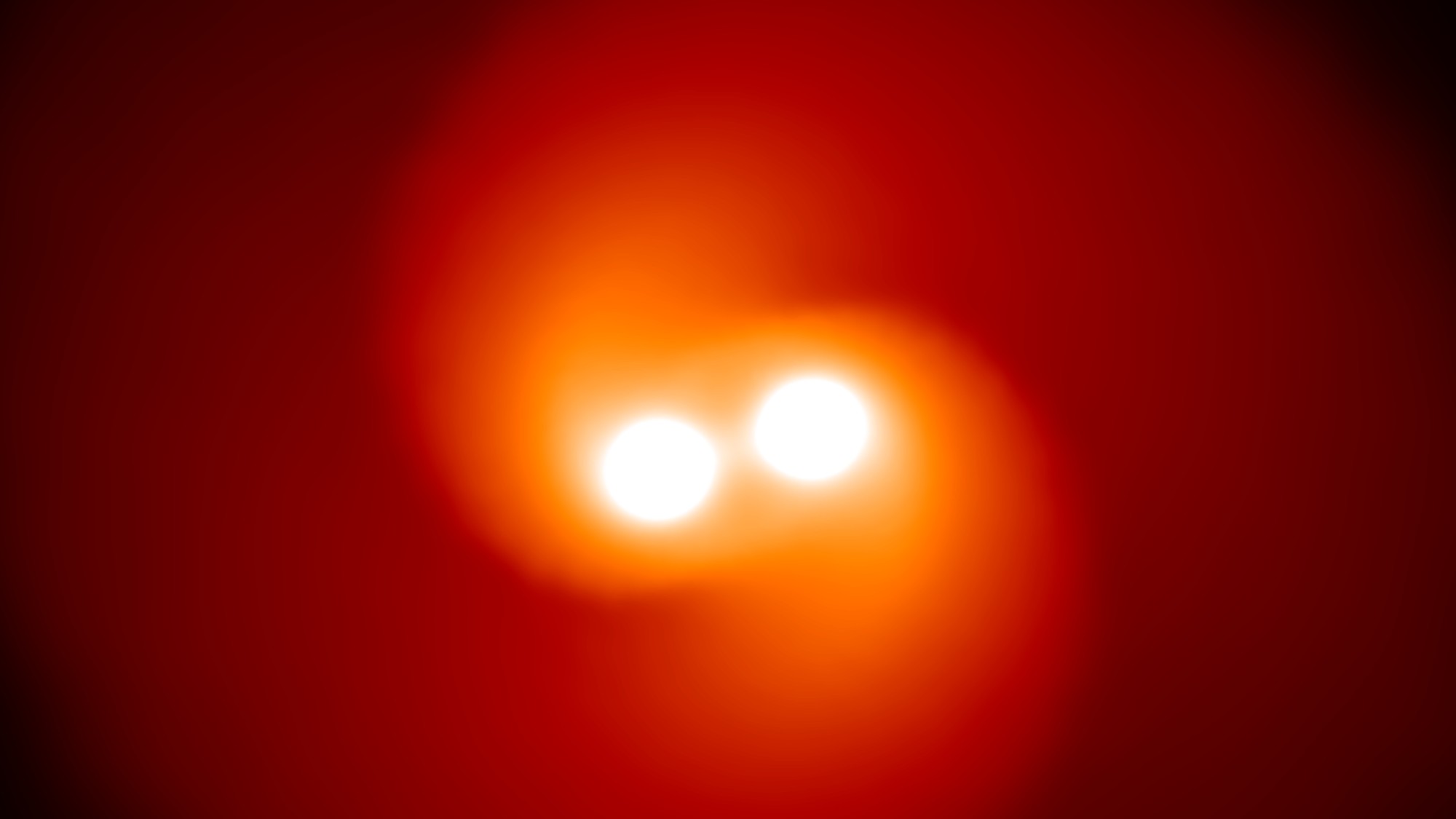
They’re not. Most live in pairs, locked in a gravitational tango. And when one finally collapses? Its partner is right there. Watching. Sometimes, catching the fallout.
New research flips the script on “interacting supernovas” — those messy, bright explosions where shockwaves hit existing gas clouds. For years, astronomers asked where that cocoon of dust came from.
“Our study suggests that many stars do not die alone,” says Ke-Jung Chen.
The answer isn’t random space debris. It’s intimate.
How the cocoon forms
Picture a red giant. Swollen. Unstable.
In a binary system, that膨胀 (expansion) causes roche lobe overflow. The giant spills its guts. Material floods toward the companion star.
Not all of it gets caught.
Much of it escapes. Forms a shell. A pre-existing cocoon waiting for the blast.
When the giant finally collapses — core imploding, shockwaves rushing outward at thousands of miles per second — they smash into that shell. Kinetic energy converts to light. Bright. Strange. Violent.
Standard supernova? Clean.
Interacting supernova? Messy. Luminous.
The problem of timing
Here’s the catch.
If binaries are common (and massive ones really are), why aren’t these specific explosions everywhere?
Why don’t we see them all the time?
Turns out, it’s comedy logic. The secret is timing.
Chen’s team ran simulations. Hundreds of them.
Mass transfer early? The cloud disperses. Millions of years of drift spread the gas thin. No target. Just empty space when the blast happens.
Mass transfer late? Thick. Dense.
The cocoon stays put. Just a few thousand years before death. The shockwave hits home.
“The companion star helps create a dense cocoon… just before the explosion.”
It’s precision choreography. The companion acts as a drain, siphoning matter to build a trapdoor right before the floor gives way.
Most binaries miss this window. The timing is off. The fuel disperses. The explosion stays quiet.
Only a few align. Only a few burn with that extra, unexpected fire.
Does it mean our understanding of stellar evolution needs a rewrite? Or just a finer toothcomb?
Probably the latter.
The sky remains mostly dark. Most deaths are private events.
But out there?
Somewhere, a pair is dancing toward the end.
And the clock is ticking.