For over 150 years, a persistent myth has shaped our understanding of human evolution: the idea that Neanderthals were “primitive” or “dim-witted” compared to modern humans. This stigma, rooted in early anatomical observations, suggested that our ancestors survived while Neanderthals vanished primarily because we possessed superior brains.
However, new research is dismantling this narrative, suggesting that the differences between our brains and theirs may be far less significant than we once believed.
The Legacy of a Misunderstanding
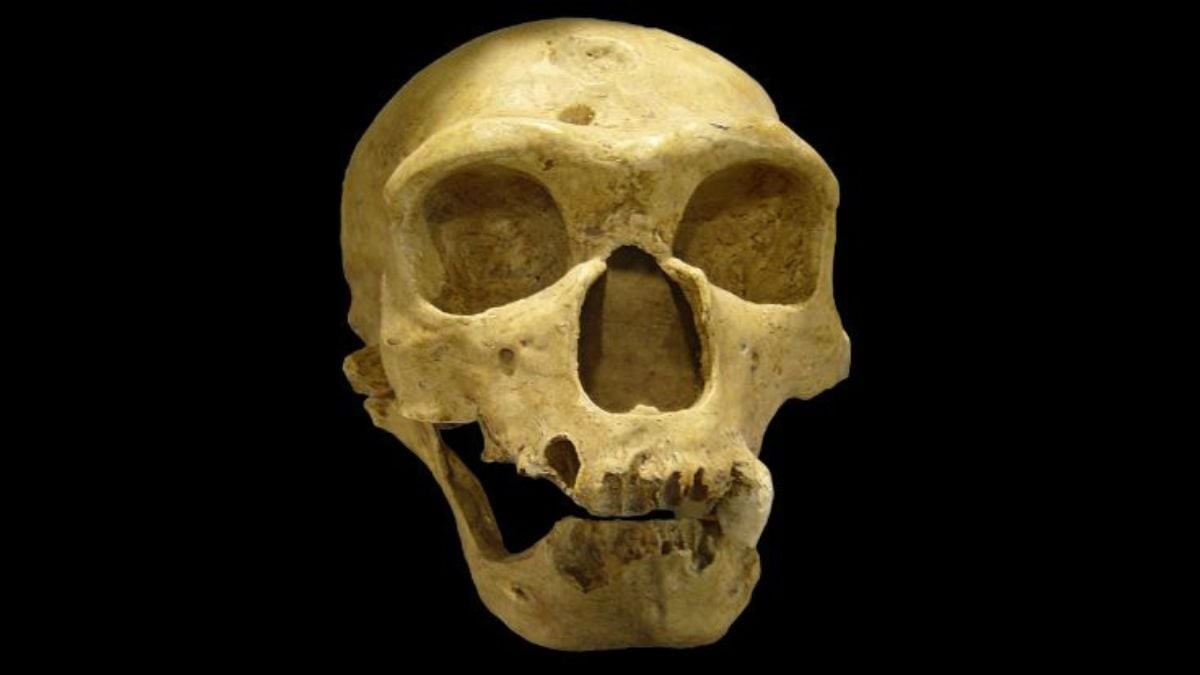
The bias against Neanderthals began almost as soon as their remains were discovered. In 1857, anatomist Hermann Schaaffhausen examined a skull found in Germany’s Neander Valley. Lacking the context of modern evolutionary biology—Charles Darwin’s On the Origin of Species would not be published for another two years—Schaaffhausen characterized the cranium as being at a “low stage of development.”
This early assessment created a scientific “stigma” that lasted for over a century. It established a baseline assumption that Neanderthal biology was inherently inferior, a view that has proven difficult to shake even as our scientific tools have improved.
New Evidence: Comparing Brain Volumes
A recent study by an international team of anthropologists has challenged the idea that Neanderthal brain structure implies cognitive inferiority. By comparing brain scans from modern human populations in the US and China, researchers found something unexpected: the regional volume differences between modern human groups are actually greater than the differences between Neanderthals and humans.
The researchers’ findings raise a critical logical point:
– If we claim that small anatomical differences in Neanderthals signify a lack of intelligence, we would logically have to claim that modern human populations are also cognitively different based on their brain volumes.
– However, extensive literature shows that brain anatomy in modern humans has a very weak correlation with actual cognitive ability.
“If we reject the idea that these modern human populations are cognitively different in an evolutionarily meaningful way, then it would undermine any argument that Neanderthal differences should be considered so.”
Beyond the Skull: Proof of Sophistication
The argument that Neanderthals were “brutish cavemen” is increasingly contradicted by archaeological evidence. Rather than being slow or intellectually challenged, Neanderthals demonstrated high levels of technical and creative skill, often predating similar developments in modern humans:
- Advanced Technology: They manufactured tools, created glue, and produced water-repellent substances.
- Medicine & Survival: There is evidence they brewed antibacterial medicines and used fire effectively.
- Art & Culture: They engaged in abstract art and likely tailored their own clothing.
- Communication: Anatomical clues from the skull suggest they may have possessed the capacity for human-like speech.
- Physicality: Recent analyses of rib cages and hips suggest they had an upright posture, contradicting the image of a “stooped” ape-like creature.
A Shared Lineage
The debate over whether Neanderthals “went extinct” is also shifting. Because modern humans and Neanderthals interbred for thousands of years, many scientists now believe they were close enough to be considered the same species. This is evidenced by the fact that many modern humans still carry Neanderthal DNA today. Rather than a total disappearance, it is possible that Neanderthals were simply absorbed into the modern human lineage.
Conclusion
The scientific community is moving away from the outdated view of Neanderthals as intellectually inferior beings. By placing their brain anatomy in the context of modern human variation, it becomes clear that their cognitive abilities were likely much closer to our own than previously assumed.