The Artemis 2 mission has reached a historic scientific milestone, delivering unexpected data that has sent waves of excitement through NASA’s mission control. During a close flyby of the Moon’s far side, astronauts aboard the Orion spacecraft witnessed something rarely seen in such detail: the literal impact of micrometeorites hitting the lunar surface.
A Moment of Scientific Discovery
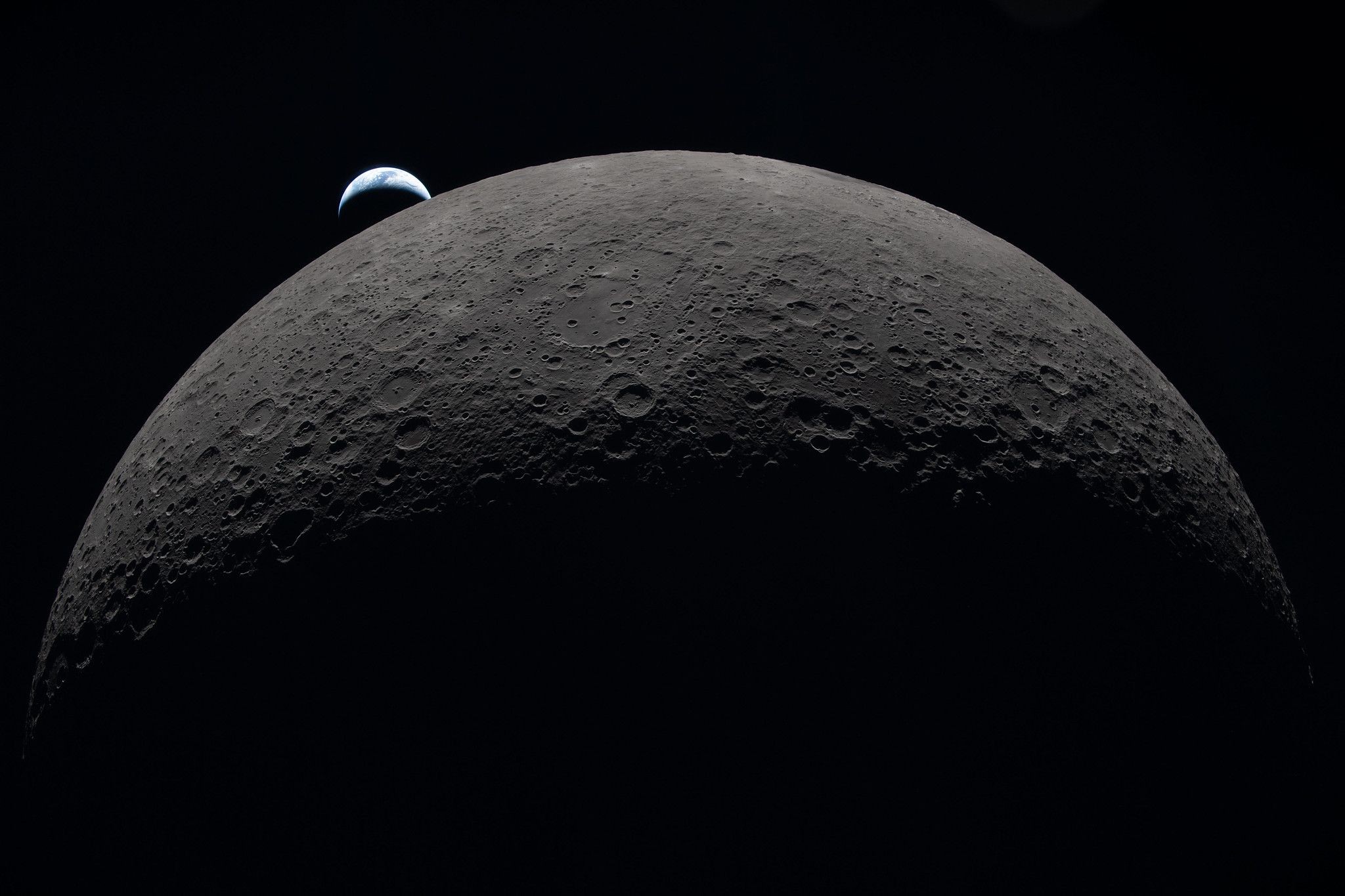
On Monday, April 6, the Artemis 2 crew completed their closest approach to the Moon, the primary objective of their 10-day mission. As the spacecraft transitioned around the lunar far side, the sun dipped behind the Moon, creating a nearly hour-long solar eclipse for the crew.
This period of darkness provided the perfect conditions for observation. With the bright glare of the sun blocked by the lunar disk, the astronauts were able to use their naked eyes to spot five distinct flashes of light on the lunar surface. These flashes were the visual signatures of micrometeorites striking the Moon at high velocities.
The discovery was so unexpected that it triggered “audible screams of delight” within the Science Evaluation Room at the Johnson Space Center.
Why These “Flashes” Matter
To the casual observer, these flashes might seem like mere light shows, but for lunar scientists, they are vital data points.
- Environmental Dynamics: Micrometeorite impacts are a constant force shaping the Moon. Observing them in real-time helps scientists understand the frequency and energy of these collisions.
- Lunar Evolution: These impacts contribute to the long-term erosion and “regolith” (lunar soil) formation, which is crucial for understanding how the Moon has changed over billions of years.
- Future Human Presence: As NASA prepares for long-term human habitation on the Moon, understanding the frequency of these impacts is essential for designing protective shielding for future lunar bases and habitats.
The Power of Human Observation
While modern spacecraft are equipped with sophisticated sensors, the Artemis 2 mission highlights the unique value of having human beings in the loop. The crew was tasked with identifying geographic features and photographing the surface, but their ability to recognize and report these transient light events—something a camera might miss or misinterpret—provided a layer of qualitative data that automated systems often lack.
Kelsey Young, the lunar science lead for Artemis 2, noted that while the team had prepared extensively, the sheer volume and visibility of these impacts exceeded all expectations.
“Science enables exploration, and exploration enables science.” — Kelsey Young, Artemis 2 Lunar Science Lead
Conclusion
The Artemis 2 flyby has proven that even as we enter a new era of spaceflight, the most profound discoveries can still come from the keen eyes of astronauts witnessing the raw, active processes of our solar system in real-time.