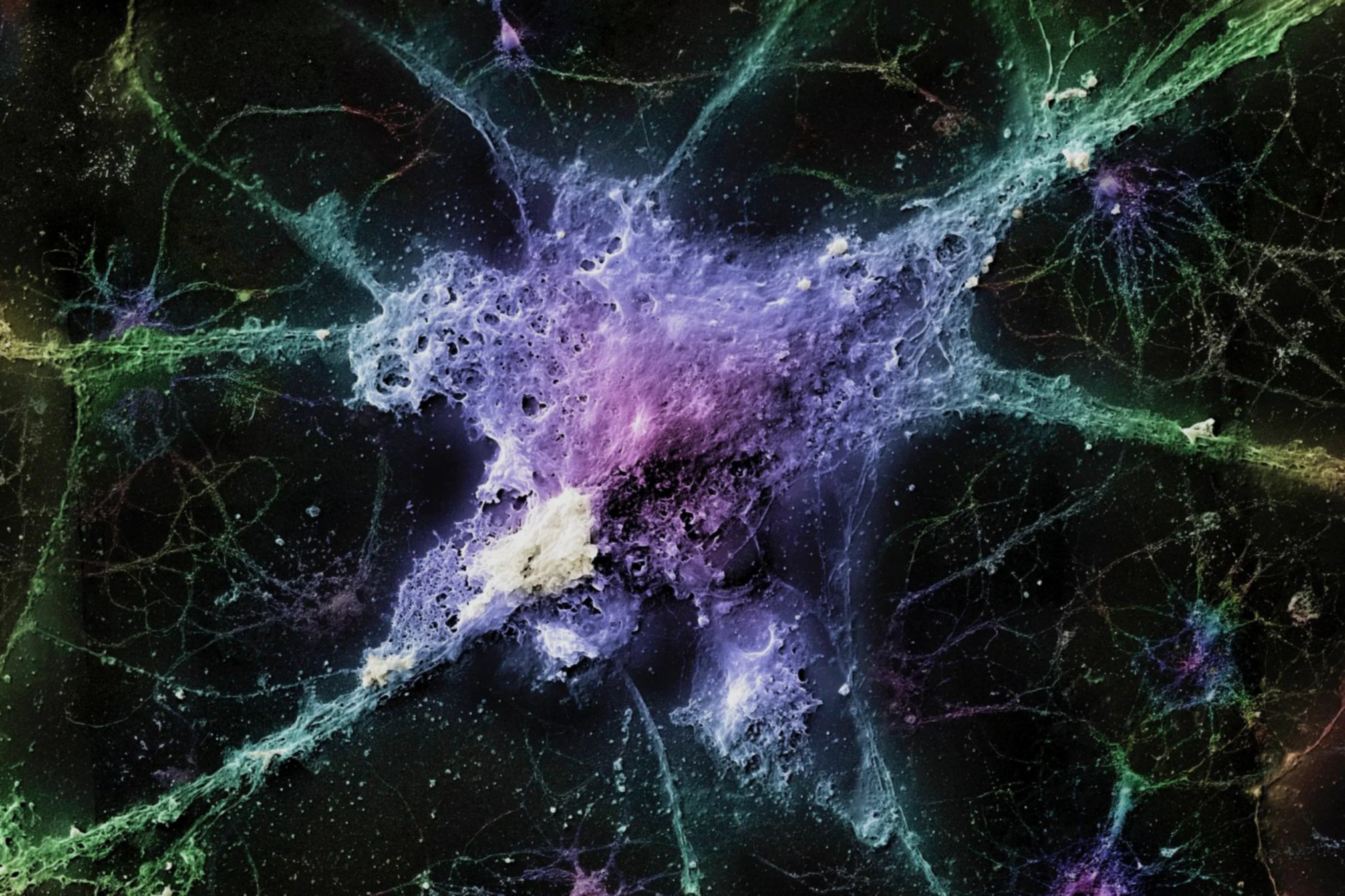
Researchers have identified a potential new target for Alzheimer’s treatment that moves beyond simply attacking protein clumps, focusing instead on enhancing the brain’s natural ability to clear out toxic waste. By targeting a specific receptor known as DDR2, a new study suggests we may be able to improve both memory retention and the efficiency of the brain’s “cleaning” system.
The Problem: Beyond Amyloid Plaques
For decades, much of the research into Alzheimer’s has focused on removing amyloid-beta plaques and tau tangles —the misfolded proteins that accumulate in the brain. However, while many drugs have successfully cleared these clumps, they have largely failed to significantly improve cognitive symptoms in patients.
This failure has led scientists to look toward the glymphatic system, the brain’s specialized waste-clearance network. The theory is that if the brain cannot effectively “flush” itself of metabolic waste, the buildup of toxins becomes inevitable, regardless of how many drugs are used to target the proteins directly.
The Discovery: The DDR2 Receptor
A team led by Jia Li at Guangzhou Medical University has identified a key player in this process: the DDR2 (discoidin domain receptor 2).
While DDR2 has previously been studied in relation to lung health—specifically pulmonary fibrosis—the researchers discovered a striking anomaly in brain tissue. While DDR2 is rarely found in healthy human tissue, it is found in high abundance in the brains of those suffering from Alzheimer’s.
The research highlights three specific cell types that increase DDR2 levels during the disease:
– Reactive astrocytes: Cells that surround amyloid-beta clumps.
– Perivascular fibroblasts: Cells that change activity before the onset of the disease.
– Choroid plexus epithelial cells: Vital components for producing the cerebrospinal fluid that drives the glymphatic system.
“If you’re blocking the DDR2 pathway, theoretically there will be less amyloid-beta protein produced and, at the same time, it will boost the waste clearance for the protein,” says Jia Li.
Breakthrough in Mouse Models
To test this theory, the team developed a monoclonal antibody designed to eliminate these DDR2 receptors. When administered to mice modeled with Alzheimer’s, the results were significant:
1. Improved Cognitive Function: The mice showed better spatial learning and memory.
2. Reduced Toxicity: Brain scans revealed a decrease in amyloid plaques.
3. Enhanced Clearance: The glymphatic system functioned more effectively, flushing out waste more efficiently.
Challenges and the Path Ahead
Despite these promising results, experts urge cautious optimism. One primary concern is that the mice used in the study represented a rare, inherited form of Alzheimer’s that appears much earlier than the more common late-onset version. It remains to be seen if targeting DDR2 will be equally effective for the broader population.
However, the research team argues that because DDR2 levels are also increased by aging and hypoxia (low oxygen)—both major risk factors for late-onset Alzheimer’s—the treatment could have wide-reaching benefits.
Current Next Steps:
– Clinical Monitoring: Researchers are conducting trials using tracers to monitor DDR2 levels in human brains to better direct treatment.
– Blood-Brain Barrier Optimization: The team is developing a smaller version of the antibody designed to cross the blood-brain barrier more efficiently, ensuring the drug actually reaches its target.
Conclusion
By shifting the focus from merely removing protein clumps to enhancing the brain’s internal cleaning mechanism via the DDR2 receptor, researchers may have found a more holistic way to combat the progression of Alzheimer’s disease.