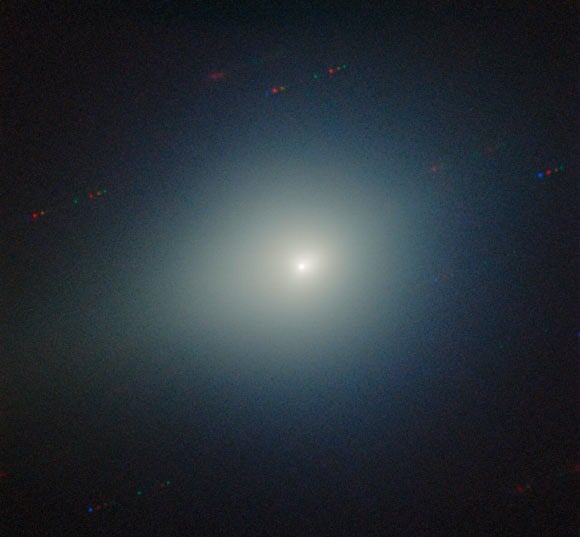
Astronomers have released striking new images of the interstellar comet 3I/ATLAS, revealing changes in its composition as it recedes from the Sun. The observations, captured on November 26, 2025, by the Gemini Multi-Object Spectrograph (GMOS) at the Gemini North telescope in Hawai’i, provide valuable insight into this rare visitor from beyond our solar system.
Comet’s Close Encounter with the Sun
3I/ATLAS made its closest approach to the Sun (perihelion) on October 30, 2025. The comet then reappeared in the sky near the triple-star system Zaniah in the Virgo constellation, allowing astronomers to resume observations. The new data highlights how the comet has changed since its fiery encounter with our star.
Public Outreach and Scientific Transparency
The images were obtained as part of a public outreach program organized by NSF NOIRLab in collaboration with Shadow the Scientists, demonstrating a commitment to transparency in scientific research. According to Eureka Scientific researcher Bryce Bolin, “Sharing an observing experience in some of the best conditions available gives the public a truly front-row view of our interstellar visitor.” The initiative aims to demystify the scientific process and engage the public in real-time astronomical discovery.
Color Changes Reveal Comet’s Chemistry
The new GMOS images, composed of exposures through blue, green, orange, and red filters, show a distinct shift in the comet’s appearance. Earlier observations from Gemini South in Chile revealed a reddish hue, but the latest images display a faint greenish glow. This change is caused by the evaporation of gases in the comet’s coma, particularly diatomic carbon (C2 ), which emits light at green wavelengths as the comet heats up.
The background stars in the images appear as streaks due to the comet remaining stationary while the telescope tracks their movement. This technique provides a clear view of the comet’s evolving composition against a dynamic backdrop.
Unanswered Questions Remain
While the new images provide valuable data, questions remain about how the comet will behave as it cools down. Comets often exhibit delayed reactions to solar heating, with heat penetrating the interior slowly. This lag can trigger further evaporation of chemicals or sudden outbursts, making the comet’s future behavior unpredictable.
As Dr. Bolin noted, “What remains unknown is how the comet will behave as it leaves the Sun’s vicinity and cools down.”
This comet represents a unique opportunity to study material from outside our solar system, offering clues about the formation of other planetary systems.
The continued monitoring of 3I/ATLAS will be crucial for understanding its long-term evolution and the composition of interstellar objects.