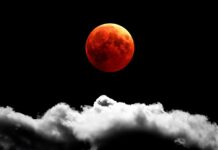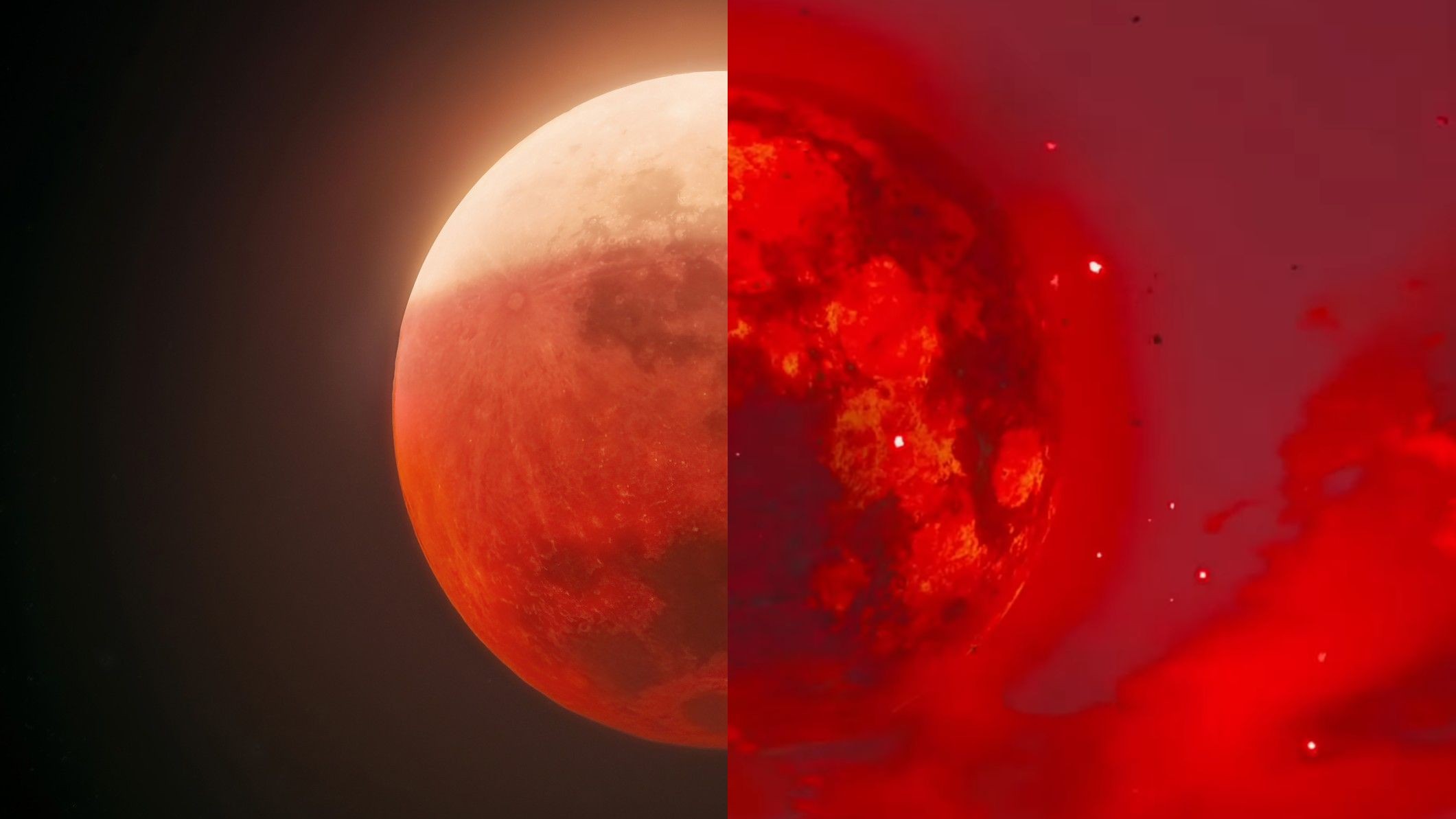
The night sky will feature a striking spectacle on March 3rd: a total lunar eclipse, commonly known as a blood moon. This rare event occurs when the Earth passes directly between the Sun and the Moon, casting a deep red hue across the lunar surface. Throughout history, blood moons have been interpreted as ominous signs, but their scientific origin is straightforward, while their cultural impact remains profound.
The Science of a Crimson Sky
During a total lunar eclipse, Earth blocks direct sunlight from reaching the Moon. Instead of disappearing, the Moon takes on a reddish tint due to the way Earth’s atmosphere filters light. Shorter wavelengths of blue light are scattered, while longer wavelengths of red and orange pass through and bend toward the Moon. This is similar to why sunsets appear red—the same atmospheric effect projects onto the lunar surface. The exact shade depends on atmospheric conditions; dust or ash can deepen the color, while clear skies create a lighter amber glow. These eclipses happen predictably, roughly every one to two years, and are safe to view with the naked eye.
Historical Fear of the Red Moon
The blood moon’s dramatic appearance has long inspired mythologies across cultures. Ancient civilizations in Mesopotamia, China, and Mesoamerica often interpreted eclipses as warnings of misfortune. In China, people believed a celestial dragon was devouring the Moon, and they would create noise to scare it away. Other cultures linked red moons to war, famine, or the death of rulers. The Bible also references blood moons in ominous terms, particularly in the Book of Joel and Revelation, associating them with impending doom.
This psychological response is rooted in the Moon’s usual stability. When it suddenly changes, especially to a blood-like color, it disrupts our sense of predictability. Before scientific understanding, such radical shifts demanded explanation, leading to supernatural interpretations.
The Blood Moon in The Legend of Zelda
Nintendo’s The Legend of Zelda series leverages this historical unease. In Breath of the Wild and Tears of the Kingdom, the blood moon is a gameplay mechanic tied to ominous imagery. When it rises, all slain enemies respawn, and lost items reappear, creating a sense that something unnatural is happening.
The blood moon also guarantees “Critical Cooks”—dishes with enhanced effects—between 11:30 PM and 12:15 AM. From a developer’s perspective, the blood moon resets the world, preventing memory overload on the Nintendo Switch. If the game detects excessive strain, it can trigger a “panic Blood Moon” at any time. Players can even force this by creating a chaotic particle effect with certain weapons.
The Inevitable Moon of Majora’s Mask
Majora’s Mask takes lunar dread to an extreme. Its moon isn’t merely red, but decaying, falling, and set to collide with the planet in three days. This constant countdown creates a sense of urgency and inevitability. While unrealistic, the game weaponizes this disruption to drive emotional tension.
Why the Crimson Moon Unsettles Us
Both real and fictional blood moons tap into humanity’s instinctive connection to celestial bodies. The Moon represents constancy, influencing tides, agriculture, and the very rhythm of life. When that constancy is threatened—whether through a natural eclipse or a decaying in-game moon—it evokes primal anxiety. Nintendo understands this, using the red sky to create unease even if the in-game consequences aren’t deadly.
A Moment for Science and Storytelling
The March 3rd blood moon offers a chance to appreciate the science behind this phenomenon and the enduring power of storytelling. In reality, it’s a predictable, awe-inspiring display of orbital mechanics. In fiction, it’s a tool for tension and dread, drawing on ancient fears to amplify emotional impact. Whether gazing at the real sky or exploring Hyrule, the red moon reminds us of both the reliability and the fragility of the cosmos.