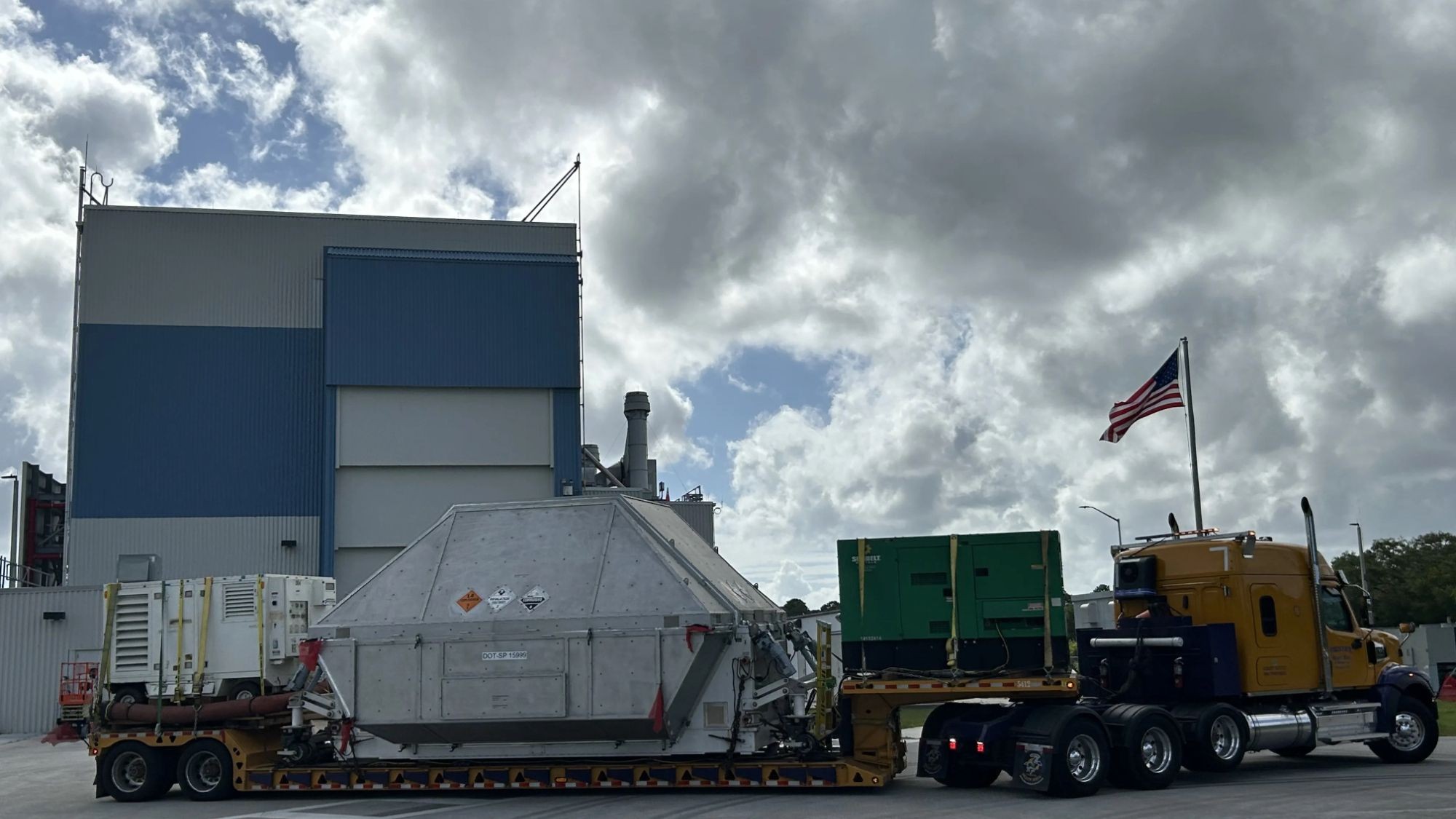
The Orion capsule, named Integrity, has safely returned to NASA’s Kennedy Space Center (KSC) in Florida, marking a pivotal transition from the historic Artemis 2 mission to the rigorous preparation for future lunar exploration.
After completing a groundbreaking journey around the Moon, the spacecraft arrived at the Multi-Processing Payload Facility on Tuesday, April 28. This return initiates a critical phase of engineering analysis that will directly inform the success of upcoming missions, including the targeted late-2027 launch of Artemis 3.
Deconstructing the Data: What Happens Next?
Upon arrival, engineers began “de-servicing operations,” a complex process designed to extract every possible insight from the mission. This is not merely maintenance; it is a forensic examination of how the spacecraft endured the harsh environment of deep space.
Key activities include:
* Payload Removal: Extracting scientific instruments and avionics boxes for reuse or analysis.
* Heat Shield Analysis: Removing the Orion heat shield for extensive inspection. This component is crucial, as it protected the crew during re-entry. Understanding its performance is vital for ensuring safety on future missions.
* Data Retrieval: Collecting telemetry and performance data to refine procedures for subsequent Artemis flights.
* Hazard Mitigation: Safely offloading remaining propellant and other hazardous materials.
“Orion’s heat shield and other elements will be removed for extensive analysis… to better understand how it performed to inform procedures and plans for future Artemis missions,” NASA officials stated.
Context: Why This Mission Matters
The Artemis 2 mission, which launched on April 1 atop a Space Launch System (SLS) rocket, was more than just a technical test; it was a historic milestone. The crew—consisting of NASA astronauts Reid Wiseman, Victor Glover, and Christina Koch, along with Canadian Space Agency astronaut Jeremy Hansen —became the first humans to travel beyond Earth orbit since Apollo 17 in 1972.
On April 6, the quartet flew around the far side of the Moon, achieving the greatest distance from Earth ever recorded by humans. The mission concluded successfully with a splashdown off the coast of San Diego on April 10. The data gathered during this flight provides the foundational proof-of-concept needed to establish a sustainable human presence on the Moon.
Looking Ahead: Artemis 3 Takes Shape
While teams analyze Artemis 2, NASA is simultaneously accelerating preparations for Artemis 3, the mission that will land the first woman and person of color on the lunar surface.
Significant hardware milestones have already been reached:
* Core Stage Assembly: The top 80% of the core stage for the Artemis 3 SLS rocket arrived at KSC from the Michoud Assembly Facility in New Orleans on April 27. Technicians are now mating this section with its engine.
* Orion Capsule Readiness: The Artemis 3 Orion capsule has seen substantial progress. All 186 Avcoat blocks for its upgraded heat shield have been installed, cured, and inspected.
* Testing Complete: The Orion service module has successfully undergone thermal cycle testing and deployment checks for all four solar array wings. The adapter cone connecting Orion to the SLS rocket has also been installed.
NASA plans to integrate the crew and service modules with the launch abort system later this year, keeping the timeline for the late-2027 launch on track.
Conclusion
The return of the Integrity capsule signifies the end of one chapter and the beginning of another. By thoroughly analyzing the performance of Artemis 2, NASA is ensuring that the Artemis 3 mission—and the broader goal of returning humans to the Moon—is built on a foundation of verified data and proven engineering.