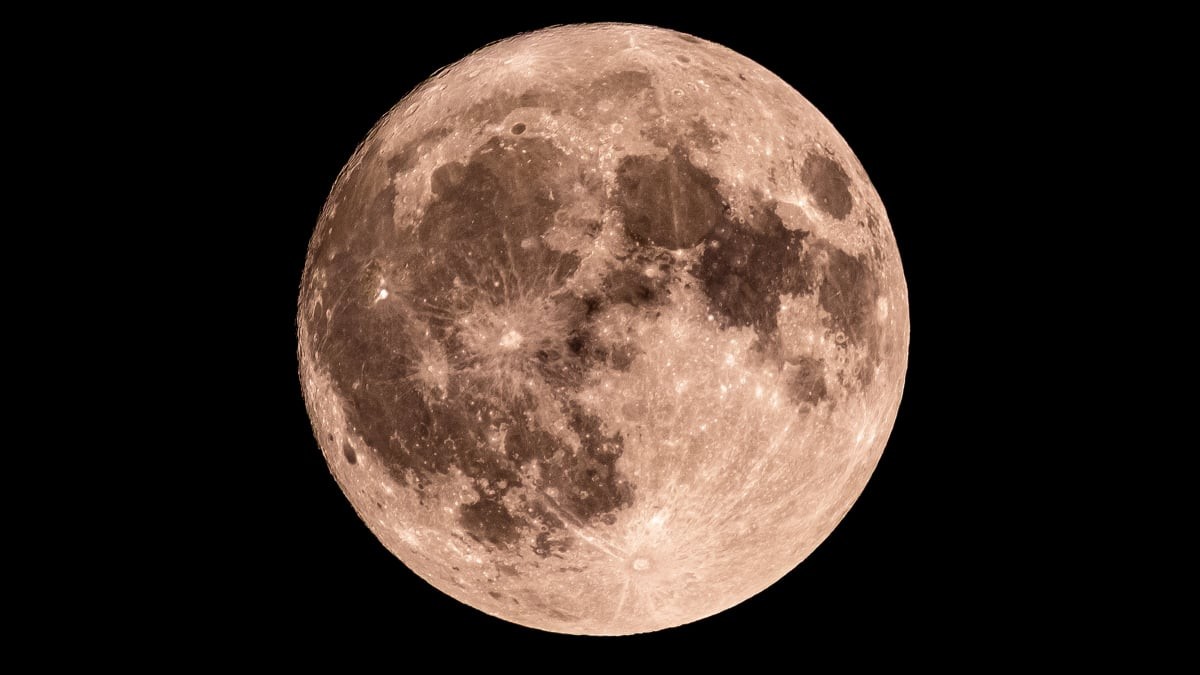
As of Friday, March 6, 2026, the Moon is in its Waning Gibbous phase, meaning it appears more than half illuminated but is gradually shrinking towards the next New Moon. Approximately 92% of the Moon’s visible surface is currently lit, providing clear viewing opportunities for skywatchers.
What You Can See Tonight
Even without specialized equipment, several lunar features are visible to the naked eye. Observers can identify the Aristarchus Plateau, the Mare Tranquillitatis (Sea of Tranquility), and the prominent Tycho Crater. Binoculars enhance this view, revealing the Mare Nectaris (Sea of Nectar) and Mare Frigoris (Sea of Cold), as well as the large Clavius Crater. For those with telescopes, detailed exploration is possible, including the smaller Linne Crater, the historic Apollo 11 landing site, and the rugged Caucasus Mountains.
Understanding Lunar Phases
The Moon’s changing appearance is due to its 29.5-day orbit around Earth, during which the amount of sunlight reflecting off its surface changes from our perspective. While the Moon is tidally locked—meaning we always see the same side—the illuminated portion varies, creating eight distinct phases:
- New Moon: The Moon is between Earth and the Sun, making it appear dark.
- Waxing Crescent: A sliver of light appears on the right side (in the Northern Hemisphere).
- First Quarter: Half of the Moon is illuminated.
- Waxing Gibbous: More than half is lit, approaching fullness.
- Full Moon: The entire visible surface shines brightly.
- Waning Gibbous: The illuminated portion begins to decrease.
- Third Quarter: The left side is half lit.
- Waning Crescent: A thin sliver remains before disappearing again.
These phases are a fundamental aspect of astronomy, driven by the interplay of sunlight, Earth’s orbit, and the Moon’s own motion. They affect not only how we view the night sky but also historical calendars, tides, and even cultural myths.
Next Full Moon
The next Full Moon is predicted for April 1 in North America. This cycle continues, offering regular opportunities to observe the Moon’s changing face and appreciate the celestial mechanics that govern our night sky.